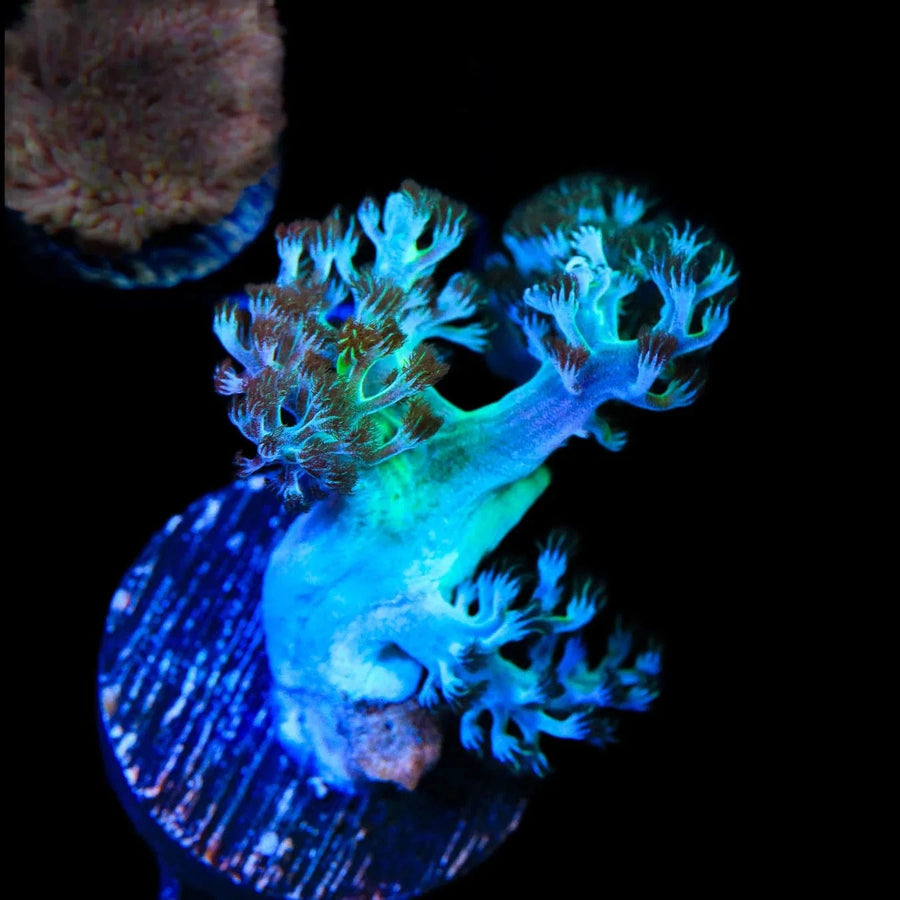
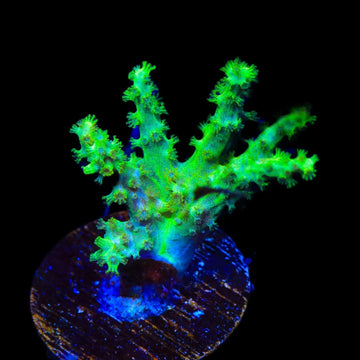
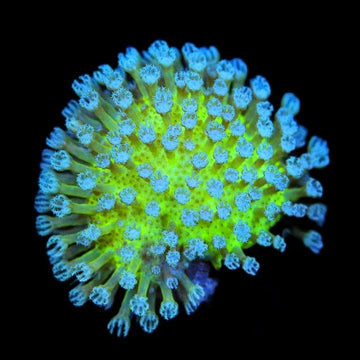
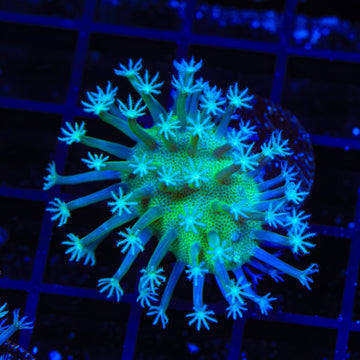
Alien Hand leather Coral
Overview
Alien Hand Leather Coral shows thick, finger-like lobes that branch from a rubbery base. Sinularia polydactyla is a soft leather coral; it prefers moderate to strong water flow and moderate lighting. It is primarily photosynthetic via symbiotic algae, but benefits from occasional fine particulate foods, which can support growth and coloration. Place it with space around it and away from sensitive neighbors, as it can release chemicals and grow large.
Quick Facts
Care
Easy
Lighting
Moderate–High
Flow
Moderate-High
Placement
Mid–High
Temperament
Semi-aggressive (4–6 inches spacing recommended)
Recommended Parameters
Temp
76–80°F
pH
8.1–8.4
Salinity
1.025–1.026
Calcium
400–430 ppm
AlkAlkalinity
8–10 dKH
Magnesium
1250–1350 ppm
Feeding
photosynthetic (primary), phytoplankton, microplankton, marine snow, rotifers, powdered coral foods, dissolved organics
Care & Placement
FAQ
Frequently Asked Questions
About the Alien Hand leather Coral
-
My Alien Hand stays “waxy” and closed for days—normal or trouble?
Periodic shedding is normal; it secretes a waxy film to slough off algae and debris. Ensure strong, chaotic flow across the colony so the film lifts. If closed >7 days, swap/refresh carbon, increase flow slightly, and check salinity stability and temperature. A short iodine/Lugol’s dip can help if you see biofilm or tissue dulling after a heat spike or handling. -
Why does my Sinularia polydactyla look brown under whites but pops green under blues?
Many morphs carry fluorescent proteins that glow under blue/actinic lighting but appear tan under full spectrum. If it’s dulling overall, consider that ultra-low nutrients can pale it, while excess dissolved organics can brown it. Aim for moderate nutrients, stable alkalinity, and strong, variable flow. Gradually acclimate to brighter light to avoid bleaching and preserve fluorescence. -
It keeps stinging or shading neighbors—how do I manage its reach and chemistry?
This coral can overtop and chemically suppress nearby corals, especially SPS downcurrent. Give generous spacing and place it upcurrent of sensitive species. Run fresh activated carbon and perform regular water changes to reduce allelopathic compounds. Prune advancing lobes before they touch others; removing a few tips monthly controls growth without shocking the colony. -
Best practice to frag an “Alien Hand” so frags don’t float away or rot?
Use a clean, sharp blade to cut a healthy lobe tip, avoiding the main stalk. Rinse briefly, then secure the frag to rubble with a toothpick and rubber band or wrap loosely with bridal veil in a low-flow basket until it attaches (1–2 weeks). Increase aeration/carbon after cutting to absorb toxins, and expect temporary deflation.