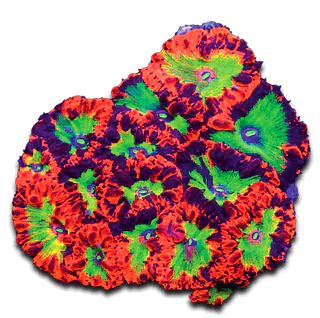
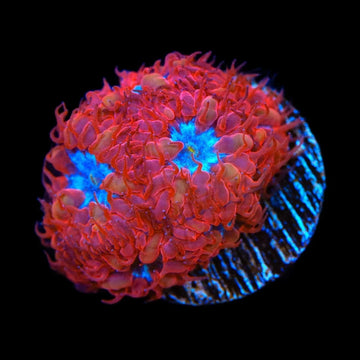
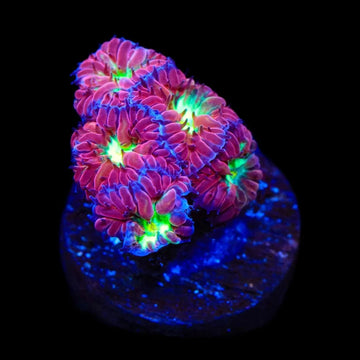
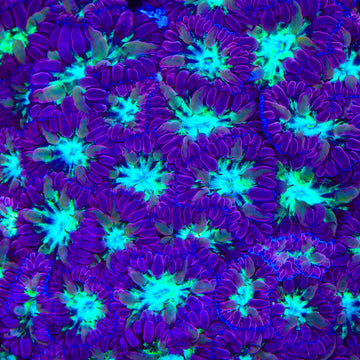
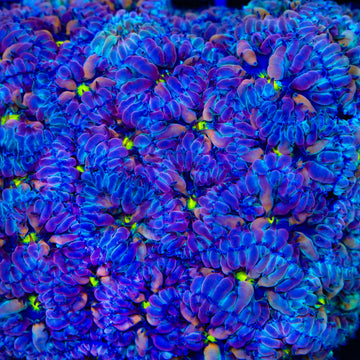
Insane Rainbow Blastomussa Coral
Overview
Insane Rainbow Blastomussa Coral displays multi-colored, fleshy polyps with thick, rounded walls; Blastomussa wellsi is a large-polyp stony coral forming domed heads. It prefers low to moderate lighting and gentle, low to moderate water flow. Photosynthetic via symbiotic algae, it also accepts small meaty foods, which can support faster growth and deeper color. Place on the sandbed or isolated rock with space around it, and keep some distance from other corals to avoid stings.
Quick Facts
Care
Moderate
Lighting
Low–Moderate
Flow
Low–Moderate
Placement
Low–Mid
Temperament
Peaceful (2–3 inches spacing)
Recommended Parameters
Temp
76–80°F
pH
8.1–8.4
Salinity
1.025–1.026
Calcium
400–450 ppm
AlkAlkalinity
8–10 dKH
Magnesium
1280–1350 ppm
Feeding
photosynthetic, mysis shrimp, enriched brine shrimp, finely chopped marine meats, zooplankton, microplankton, coral-specific powdered foods (e.g., Reef Roids), marine snow
Care & Placement
FAQ
Frequently Asked Questions
About the Insane Rainbow Blastomussa Coral
-
My Insane Rainbow Blastomussa polyps deflated after a move—how can I get them to re-inflate?
Acclimate to light slowly; aim for moderate PAR (80–120) and indirect flow. Check for irritants like vermetid snail threads or sand trapped under tissue. Maintain stable alk 8–9 dKH and salinity 1.025–1.026. Slightly higher nutrients (NO3 5–15 ppm, PO4 0.03–0.10 ppm) help. Run fresh carbon if near soft corals. Feed small meaty foods at dusk to encourage expansion. -
How do I keep the rainbow colors from washing out or turning brown?
Prioritize blue/UV-heavy spectrum with moderate PAR and gentle flow. Avoid ultra-low nutrients; keep nitrate and phosphate detectable as above. Limit long photoperiods under intense white channels. Ensure trace stability via regular water changes; avoid chasing single additives. Consistent temperature (24–26°C) and low stress preserve pigments. If paling, lower light 20–30% and increase feeding for two weeks. -
What’s the best way to feed Blastomussa wellsi without causing tissue damage or fouling?
Target-feed at dusk when feeder tentacles appear. Turn off flow, offer small portions of mysis, enriched brine, or fine blends (cyclops, reef roids) using a pipette. Keep portions tiny—overfeeding causes slime and recession. Resume gentle flow after 10–15 minutes. Two to three feedings weekly boost growth and color without pushing nutrients too high. -
What if heads start receding from the base or show brown jelly-like tissue?
Isolate immediately. Siphon the jelly, dip in iodine, and increase indirect flow to prevent stagnation. If only some heads are affected, frag healthy polyps away from diseased areas. Check for alk swings, recent light increases, or pests. Maintain stable parameters and moderate lighting while the colony recovers; feed small, clean portions to support tissue repair.