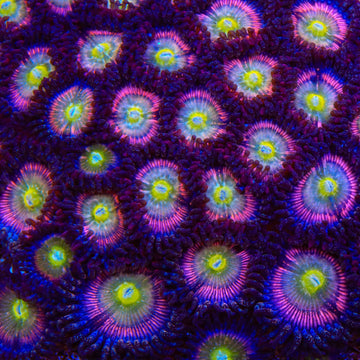
Gorilla Nipple Zoanthids Coral
Overview
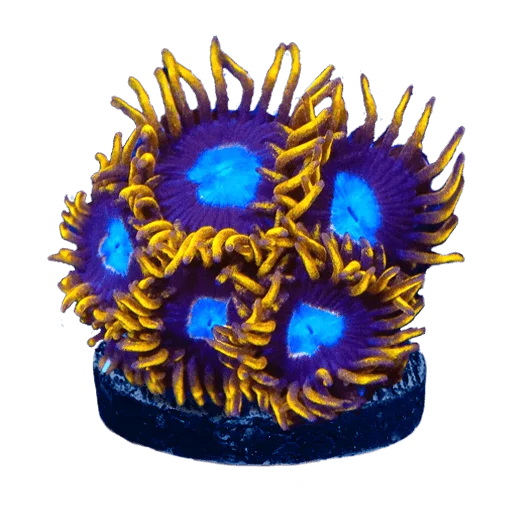
Gorilla Nipples Zoanthids Coral features tightly packed polyps with raised, dome-shaped oral discs and contrasting skirts. Classified as Zoanthus sp., this is a soft colonial polyp coral that spreads as a mat; it prefers moderate lighting and low to moderate, steady water flow. Primarily photosynthetic via symbiotic algae, it accepts small particulate foods, which can speed growth and bring out stronger colors. Place on isolated rock to manage spreading and keep distance from aggressive neighbors, as it can be overgrown or stung.
Quick Facts
Care
Easy
Lighting
Low–Moderate
Flow
Moderate–High
Placement
Mid–Low
Temperament
Semi-aggressive (fast mat growth; 2–4 inches spacing)
Recommended Parameters
Temp
76–80°F
pH
8.1–8.4
Salinity
1.025–1.026
Calcium
400–450 ppm
AlkAlkalinity
8–10 dKH
Magnesium
1250–1350 ppm
Feeding
photosynthetic, phytoplankton, zooplankton, rotifers, copepod nauplii, microplankton, powdered coral foods (e.g., Reef-Roids), marine snow
Care & Placement
FAQ
Frequently Asked Questions
About the Gorilla Nipple Zoanthids Coral
-
Why do my Gorilla Nipples stretch and thin out instead of forming tight, plump polyps?
They’re likely reaching for light or suffering from low flow. Increase PAR gradually (target ~100–200) and provide moderate, turbulent flow so skirts flutter. Ultra-clean water can also cause shrinking; maintain low but measurable nutrients (nitrate 2–10 ppm, phosphate 0.03–0.1). Check for shade from neighboring corals and remove film algae that diffuses light. -
My colony’s green skirts faded after a lighting change. Can the original color return?
Often, yes. This morph shows best fluorescence under blue-heavy spectra. Reduce harsh white intensity, stabilize PAR, and keep nutrients non-zero to avoid washing out pigments. Color can rebound over weeks as zooxanthellae density and accessory pigments adjust. Avoid big jumps in spectrum; make 5–10% weekly changes and monitor response. -
What pest issues are specific to Zoanthus like Gorilla Nipples, and how do I confirm them?
Zoa-eating nudibranchs often mimic your colony’s colors and feed at night; check with a red flashlight and look for tiny white egg spirals on polyp bases. Sundial snails have black-and-white banded shells and hide under mats. “Zoa pox” shows as small beige pustules. Use targeted dips (iodine-based for pox, broader coral dips for nudis) and manually remove eggs. -
Do Gorilla Nipples react badly to nearby soft corals or LPS?
They lack long sweepers but are sensitive to chemical warfare. Palythoa, leathers, and some LPS can suppress extension or dull colors. Run fresh carbon, maintain good export, and leave a few inches of space with crossflow between colonies. If growth stalls near a neighbor, relocate the zoas to a rough, vertical surface where they can encrust away from contact.