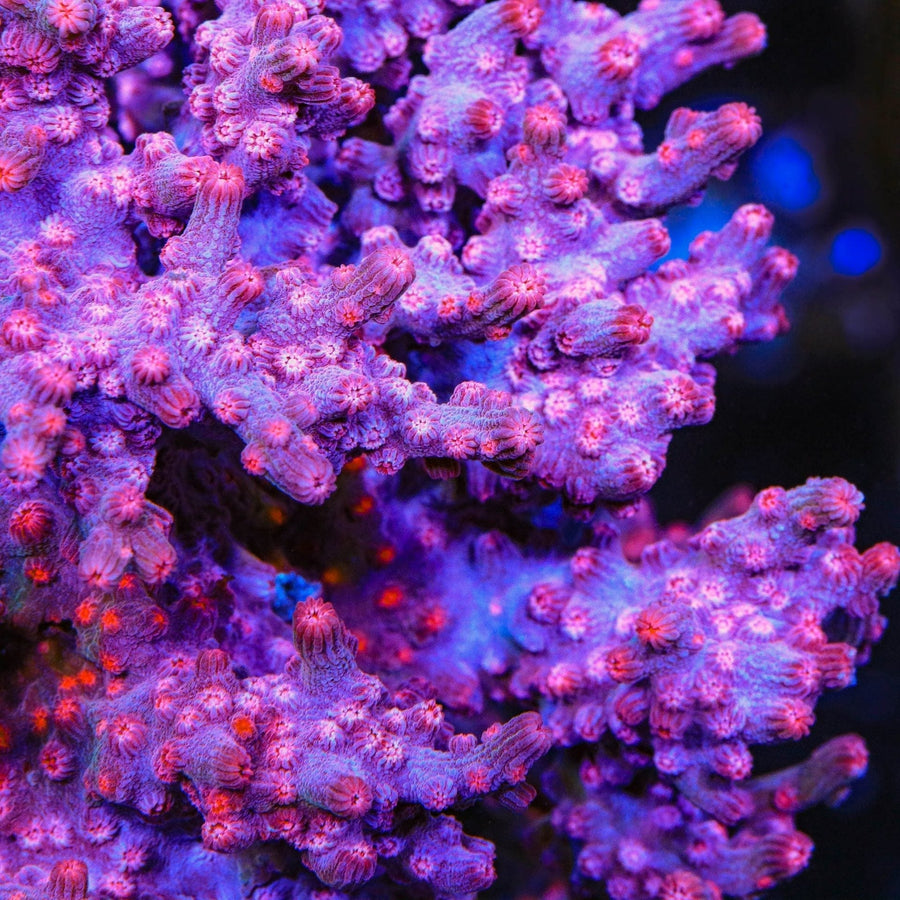
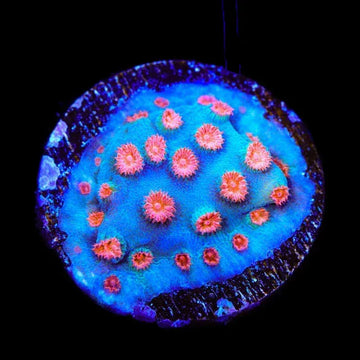
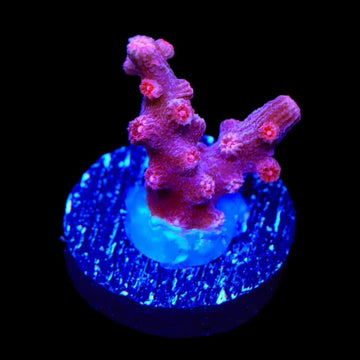
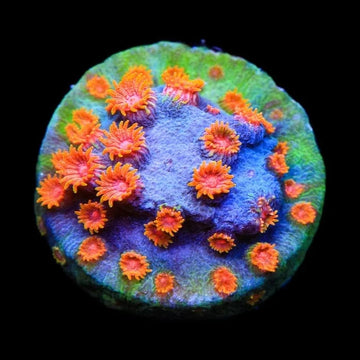
CB Bling Bling Cyphastrea Coral
Overview
Bling Bling Cyphastrea Coral shows an encrusting growth with small, closely set polyps that create a sparkling surface. Cyphastrea sp. is a hardy encrusting stony coral that prefers low to moderate light and gentle, low to moderate water flow. It is photosynthetic with symbiotic algae but benefits from occasional fine particulate foods to support growth and color. Place on stable rock away from aggressive neighbors, allowing space to spread and avoiding direct blasting flow.
Quick Facts
Care
Easy
Lighting
Low–Moderate
Flow
Low–Moderate
Placement
Low–Mid
Temperament
Peaceful (2–3 inches spacing)
Recommended Parameters
Temp
76–80°F
pH
8.1–8.4
Salinity
1.025–1.026
Calcium
400–450 ppm
AlkAlkalinity
8–9.5 dKH
Magnesium
1280–1380 ppm
Feeding
photosynthetic, microplankton, rotifers, copepods/cyclops, baby brine shrimp, powdered coral foods (e.g., Reef-Roids), marine snow
Care & Placement
FAQ
Frequently Asked Questions
About the CB Bling Bling Cyphastrea Coral
-
Why does my Bling Bling Cyphastrea lose its sparkle under strong lights when other SPS thrive?
Cyphastrea sp. comes from shaded, turbid zones and often washes out above ~120–150 PAR. High PAR can bleach the base and mute gold polyps. Place it in lower light with a strong blue spectrum, and light-acclimate over 2–3 weeks. Slightly higher nutrients (e.g., NO3 5–15 ppm, PO4 0.03–0.1) help maintain depth of color without browning. -
The colony’s edges are receding while the center looks fine—what’s the hidden cause?
Edge recession often stems from detritus collecting along the encrusting rim in low, chaotic flow. Fine particles irritate tissue and invite film algae/cyano. Increase crossflow to sweep the perimeter, turkey-baste weekly, and avoid horizontal ledges that trap debris. Check for vermetid snails near the rim; their mucus threads can trigger localized tissue loss. -
Can Bling Bling Cyphastrea overrun nearby corals even though it’s considered peaceful?
Yes—its short tentacles make it “polite,” but its encrusting base is persistent. It will creep under or around slower neighbors and shade them. Mount it on isolated islands or vertical surfaces to confine spread. Leave 2–4 cm of bare rock as a buffer, and trim margins with bone cutters before it reaches prized LPS or zoas. -
My polyps retract at night and stay closed for days after a parameter swing—normal or a warning sign?
Brief nighttime retraction is normal, but multi‑day shutdown suggests stress from alkalinity swings or rapid phosphate drops. Keep alk stable (8–9 dKH) and avoid aggressive media changes. If tips look intact with no sloughing, hold steady and reduce light temporarily. If tissue thins at the base, inspect for pests and improve rim flow immediately.