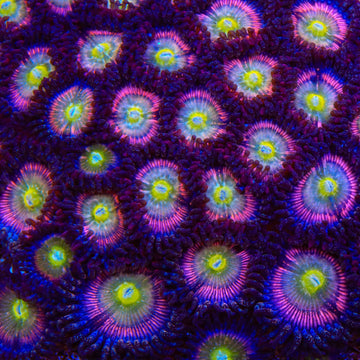
Green Bay Packer Zoanthids Coral
Overview
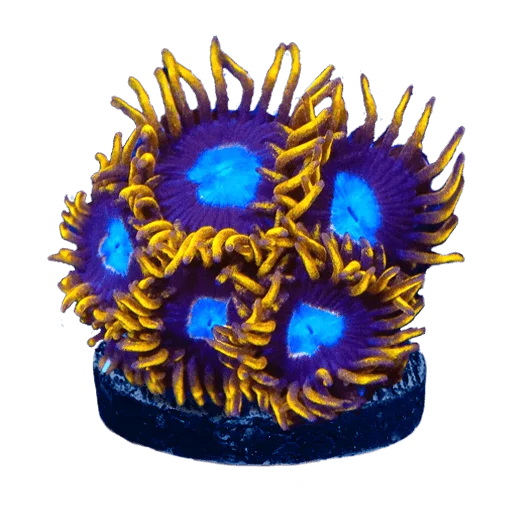
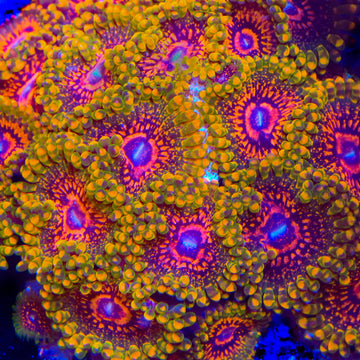
Green Bay Packers Zoanthids Coral shows small polyps with bright green centers, yellow skirts, and a contrasting dark base. Zoanthus sp., a soft colonial polyp coral, does well under moderate light and low to moderate water flow. It is photosynthetic via symbiotic algae but benefits from occasional small meaty or planktonic foods, which can improve growth and maintain color. Place on an isolated rock to control spreading and keep distance from aggressive stinging corals.
Quick Facts
Care
Easy
Lighting
Low–Moderate
Flow
Moderate, indirect
Placement
Low–Mid
Temperament
Peaceful to semi-aggressive (2–4 inches spacing; may overgrow neighbors)
Recommended Parameters
Temp
76–82°F
pH
8.1–8.4
Salinity
1.025–1.026
Calcium
400–450 ppm
AlkAlkalinity
8–10 dKH
Magnesium
1250–1350 ppm
Feeding
photosynthetic (primary), phytoplankton, zooplankton, rotifers, copepod nauplii, baby brine shrimp, cyclops, microplankton, powdered coral foods (e.g., Reef-Roids), marine snow
Care & Placement
FAQ
Frequently Asked Questions
About the Green Bay Packer Zoanthids Coral
-
How do I keep the Green Bay Packers Zoas’ neon center and gold ring from fading or turning dull?
Maintain moderate PAR (80–150) with strong blue spectrum and stable nutrients (nitrate 2–10 ppm, phosphate 0.03–0.1). Too-white light or ultra-low nutrients wash colors; excess nutrients brown them out. Increase turbulent flow to prevent film algae on skirts. Trace element depletion (iodine, iron) can mute tones—dose only if tested. Avoid rapid lighting changes; acclimate over 2–3 weeks. -
My colony opens but growth stalled—what advanced tweaks spur faster matting without inviting algae?
Keep alkalinity steady (8–9 dKH) and slightly elevated nutrients as above. Target feed fine foods (reef roids, powdered zooplankton) 1–2x weekly with pumps off for 10–15 minutes, then restore strong flow. Use blue-heavy photoperiod with a 1–2 hour midday white peak. Raise magnesium to 1350–1450 for encrusting vigor. Trim shadowing polyps to stop self-shading. -
These zoas sometimes “melt” after looking fine. What rare causes should I check beyond basics?
Inspect for zoa-eating nudibranchs and their egg spirals, sundial snails, and zoa spiders; hunt at night with a flashlight. If pustules appear, treat with Furan‑2 dips for zoa pox. Improve gas exchange and random flow to prevent detritus pockets. Avoid sudden GFO drops in phosphate. Run fresh carbon to temper chemical warfare from nearby softies. -
Why do the skirts get unusually long or stubby, and does it signal a problem?
Skirt length responds to conditions: stronger, more chaotic flow often yields longer, fluttering skirts; very low flow can make them stubby and trap film. High PAR can tighten polyp posture; lower PAR may flatten discs. If skirts shrink and polyps stay small for days, check for pests, abrupt parameter swings, or excessive white light. Adjust gradually.