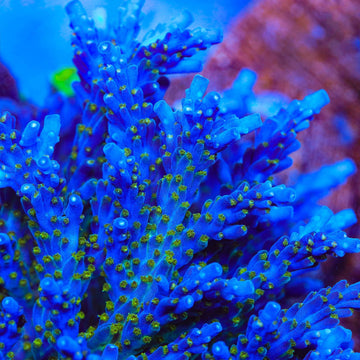
MattV Looney Tunes Tenuis Acropora Coral
Overview
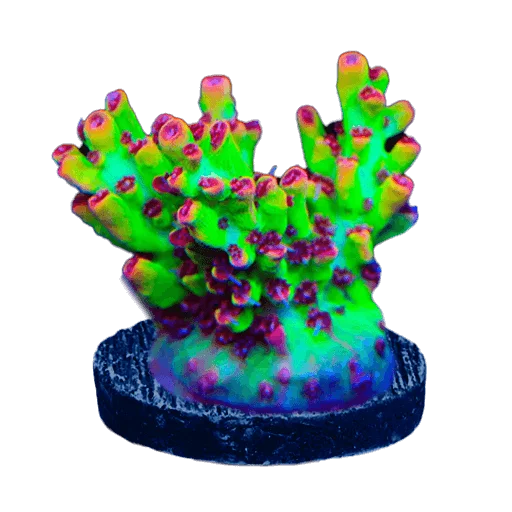
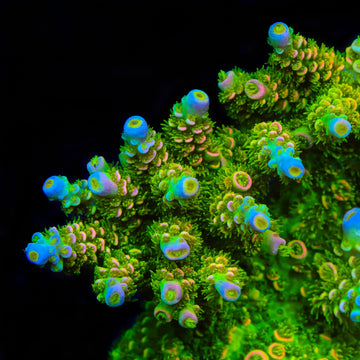
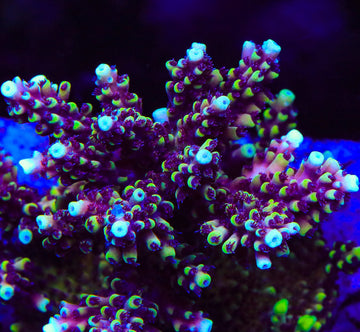
MattV Looney Tunes Tenuis Acropora Coral shows tight axial growth with short, tapered branches and contrasting polyp tips. Acropora tenuis is a small-polyp stony branching coral; provide strong light and high, turbulent flow. It relies on symbiotic algae for most nutrition but can take very fine particulate foods, which may support faster growth and deeper coloration. Place high on stable rockwork with space from aggressive neighbors, and keep alkalinity stable with low nutrients to prevent tissue loss.
Quick Facts
Care
Difficult
Lighting
High
Flow
High
Placement
High
Temperament
Peaceful (2–3 inches spacing)
Recommended Parameters
Temp
77–79°F
pH
8.1–8.4
Salinity
1.025–1.026
Calcium
400–450 ppm
AlkAlkalinity
8–9 dKH
Magnesium
1300–1400 ppm
Feeding
photosynthetic (primary), microplankton, zooplankton, rotifers, copepod nauplii, oyster eggs, coral-specific powdered foods (e.g., Reef-Roids), amino acid supplements
Care & Placement
FAQ
Frequently Asked Questions
About the MattV Looney Tunes Tenuis Acropora Coral
-
Why do some MattV Looney Tunes Tenuis frags brown out under strong LEDs while others glow neon?
A. tenuis shows pronounced spectral selectivity. Too much white/green and excessive PAR (>350–400) can trigger photo-protective pigments and browning. Run a blue/UV-heavy spectrum, moderate PAR (250–350 at the tips), and keep nutrients non-zero (NO3 5–15 ppm, PO4 0.03–0.08). Stable alkalinity (8–8.6 dKH) prevents pigment loss. Gradually acclimate over 2–3 weeks to avoid photo-inhibition that mutes fluorescence. -
My colony has great tip color but a dull base—what adjustments help color up the base?
This pattern often points to boundary layer issues at the base: low flow, detritus, and shadowing. Increase cross-flow under the colony with alternating gyres, lightly turkey-baste weekly, and trim nearby branches to open sight lines. Raise the piece 1–2 cm off the plug on a pedestal to improve wash-through. Mildly bump phosphate and iron via targeted trace dosing to support tissue vitality in shaded zones. -
What subtle pests or stress signs are easy to miss on this strain?
Early AEFW activity shows as tiny scallops on lower branches and dust-like eggs on shaded undersides. Red bugs reduce polyp extension and mute fluorescence before obvious damage. Also watch for micro-tissue recession at the base after alkalinity dips. Inspect at night with blue light and a loupe, baste branches to reveal hiding flatworms, and rotate the frag to check undersides weekly. -
Does this coral tolerate close placement to other Acropora, or does spacing matter?
A. tenuis can lose in slow-motion allelopathic contests, especially against bushy, slime-producing acros. Provide at least 3–5 cm clearance down-current, with strong, alternating flow to dilute chemical cues. If color dulls on the side facing a neighbor, increase separation or redirect flow. Activated carbon changed regularly helps, but physical spacing and good export are the most reliable strategies.