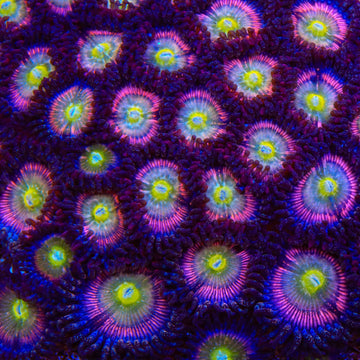
Blue Lagoon Zoanthids Coral
Overview
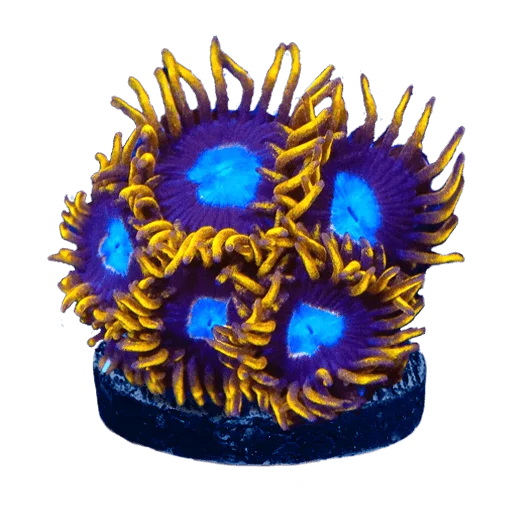
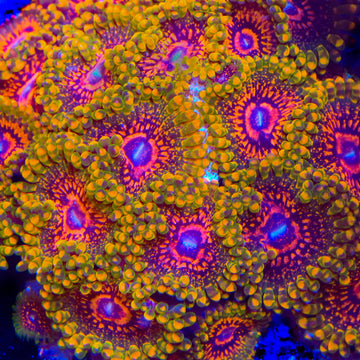
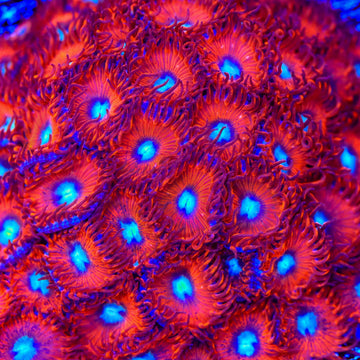
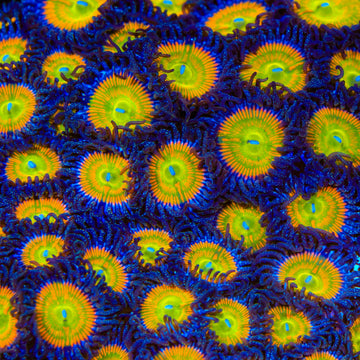
Blue Lagoon Zoanthids Coral displays small button-like polyps with contrasting centers and skirts. Zoanthus sp., a soft colonial polyp that forms encrusting mats, thrives under moderate light and gentle to moderate water flow. Primarily photosynthetic with symbiotic algae, it can take occasional small meaty or powdered foods to boost growth and maintain coloration. Place on an isolated rock to manage spreading and keep space from aggressive or stinging neighbors; handle with care when fragging.
Quick Facts
Care
Easy
Lighting
Moderate
Flow
Moderate
Placement
Low–Mid
Temperament
Semi-aggressive (2–3 inches spacing)
Recommended Parameters
Temp
76–80°F
pH
8.1–8.4
Salinity
1.025–1.026
Calcium
380–430 ppm
AlkAlkalinity
8–10 dKH
Magnesium
1250–1350 ppm
Feeding
photosynthetic (primary), microplankton, phytoplankton, fine zooplankton, powdered coral foods, reef roids, marine snow
Care & Placement
FAQ
Frequently Asked Questions
About the Blue Lagoon Zoanthids Coral
-
Why does my Blue Lagoon Zoanthids Coral fade from vivid blue to dull teal or brown?
Color shifts usually trace to spectrum, PAR, and nutrients. Aim for moderate PAR (80–150) with strong 420–460 nm (violet/royal blue). Too much white or PAR spikes can brown or bleach polyps. Keep NO3 around 5–15 ppm and PO4 0.03–0.10 ppm; ultra-low nutrients dulls color. Maintain stable alkalinity and trace iodine/iron via regular water changes. Acclimate to light slowly to prevent photoinhibition. -
How can I keep this fast-matting zoa from overrunning nearby corals?
Mount the colony on an “island” rock with sand gaps. Trim the advancing mat monthly by cutting a thin border with a scalpel; remove fragments to prevent reattachment. For stubborn runners, spot-apply a tiny ring of kalk paste to the bare edge (not the polyps) and siphon residue. Strategic shading and redirecting flow can discourage spread toward sensitive neighbors. -
My colony is staying closed and producing stringy mucus—what should I check first?
Inspect at night for zoa-eating nudibranchs, sundial snails, or spiders; remove pests and use a povidone-iodine or hydrogen peroxide dip. If you see tiny white pustules, suspect zoa pox and treat with Furan-2 dips. Improve flow to prevent detritus buildup and bacterial film. Avoid repeated harsh dips; address root causes (pests, low flow, unstable nutrients) and allow 3–5 days for recovery between interventions. -
Are Blue Lagoon Zoanthids safe to handle, and what precautions should I take?
Zoanthus can contain palytoxin, though typically less than some Palythoa. Treat all work as hazardous: wear gloves and eye protection, avoid cuts, keep tools dedicated, and never expose colonies to hot water or steam. Frag in a well-ventilated area, keep pets/kids away, and wash equipment thoroughly. If slime contacts skin or eyes, rinse immediately and seek medical advice if symptoms occur.