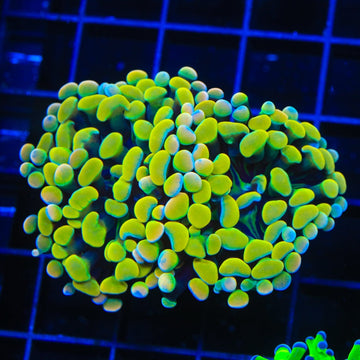
Banana Boat Torch Coral
Overview
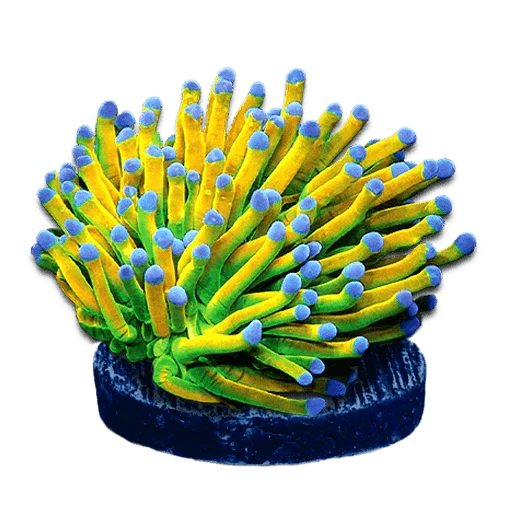
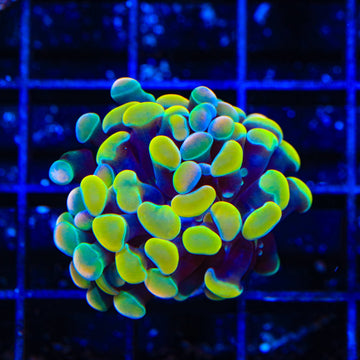
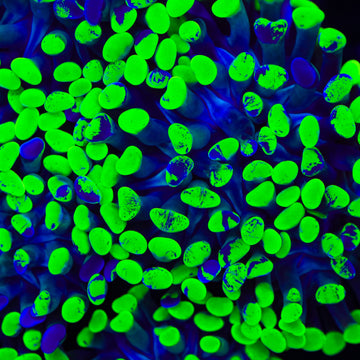
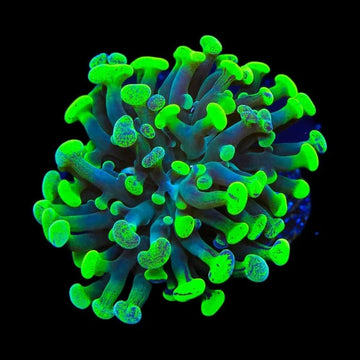
Banana Boat Torch Coral features long, swaying tentacles with bright yellow tips. Euphyllia glabrescens is a large-polyp stony coral that prefers moderate light and moderate, indirect flow. It relies on symbiotic algae for photosynthesis but accepts small meaty foods, which can support faster growth and stronger coloration. Place it where the tentacles can move without touching neighbors, as it has long stinging sweeper tentacles.
Quick Facts
Care
Moderate
Lighting
Moderate–High
Flow
Moderate, indirect
Placement
Mid–Low
Temperament
Aggressive (6–10 inches spacing)
Recommended Parameters
Temp
77–80°F
pH
8.1–8.4
Salinity
1.025–1.026
Calcium
400–450 ppm
AlkAlkalinity
8–9.5 dKH
Magnesium
1280–1350 ppm
Feeding
photosynthetic, mysis shrimp, enriched brine shrimp, finely chopped seafood shrimp or clam, zooplankton, microplankton, coral-specific powdered foods, marine snow
Care & Placement
FAQ
Frequently Asked Questions
About the Banana Boat Torch Coral
-
Why does my Banana Boat Torch retract after thriving for months?
Sudden retraction often traces to stability or irritation. Check for alkalinity swings, nutrient starvation (aim NO3 ~5–15 ppm, PO4 ~0.03–0.1), vermetid snails or stinging neighbors, and flow changes causing tissue to rub the skeleton. Shadowing from coral growth can also reduce PAR to inner tissue. Restore stable parameters, improve random flow, remove irritants, and re-angle for even light. -
How do I keep the banana-yellow coloration from fading or turning green/brown?
Maintain moderate PAR (150–250) with strong blue/violet (420–470 nm; some 380–420 nm) and avoid overly white spectrums. Keep nutrients non-zero, potassium 380–420 ppm, and iodine ~0.03–0.06 ppm. Excess light can bleach; ultra-low nutrients dull color. Periodic iron/manganese within reef-safe ranges can help fluorescence but avoid heavy dosing. Consistent spectrum and stability are key. -
How far do sweepers reach, and can it live near other Euphyllia?
Torch sweepers commonly extend 6–10 inches, often more at night or in laminar flow. Despite family ties, torches can burn hammers/frogspawn and vice versa. Provide a clear buffer, favor random/gyre-like flow to limit straight-line reach, and run carbon if multiple LPS are present. Watch for micro-burns on neighbors and move the torch first—its sting is usually stronger. -
How should I respond to early signs of brown jelly on this torch?
Isolate immediately, siphon the slime, and remove necrotic tissue. Do an iodine dip; many hobbyists also use a short ciprofloxacin bath in a separate container. Increase random flow, stabilize alk 8–9 dKH, and keep nutrients modest. Run fresh carbon and consider UV on the system to reduce bacterial load. If recession continues, cut away healthy heads.