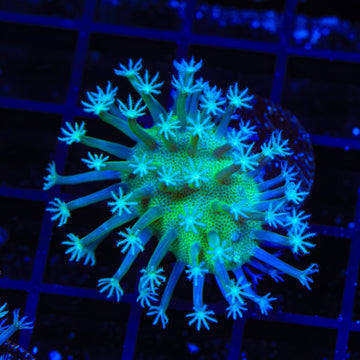
Green Leather Coral
Overview
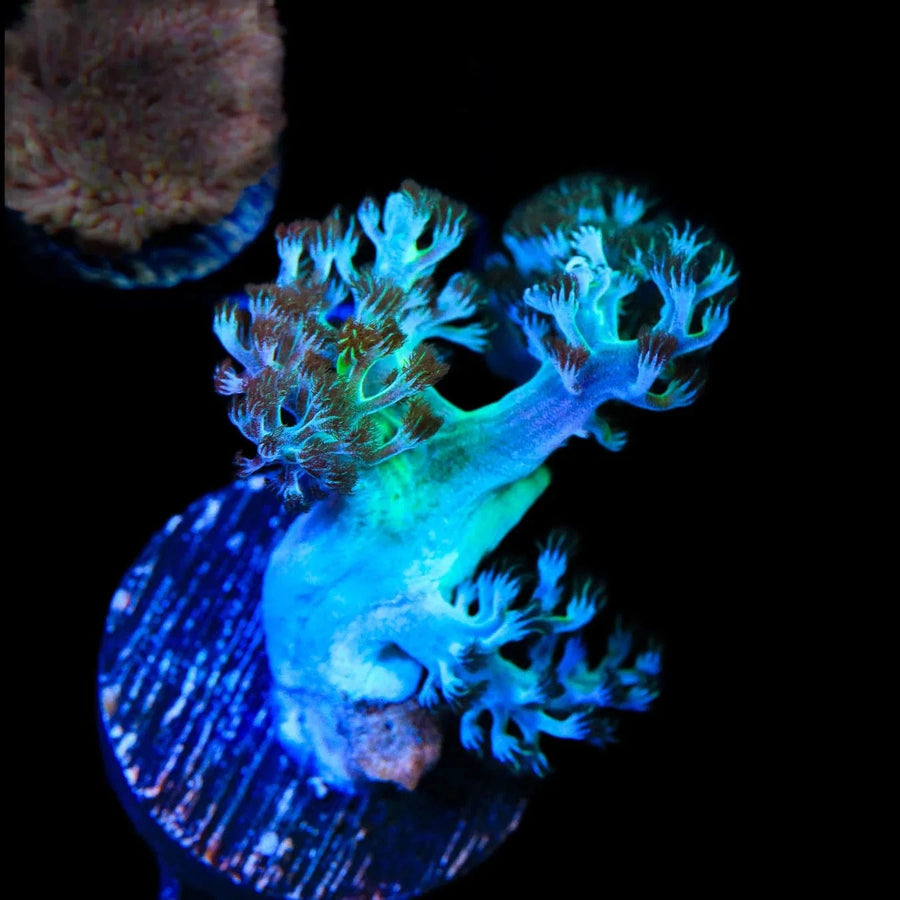
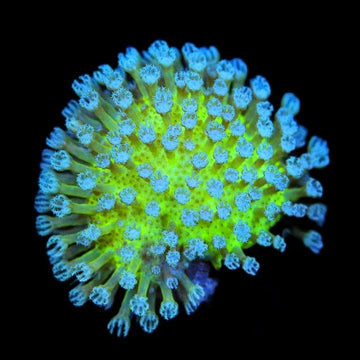
Green Leather Coral has a smooth, toadstool-like cap with short, retractable polyps. Sarcophyton sp. is a soft leather coral that prefers moderate light and moderate to strong, varied water flow. It is largely photosynthetic, relying on symbiotic algae, but occasional small particulate foods can support growth and maintain color. Place it where it can expand fully and give space from other corals, as it can release irritants and may shade neighbors.
Quick Facts
Care
Easy
Lighting
Moderate–High
Flow
Moderate–High
Placement
Mid–High
Temperament
Semi-aggressive (chemical; 4–6 inches spacing)
Recommended Parameters
Temp
76–80°F
pH
8.1–8.4
Salinity
1.025–1.026
Calcium
380–420 ppm
AlkAlkalinity
8–10 dKH
Magnesium
1250–1350 ppm
Feeding
photosynthetic (primary), phytoplankton, microplankton, marine snow, rotifers, fine powdered coral foods
Care & Placement
FAQ
Frequently Asked Questions
About the Green Leather Coral
-
Why does my Green Leather Coral periodically “shed,” and how can I help it recover faster?
Sarcophyton sp. forms a thin waxy film to slough off algae and detritus. This is normal but can last longer in low flow or low light. Provide moderate, variable flow across the cap to keep the surface clear, and ensure stable parameters. Briefly increasing blue/white intensity and running fresh carbon can help. An iodine dip is optional if the film persists beyond 10–14 days. -
My green coloration looks dull under daylight. Is this a health issue or lighting artifact?
Many “green” leathers fluoresce best under strong blue/actinic spectrum; daylight can mask fluorescence, making them look brownish from zooxanthellae density. If polyps are extended and growth is steady, it’s likely fine. To boost visible fluorescence, use a balanced spectrum with adequate blue, maintain moderate nutrients (not ultra-low), and avoid sudden PAR swings that can cause paling or over-browning. -
Can Green Leather Coral chemically irritate neighbors, and how do I manage this?
Yes—Sarcophyton releases terpenoid compounds that can suppress or irritate stony corals and other softies. Give generous spacing, maintain steady, directional flow away from sensitive species, and run high-quality activated carbon changed regularly. Skimming and periodic water changes help reduce buildup. If nearby SPS or LPS show sudden retraction, move them up-current or increase carbon use. -
My leather’s stalk is drooping and the base looks pinched. What should I check?
Inspect for bacterial rot, sponges or vermetid tubes irritating the base, and detritus buildup in low-flow zones. Increase cross-flow, carefully baste the area, and trim or relocate if shade from the cap traps debris. If tissue is necrotic, perform a conservative cut above the affected area, iodine dip the healthy portion, and remount on clean rubble. Run fresh carbon afterward.