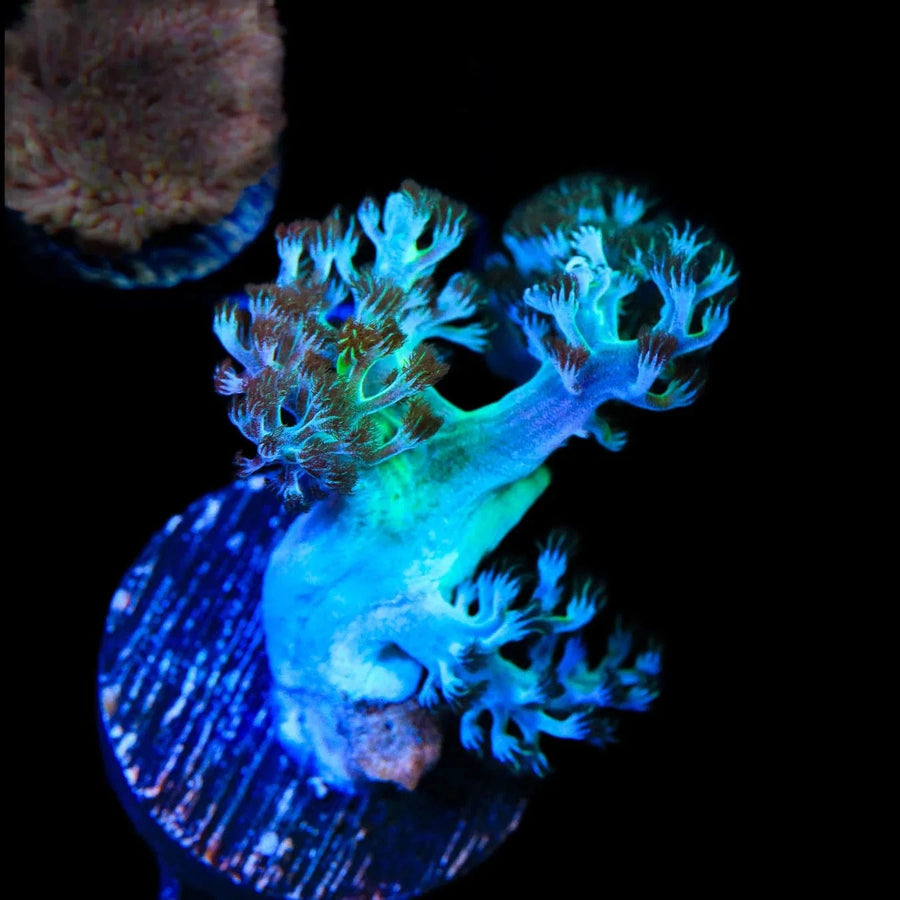
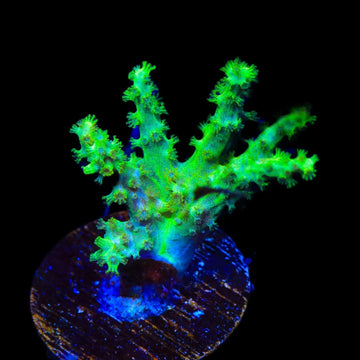
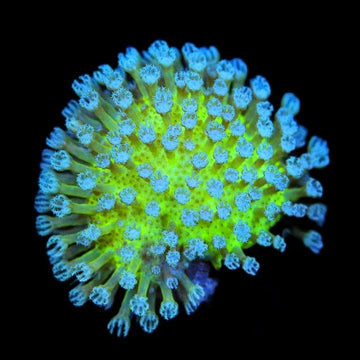
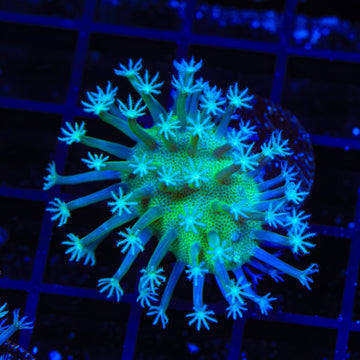
Green Cabbage Leather Coral
Overview
Green Cabbage Leather Coral forms thick, ruffled lobes that resemble folded leaves. Sinularia dura is a soft leather coral with a lobed structure; it prefers moderate lighting and moderate to strong, varied water flow. It is primarily photosynthetic with symbiotic algae, though occasional small particulate foods can support growth and color. Place it with space around it and avoid direct contact with other corals, as it can grow large and may release chemicals that irritate neighbors.
Quick Facts
Care
Easy
Lighting
Moderate–High
Flow
Moderate to High
Placement
Mid–High
Temperament
Semi-aggressive (6 inches spacing)
Recommended Parameters
Temp
75–80°F
pH
8.1–8.4
Salinity
1.025–1.026
Calcium
400–440 ppm
AlkAlkalinity
8–10 dKH
Magnesium
1250–1350 ppm
Feeding
photosynthetic (primary), phytoplankton, microplankton, marine snow, fine powdered coral foods
Care & Placement
FAQ
Frequently Asked Questions
About the Green Cabbage Leather Coral
-
Why does my Green Cabbage Leather Coral develop a glossy film and stop extending polyps for days?
Sinularia dura periodically sheds a waxy cuticle to clear algae and biofilm. This can last several days. Provide strong, turbulent flow to help slough the layer, avoid direct blasting. If shedding is prolonged (>10–14 days), increase activated carbon, perform a moderate water change, and verify stable alkalinity and temperature. Avoid handling during the shed to prevent tissue damage. -
My specimen is losing its green tint and looking tan—what’s the likely cause?
Color shifts often reflect lighting spectrum and nutrient balance. In very low nutrients or overly blue-heavy light, green can fade. Aim for moderate PAR (150–250), a balanced spectrum with adequate white channels, and non-zero nitrate/phosphate (e.g., 5–15 ppm NO3, 0.03–0.08 ppm PO4). Ensure adequate flow to prevent film buildup that dims color. Avoid rapid light changes; acclimate over weeks. -
How can I limit chemical aggression from Sinularia dura toward nearby corals?
This species produces allelopathic compounds that can suppress neighbors, especially LPS and some SPS. Run high-quality activated carbon and replace it regularly, maintain steady skimming, and schedule consistent water changes. Provide generous spacing and avoid placing sensitive corals directly downstream. If you notice unexplained retraction in neighbors, rotate flow patterns or relocate the Sinularia to reduce chemical exposure. -
What placement helps maintain the cabbage shape rather than tall, leggy growth?
Mount it on a stable rock with moderate-to-strong, chaotic flow and moderate light. Too little light or flow encourages stretched, unstable growth; too much point-source flow can cause tissue recession at edges. Give horizontal room for plating and plan for shading; elevate it slightly so detritus doesn’t settle in folds. Trim overhanging lobes if they start shadowing key areas.