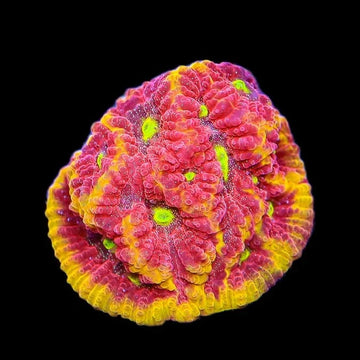
Christmas Favia Coral
Overview
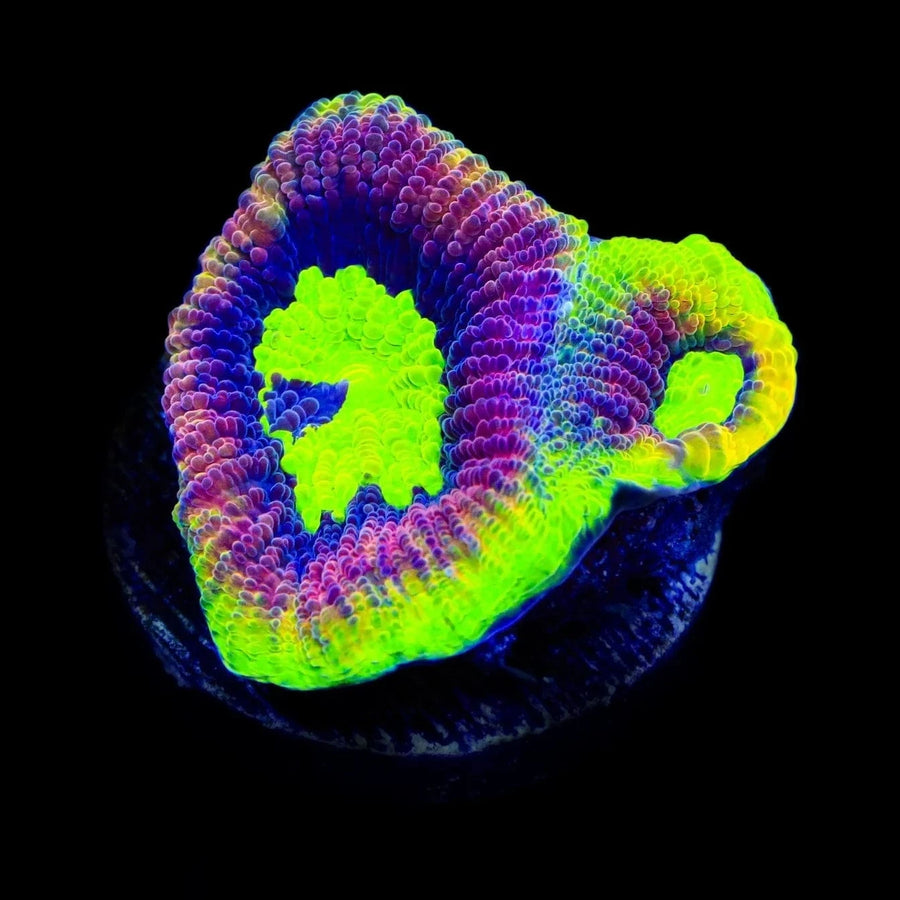
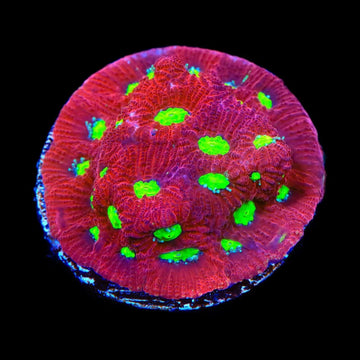
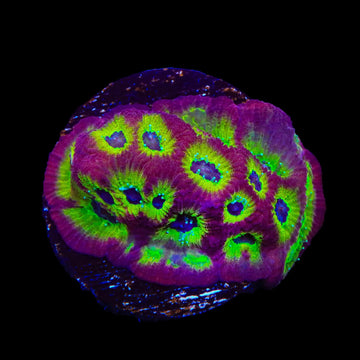
Christmas Favia Coral shows red and green polygonal corallites with raised ridges. Favia favus is a stony, dome-forming brain coral; it prefers moderate lighting and low to moderate, steady water flow. It is photosynthetic via symbiotic algae but accepts small meaty foods at night, which can improve growth and coloration. Place with space around it, as its sweeper tentacles can sting nearby corals after lights out.
Quick Facts
Care
Moderate
Lighting
Low–Moderate
Flow
Low–Moderate
Placement
Low–Mid
Temperament
Aggressive (6–8 inches spacing)
Recommended Parameters
Temp
76–80°F
pH
8.1–8.4
Salinity
1.025–1.026
Calcium
400–440 ppm
AlkAlkalinity
8–10 dKH
Magnesium
1250–1350 ppm
Feeding
photosynthetic, mysis shrimp, enriched brine shrimp, finely chopped seafood (clam, shrimp, krill), zooplankton, microplankton, cyclops, marine snow, coral-specific powdered foods (e.g., Reef-Roids)
Care & Placement
FAQ
Frequently Asked Questions
About the Christmas Favia Coral
-
Why does my Christmas Favia change from deep red/green to washed-out colors under new lights?
Favia favus often bleaches or shifts pigment under high PAR or white-heavy spectra. Aim for 80–150 PAR with a blue-leaning spectrum to preserve red and fluorescent green. Acclimate slowly (10–15% intensity increase per week). Maintain stable nutrients (nitrate 5–15 ppm, phosphate 0.03–0.1 ppm); ultra-low nutrients fade colors. Consistent alkalinity (8–9 dKH) helps prevent stress-related paling. -
My colony extends long sweepers at night and stings neighbors—can I curb this without moving it?
Give 3–6 inches of space and moderate, randomized flow to keep tentacles from settling on nearby corals. Target feed small meaty foods shortly after lights out; a well-fed colony often shows shorter, more predictable extension. Avoid sudden pH/alk swings that increase aggression. If needed, place it on an isolated rock or sand “island” to create a safe perimeter. -
The edges are receding while the center looks fine—what’s the best rescue plan?
Edge recession often follows sediment buildup, algae encroachment, or laminar flow hitting one side. Increase cross-flow, gently turkey-baste detritus, and trim nearby nuisance algae. Perform an iodine or broad-spectrum coral dip, then spot feed to stimulate recovery. If tissue loss accelerates or brown jelly appears, siphon affected areas and consider cutting healthy sections between corallites with a diamond saw. -
Is my coral actually Favia favus or a similar brain coral?
Favia favus has distinct corallites with their own walls; Favites species often share walls. Under magnification, look for separate rims around each polyp arranged in a honeycomb pattern. Mouth spacing is slightly wider in F. favus, and the colony tends to form low mounds rather than tight, blocky ridges. Correct ID informs spacing, as some look-alikes have even longer sweepers.