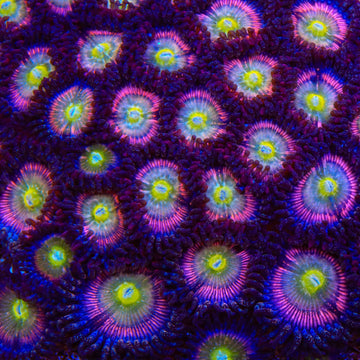
Mind Trick Zoanthids Coral
Overview
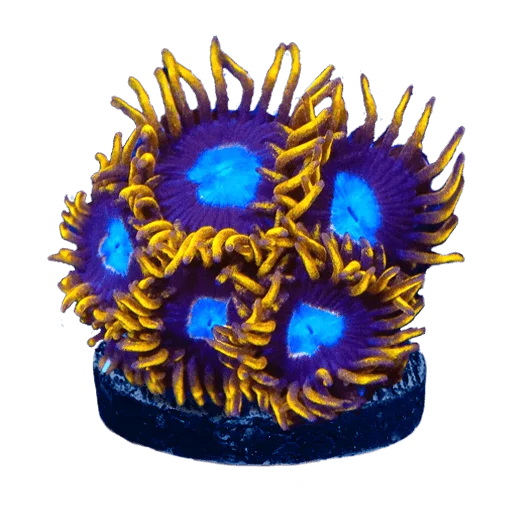
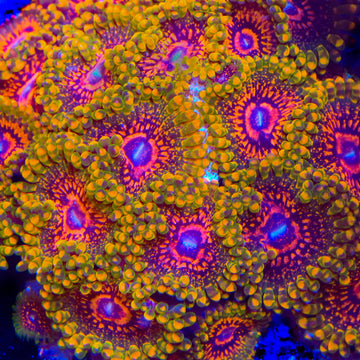
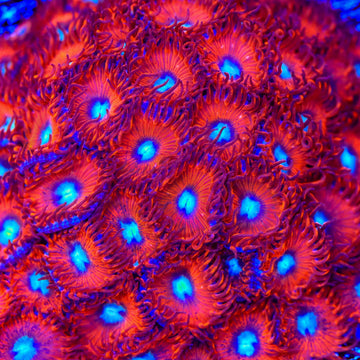
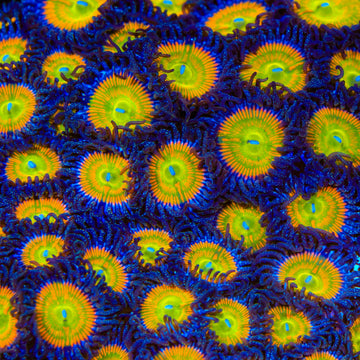
Mind Trick Zoanthids Coral displays small button-like polyps with contrasting centers and fringed skirts. Classified as Zoanthus sp. Coral, it is a soft colonial polyp that does well under moderate light and moderate, varied water flow. It is primarily photosynthetic through symbiotic algae but benefits from occasional small meaty or planktonic foods to support faster growth and color. Place on an isolated rock to control spreading, and handle with care (gloves and eye protection) due to potential toxins.
Quick Facts
Care
Easy
Lighting
Low–Moderate
Flow
Moderate
Placement
Low–Mid
Temperament
Semi-aggressive (3–6 inches spacing)
Recommended Parameters
Temp
76–82°F
pH
8.1–8.4
Salinity
1.025–1.026
Calcium
400–440 ppm
AlkAlkalinity
8–10 dKH
Magnesium
1250–1350 ppm
Feeding
photosynthetic (primary), phytoplankton, microplankton, rotifers, cyclops, brine shrimp nauplii, powdered coral foods (e.g., Reef Roids), marine snow
Care & Placement
FAQ
Frequently Asked Questions
About the Mind Trick Zoanthids Coral
-
Why did my Mind Trick Zoanthids lose their speckled pattern or shift color?
This morph responds strongly to spectrum, PAR, and nutrients. Aim for blue-heavy light with moderate PAR (80–150). Keep nitrate 5–15 ppm and phosphate 0.03–0.1 ppm; ultra-low nutrients or sudden drops often mute speckles and shrink skirts. Avoid blasting white channels. Color returns gradually after stabilizing parameters; minor iron and iodine via regular water changes can help, but avoid chasing trace elements without testing. -
My polyps stay closed while other zoas look fine—what’s unique to check with this morph?
Inspect after lights out for zoa-eating nudibranchs, sundial snails, and zoa spiders—Mind Trick’s small polyps are a favorite. Increase random flow to prevent detritus lodging at the mat edge. Perform staged dips (commercial coral dip, followed by Lugol’s) and remove egg clusters manually. If you see pitting/white lesions (zoa pox), try nitrofurazone baths and stabilize alkalinity; avoid large swings that trigger bacterial stress. -
Best way to frag Mind Trick Zoanthids without losing the pattern or causing melt?
Cut the mat between polyps with a sterile scalpel, keeping 2–3 connected polyps per frag to maintain continuity of the speckling. Wear gloves and eye protection. Place frags on small, rough plugs; dip in iodine, then cure in moderate flow and low–moderate light for 5–7 days. Avoid heavy feeding the first week. Gradually ramp light to prevent bleaching and tissue recession. -
How do I keep them from overrunning neighboring corals or getting smothered themselves?
Mount on an isolated “island” rock and trim the mat monthly with a razor. Create epoxy or bare-rock buffer zones they hesitate to cross. Run fresh activated carbon to reduce chemical aggression between colonies. Keep fast-growing palythoas and encrusting SPS at a distance. Maintain enough flow to lift skirts but not tear tissue; this limits detritus that fuels unchecked spread.