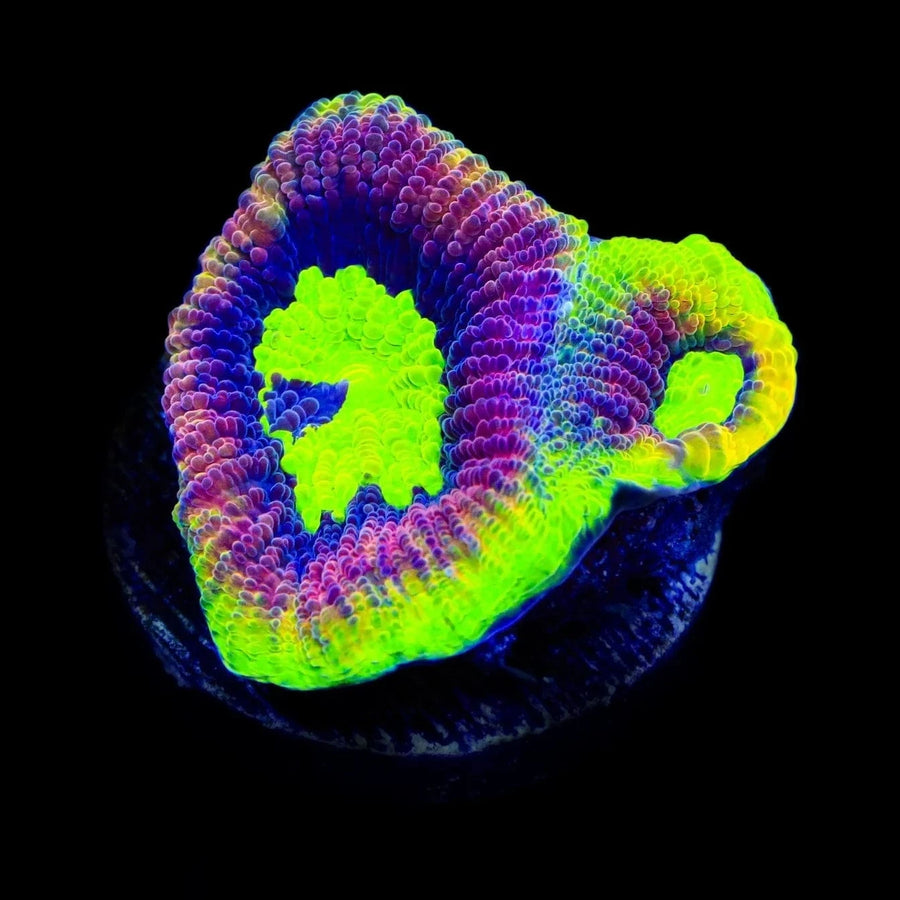
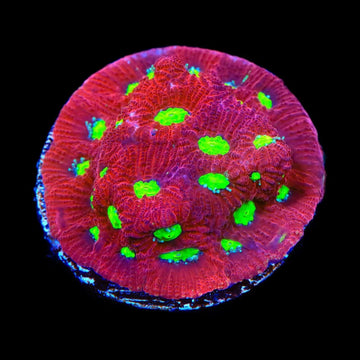
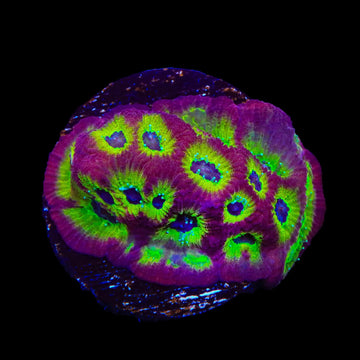
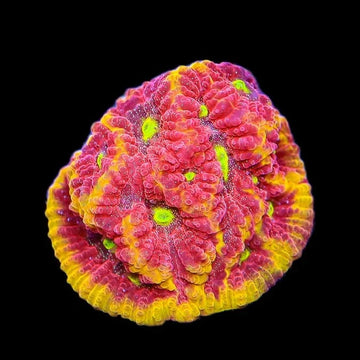
Favia of the Gods Favia Coral
Overview
Favia of the Gods Favia Coral shows rounded, maze-like polyps with contrasting mouths on a domed colony. Favia favus is a stony, massive brain coral that does well under moderate lighting and moderate water flow. It relies on symbiotic algae for energy but accepts small meaty foods at night, which can support faster growth and deeper color. Place with space from neighbors, as sweeper tentacles can sting nearby corals.
Quick Facts
Care
Moderate
Lighting
Low–Moderate
Flow
Moderate indirect
Placement
Low–Mid
Temperament
Aggressive (6–8 inches spacing)
Recommended Parameters
Temp
76–80°F
pH
8.1–8.4
Salinity
1.025–1.026
Calcium
400–450 ppm
AlkAlkalinity
8–10 dKH
Magnesium
1280–1350 ppm
Feeding
photosynthetic, mysis shrimp, enriched brine shrimp, finely chopped marine meaty foods, copepods, zooplankton, microplankton, coral-specific powdered foods, reef roids, marine snow
Care & Placement
FAQ
Frequently Asked Questions
About the Favia of the Gods Favia Coral
-
Why does my Favia of the Gods extend long sweepers at night, and how far should I space it from neighbors?
This species sends out aggressive sweeper tentacles after lights out, often 2–6 inches, to secure feeding territory. Give at least 6 inches of clearance from other LPS and even more from delicate SPS. A brief evening target feed can reduce “searching” behavior, and slightly higher, variable flow helps keep sweepers shorter without stressing tissue. -
My coral’s colors dulled after a few weeks. How can I keep the neon rim and contrasting centers vivid?
Bright coloration depends on stable nutrients and spectrum. Aim for 5–15 ppm nitrate and 0.03–0.08 ppm phosphate; ultra-low nutrients wash out pigment, while excess turns it brown. Provide 100–150 PAR with strong blue/violet. Avoid rapid light increases; ramp over 2–3 weeks. Regular small amino feedings and diverse meaty foods at night support fluorescence. -
I’m seeing slow tissue loss from the base upward. What’s the likely cause and fix?
Base recession often tracks shadowed, low-flow areas where detritus and vermetid mucus irritate tissue. Increase cross-flow, gently turkey-baste the base, and remove nearby vermetids. Trim or re-angle rock to improve light penetration. An iodine dip can halt mild bacterial spread; if brown jelly appears, frag above the affected zone and improve oxygenation. -
Can this coral handle turbid or “dirtier” water like in natural lagoons?
Yes, it adapts well to slightly turbid conditions if parameters are stable. Intermittent fine particulates can even boost feeding, but keep organics controlled. Use random flow to keep sediment from settling on the polyp mouths. If sand accumulates, gently blow it off; prolonged burial of the rim leads to localized die-off and algae on exposed skeleton.