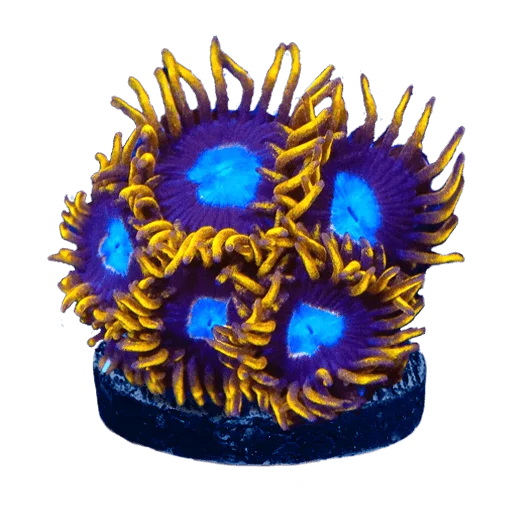
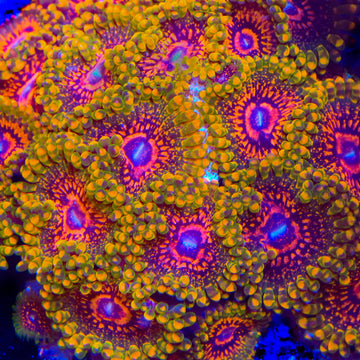
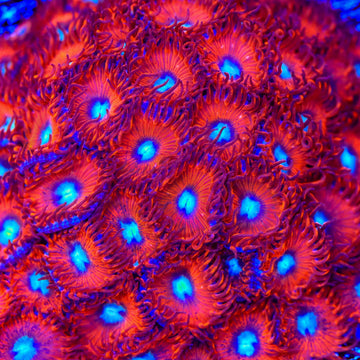
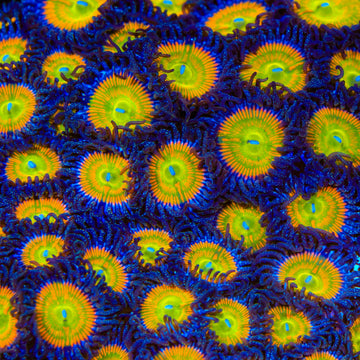
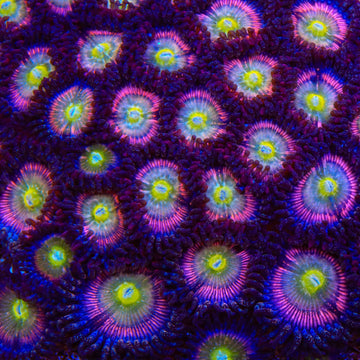
Bow Tie Blaster Zoanthids Coral
Overview
Bow Tie Blasters Zoanthids Coral shows small button-like polyps with bright contrasting centers and skirts. Zoanthus sp., a soft, mat-forming zoanthid, thrives under moderate light and low to moderate, indirect flow. It relies on symbiotic algae for energy but accepts occasional small meaty foods or powdered coral foods, which can support faster growth and deeper color. Place on isolated rock to control spread, and keep distance from aggressive stinging corals.
Quick Facts
Care
Easy
Lighting
Low–Moderate
Flow
Moderate
Placement
Low–Mid
Temperament
Peaceful to semi-aggressive (2-3 inches spacing)
Recommended Parameters
Temp
76–80°F
pH
8.1–8.4
Salinity
1.025–1.026
Calcium
400–450 ppm
AlkAlkalinity
8–10 dKH
Magnesium
1250–1350 ppm
Feeding
photosynthetic (primary), microplankton, phytoplankton, zooplankton, rotifers, copepod nauplii, powdered coral foods, fine marine snow
Care & Placement
FAQ
Frequently Asked Questions
About the Bow Tie Blaster Zoanthids Coral
-
Why are my Bow Tie Blasters growing tall stalks with tiny heads?
That usually signals they’re reaching for light. Check PAR at the colony; aim for roughly 80–160 PAR with moderate, indirect flow. If PAR is low, move them up gradually over 1–2 weeks. If PAR is already high, they may be avoiding harsh flow or shifting spectrum—reduce direct blast and add a touch more white for balance. Ensure stable alkalinity and avoid ultra‑low nutrients that can stunt polyp size. -
How do I keep the “bow-tie” pattern and colors from washing out?
Maintain stable nutrients (NO3 5–15 ppm, PO4 0.03–0.08 ppm), moderate PAR, and a blue‑leaning spectrum with some neutral whites to keep reds/oranges from dulling. Sudden increases in light can bleach; raise intensity slowly. Good iodine and iron levels help, but avoid dosing blind—test first. Carbon helps clarity for color pop, but don’t overdo it or you may lighten tissue. -
Some polyps stay closed while others look perfect—what should I check?
Inspect at night with a red light for zoa‑eating nudibranchs, sundial snails, or spiders. Look for shaded bases or detritus collecting at the skirt; adjust flow to keep the mat clean. Run fresh carbon if soft corals are nearby to reduce chemical aggression. If you see pale lesions or “pox,” isolate and do a targeted Furan‑2 bath per label, then improve flow and cleanliness. -
How can I grow a lush colony without letting it overrun my rockwork?
Start on an isolated “island” rock or use a rubble perimeter as a physical boundary. Prune monthly by peeling the mat and removing outer rings. Keep nutrients moderate rather than high to avoid runaway spread. Give neighboring LPS some space—sweepers can damage polyps and trigger a defensive growth spurt. Occasional targeted feeding boosts growth, so pair it with regular trimming.