JF Azz Krak Zoanthids Coral
Overview
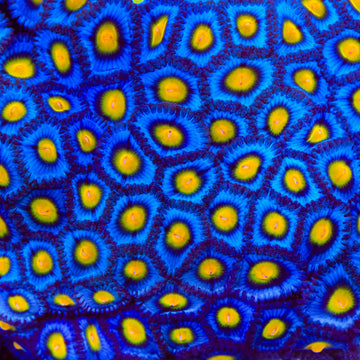
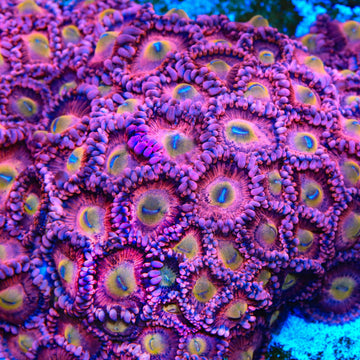
JF Azz Krak Zoanthids Coral shows a polyp mat with small button-like polyps displaying a distinct center-and-ring pattern. Zoanthus sp., a soft colonial zoanthid, prefers moderate lighting and moderate, steady water flow. Primarily photosynthetic via symbiotic algae, it also accepts occasional small particulate foods, which can support faster growth and stable coloration. Place on an isolated rock to control spreading and leave space from stinging or aggressive neighbors.
Quick Facts
Care
Easy
Lighting
Low–Moderate
Flow
Moderate
Placement
Low–Mid
Temperament
Peaceful to semi-aggressive (can overgrow; 2–3 inches spacing)
Recommended Parameters
Temp
76–80°F
pH
8.1–8.4
Salinity
1.025–1.026
Calcium
380–450 ppm
AlkAlkalinity
8–10 dKH
Magnesium
1250–1350 ppm
Feeding
photosynthetic (primary), microplankton, phytoplankton, zooplankton, powdered coral foods (e.g., Reef-Roids), marine snow, occasional finely minced mysis shrimp, brine shrimp nauplii
Care & Placement
FAQ
Frequently Asked Questions
About the JF Azz Krak Zoanthids Coral
-
Why do my JF Azz Krak colors shift or dull under new lights?
This morph shows its richest blues and contrasting skirts under higher blue/UV spectrum with moderate PAR (120–200). Too white or intense light can wash centers; too dim causes stretching and muted skirts. Keep nutrients non-zero (NO3 5–15 ppm, PO4 0.03–0.1) to avoid pale polyps. Increase blue channels gradually over 2–3 weeks and stabilize alkalinity 8–9 dKH for consistent fluorescence. -
Growth has stalled even though parameters look fine—what nudges this morph?
Azz Kraks often plateau if flow is low or nutrients are ultra-lean. Add gentle, alternating flow so skirts sway and detritus can’t settle. Keep NO3 detectable and feed the tank small particle foods 1–2x weekly. A slight rise in iodine/iron via regular water changes or measured dosing can restart budding. Avoid frequent fragging; let a 3–5 polyp cluster establish first. -
What pests or ailments uniquely trouble this morph, and how do I catch them early?
Look for zoa-eating nudibranchs, sundial snails, and zoa spiders—often active at night. Use a red flashlight to inspect undersides and stems. Symptoms include closed polyps, nibbled skirts, or “melting.” For zoa pox (tiny beige bumps), isolate and treat with Furan-2 baths. Routine dips for new frags, weekly turkey-basting to clear debris, and a wrasse that hunts pests can prevent outbreaks. -
Placement tips to avoid aggression and chemical stress with this morph?
Keep Azz Kraks away from long-sweeper LPS (e.g., euphyllia) and high-sting favias; their tentacles can burn the colony overnight. Give a buffer from clove polyps and palys to limit chemical competition. Run fresh activated carbon and maintain steady export to control allelopathy. Mount on an isolated rock “island” to manage spread and ensure consistent, cross-flow without dead spots.