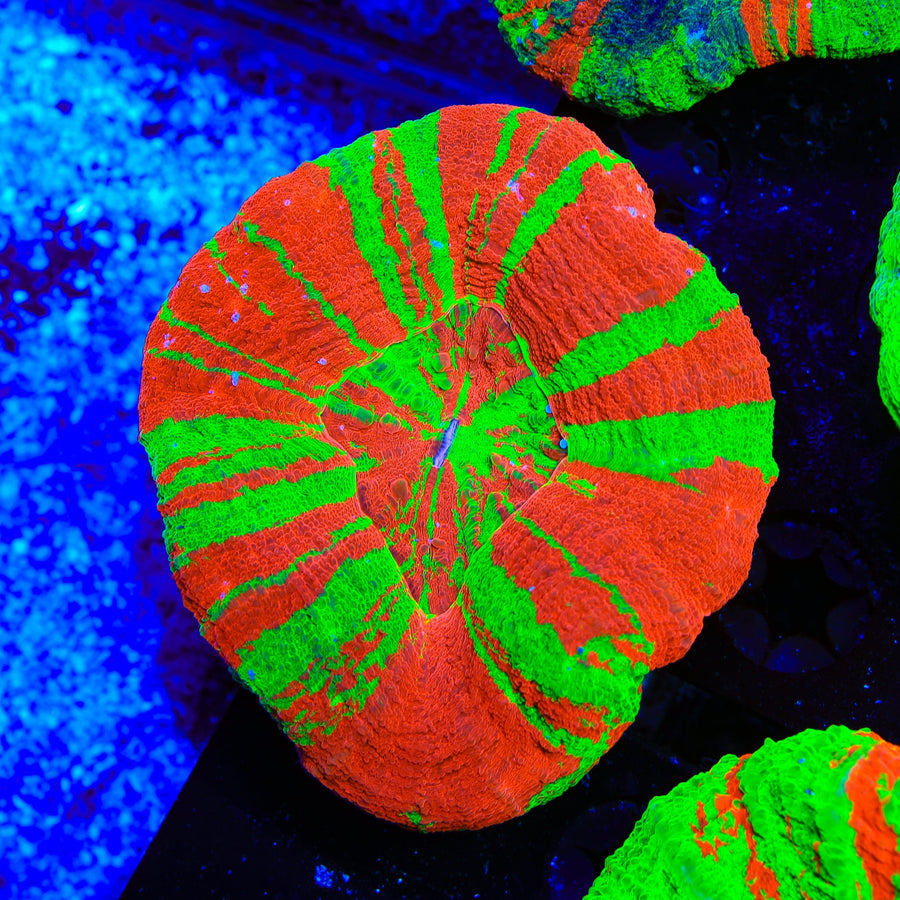
Scoly Corals

6 scoly corals for sale, including master, ultra and bleeding apple scolymia
Shop scoly corals for sale, including master scolymia, ultra, and bleeding apple morphs. A scoly is a single massive polyp rather than a colony, forming a flat disc of pleated tissue that can carry striking concentric rings and radial patterns. Most are Hom... Read more Show less

Shop scoly corals for sale, including master scolymia, ultra, and bleeding apple morphs. A scoly is a single massive polyp rather than a colony, forming a flat disc of pleated tissue that can carry striking concentric rings and radial patterns. Most are Homophyllia from Australian waters or true Scolymia from the Atlantic. These LPS corals want low light, gentle flow, and a flat spot on the sand bed, which makes them an excellent centerpiece for the bottom third of a reef alongside acan corals. Every scoly ships with a live arrival guarantee.

Skip to results list

Filters

6 items
Column grid

Active filters:

Column grid
Filter

Active filters:

  • Ultra Bleeding Apple Scolymia Coral

    Ultra Bleeding Apple Scolymia Coral

    Sale price  $699.99 Regular price $769.99

    WYSIWYG

    Care Level Moderate
    Lighting Low–Moderate
    Flow Low–Moderate
    Placement Low
  • Master Scolymia Coral

    Master Scolymia Coral

    Sale price  $599.99 Regular price $659.99

    WYSIWYG

    Care Level Moderate
    Lighting Low–Moderate
    Flow Low–Moderate
    Placement Low
  • Master Scolymia Coral

    Master Scolymia Coral

    Sale price  $1,199.99 Regular price $1,319.99

    WYSIWYG

    Care Level Moderate
    Lighting Low–Moderate
    Flow Low–Moderate
    Placement Low
  • Ultra Scolymia Coral

    Ultra Scolymia Coral

    Sale price  $399.99 Regular price $439.99

    WYSIWYG

    Care Level Moderate
    Lighting Low–Moderate
    Flow Low–Moderate
    Placement Low
  • Bleeding Apple Scolymia Coral

    Bleeding Apple Scolymia Coral

    Sale price  $799.99 Regular price $879.99

    WYSIWYG

    Care Level Moderate
    Lighting Low–Moderate
    Flow Low–Moderate
    Placement Low
  • Reverse Bleeding Apple Scolymia Coral

    Reverse Bleeding Apple Scolymia Coral

    Sale price  $649.99 Regular price $714.99

    WYSIWYG

    Care Level Moderate
    Lighting Low–Moderate
    Flow Low–Moderate
    Placement Low

Answers

Scoly Coral Care FAQ

Are scoly corals hard to keep?

Scolys are undemanding once placed correctly, and the placement is most of the difficulty. They want low light, gentle flow, and a flat, stable surface where nothing can rub against them. Their tissue is thin and easily damaged, so a scoly that slips off a rock or gets sandblasted by a powerhead can develop an infection quickly. Given a calm sand-bed spot and occasional feeding, they are long-lived and very stable.

Where should I place a scoly coral?

Flat on the sand bed or on a low, level ledge, out of direct light and direct current. Scolys are heavy, disc-shaped polyps that naturally rest horizontally, and tilting one so water pools against the tissue invites problems. Keep it clear of species with sweeper tentacles, and make sure snails and hermit crabs cannot repeatedly climb across the polyp, which causes it to stay retracted.

Do scoly corals sting other corals?

Scolys are relatively peaceful and do not deploy the long sweepers that chalices and torches use. They can extend short feeding tentacles at night and will defend the space immediately around the polyp, so a few inches of clearance is sensible. The greater risk runs the other way: a scoly on the sand bed is easy prey for a more aggressive neighbor above it, so place it where nothing can reach down onto the disc.

How often should I feed a scoly coral?

Once or twice a week is plenty. Scolys have a large central mouth and will take mysis, chopped seafood, or prepared LPS food placed directly on the disc after the feeding tentacles emerge in the evening. Feeding drives the slow tissue expansion that makes a polyp look full and healthy. Avoid oversized pieces, which the coral may reject hours later and foul the water.

What is the difference between Scolymia and Homophyllia?

True Scolymia are Atlantic and Caribbean corals, while most of what the hobby calls an Australian scoly is now classified as Homophyllia australis, with the flatter, more oval bowerbanki also common. Care is essentially identical across all of them: low light, gentle flow, a flat resting spot, and regular feeding. The naming matters mainly for pricing, since Australian collected pieces with heavy rainbow patterning command the highest premiums.

Live coral buying guide

How to Choose Live Corals for Your Reef Aquarium

What are scoly corals?

A scoly is a single large polyp stony coral that grows as one massive, disc-shaped polyp rather than a branching or encrusting colony. The tissue is pleated into radial folds around a central mouth, and in the best specimens those folds carry concentric bands of contrasting color. The hobby name covers true Scolymia from the Atlantic and Homophyllia from Australian waters. Because each piece is a single polyp, scolys are sold as individual specimens rather than frags, and no two are alike.

Scoly coral care: light, flow, and placement

Low light and low flow, on a flat surface. Scolys naturally sit horizontally on rubble and sediment, so the sand bed or a level ledge on the lower rockwork suits them. Strong light bleaches the tissue and strong current abrades it, and both problems show up as receding flesh at the edge of the skeleton. Review your reef lighting before placing one, and keep alkalinity and salinity steady with reliable water testing equipment. Feed small meaty foods once or twice a week in the evening.

Master, ultra, and bleeding apple morphs

Scolys are graded on color pattern and contrast rather than species:

  • Master scoly — the trade term for a specimen with multiple concentric color bands and high contrast between the rings and the mouth.
  • Bleeding apple — a deep red body with a contrasting centre, one of the most recognizable and consistently sought patterns.
  • Rainbow and warpaint morphs — pieces carrying three or more colors in irregular radial streaks, usually the most expensive in any shipment.
  • Ultra and single-color specimens — saturated one or two tone polyps, a strong value entry into the group.

Caring for a thin-tissue centerpiece

The practical risk with a scoly is mechanical damage rather than water chemistry. Make sure the polyp rests level and cannot tip or roll, keep it away from powerhead outflow, and discourage hermit crabs and large snails from crossing it. If the tissue begins receding from the skeletal edge, move the coral to calmer, dimmer water immediately and consider a coral dip; recession caught early usually reverses, while recession left alone rarely does.

Where scolys fit in a reef

Scolys are bottom-of-the-tank centerpieces, and they pair naturally with other low-light, calm-water LPS that occupy the same zone. Compare acan corals and chalice corals for the same shelf, browse the full range of live corals for sale, or look through one-off specimens in WYSIWYG corals.