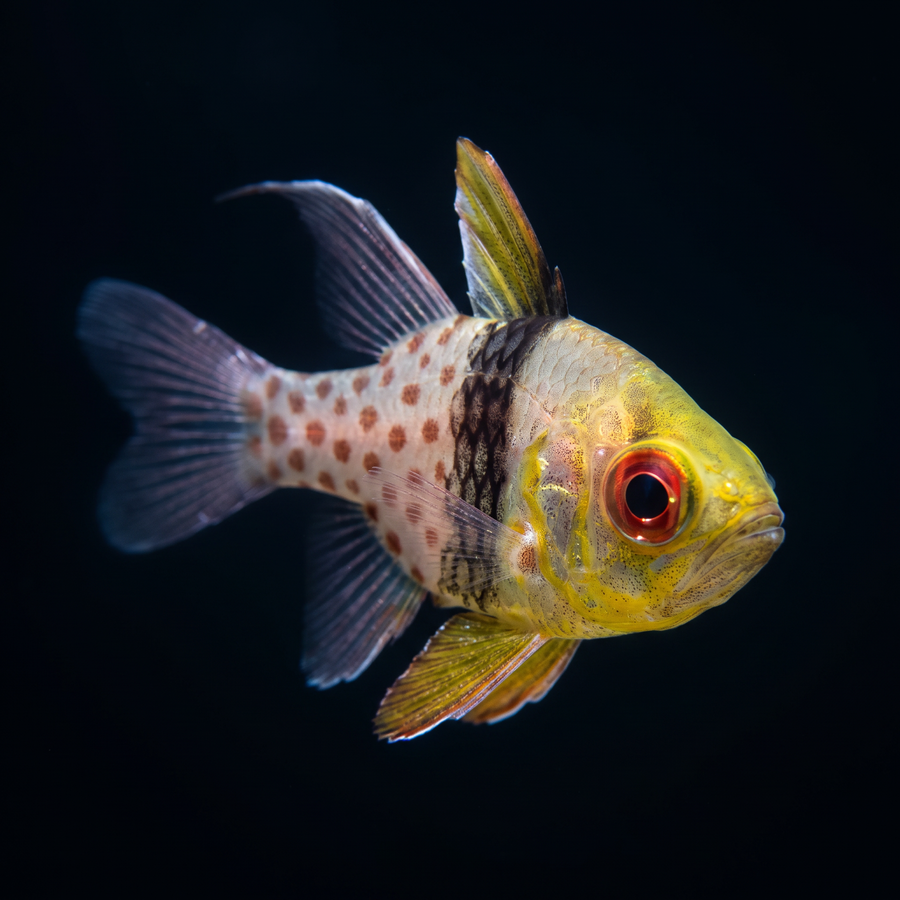
Cardinalfish

3 available — saltwater cardinalfish with elegant fins, striking patterns, and calm, measured swimming behavior.
Cardinalfish are popular for their elegant profiles, prominent eyes, and calm hovering behavior. Species differ in social structure, adult size, preferred habitat, and willingness to coexist in groups.Explore our current selection or discover more saltwater... Read more Show less

Cardinalfish are popular for their elegant profiles, prominent eyes, and calm hovering behavior. Species differ in social structure, adult size, preferred habitat, and willingness to coexist in groups.

Explore our current selection or discover more saltwater fish for established aquariums.

Skip to results list
Filters
3 items
Column grid
Column grid
Filter

Active filters:

  • Pajama Cardinal

    Pajama Cardinal

    Starting at$38.69

    Sphaeramia nematoptera

    Care Level Easy
    Temper­ament Peaceful
    Reef Safe Yes
    Diet Carnivore
    Tank Size 20 gallons
    Max Size 3.5 inches
  • Captive-Bred Banggai Cardinalfish

    Captive-Bred Banggai Cardinalfish

    Starting at$35.99

    Pterapogon kauderni

    Care Level Easy
    Temper­ament Peaceful
    Reef Safe Yes
    Diet Carnivore
    Tank Size 30 gallons
    Max Size 3.4 inches
  • Flower Cardinalfish

    Flower Cardinalfish

    Starting at$44.99

    Ostorhinchus cyanosoma

    Care Level Easy
    Temper­ament Peaceful
    Reef Safe Yes
    Diet Carnivore
    Tank Size 30 gallons
    Max Size 2.8 inches

Top picks

Popular Cardinalfish

Compare the strongest options in this collection at a glance.

Answers

Can saltwater cardinalfish be kept in groups?
Some species naturally form groups, while others may become territorial as they mature or pair. Research the selected species and provide enough shelter and visual space.
What do cardinalfish eat?
Many cardinalfish accept appropriately sized marine meaty foods, including prepared frozen or dry options. Shy individuals may need targeted feeding away from faster fish.
Are cardinalfish active during the day?
Activity patterns vary, but many cardinalfish favor shaded areas and may become more active under subdued lighting or during evening feeding periods.
Are saltwater cardinalfish reef safe?
Many are commonly maintained with corals, but small mobile invertebrates may be at risk depending on the cardinalfish species and the relative size of potential prey.
How should I acclimate cardinalfish?
Match temperature and adjust carefully for salinity differences, using dim lighting to reduce stress. Add the fish near shelter and monitor breathing and tankmate reactions.

Dive deeper

Saltwater Cardinalfish Selection and Care Guide

Choosing Cardinalfish

Look for clear eyes, intact fins, a rounded body profile, and calm, level swimming. Ask whether the fish has been eating and whether it was housed alone, as a pair, or in a group. Social behavior differs among species, so confirm identification before combining cardinalfish with other saltwater fish.

Habitat and Acclimation

Create shaded ledges, caves, and open hovering areas while maintaining stable salinity, temperature, and oxygenation. Some species associate with branching corals or sheltered reef zones. Acclimate according to shipping water, dim the lights, and release the fish near cover. Useful nets and testing tools are available under aquarium supplies.

Feeding Routine

Feed appropriately sized marine foods in portions the fish can capture. Cardinalfish may feed more confidently in subdued light, and reserved individuals can be outcompeted by fast tankmates. Explore fish food options suited to carnivorous marine fish, vary the menu, and confirm that each individual receives food.

Compatibility and Social Structure

Match cardinalfish with nonpredatory companions that do not constantly chase them or monopolize shelter. Grouping success depends on species, available space, and the development of pairs or territories. Reef suitability is often favorable, but very small shrimp or other mobile invertebrates can be viewed as prey. Observe group dynamics as fish mature.