Match your clean up crew to the algae you have
Algae control starts with identification. Film algae on glass, green hair algae on rock, diatoms on fresh sand, bubble algae in crevices, and cyanobacteria sheets all respond to different grazers, and some respond to none at all. Work out what you are looking at with the reef tank pest and algae identification guide, then build a saltwater clean up crew around it. For a species-by-species walkthrough and stocking strategy, see our complete clean up crew guide.
Snails, hermit crabs, and emerald crabs
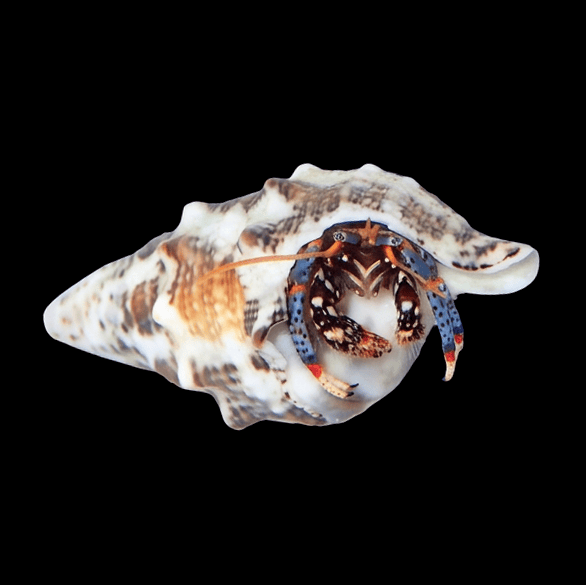
Saltwater snails are the backbone of most crews. Trochus graze film and soft green algae and can usually right themselves after a fall, Astrea are inexpensive glass and rock grazers, Cerith and Nassarius work the sand bed, and Mexican Turbos clear large surfaces quickly in bigger tanks. Hermit crabs and true crabs add scavenging: Blue Leg and Red Leg hermits pick at film algae and leftover food, while emerald crabs are the usual choice for bubble algae. Hermits need spare shells as they grow, and most crabs stay opportunistic no matter how well fed they are.
Urchins, sea hares, and specialist grazers
Sea urchins are powerful grazers that strip turf and coralline from rockwork, which helps in an algae-heavy tank but can be destructive in a polished reef; they also push loose frags around, so glue down anything you want to stay put. Dolabella sea hares and lettuce nudibranchs target green hair algae specifically and are best treated as short-term specialists, since they can starve once that algae is gone. Other cleanup inverts such as sea cucumbers sift the sand bed rather than graze rock.
Herbivorous fish for algae control
Herbivorous fish cover open rockwork that inverts miss. Tangs are the best-known grazers: bristletooth species such as Tomini and Two Spot suit mid-sized reefs, while sailfin and Naso tangs need long, large systems. Rabbitfish and foxfaces are enthusiastic algae eaters, and grazing blennies work film algae in smaller tanks. Compare the full range of algae eating and utility fish, and confirm adult size and minimum tank volume before buying.
Stocking, feeding, and long-term algae management
Add grazers gradually and size the crew to the food available instead of a fixed count per gallon. Supplement with dried seaweed or macroalgae once nuisance algae declines so herbivores do not starve. Nutrient export matters more than any single animal: keep up water changes, run a refugium under refugium lighting if it suits your system, and track nitrate and phosphate with reliable aquarium test kits. Care profiles for every invert are in the saltwater invertebrate guide, and you can assemble a mixed order with the invert pack builder.