What you’ll learn
About This Video
Key takeaways
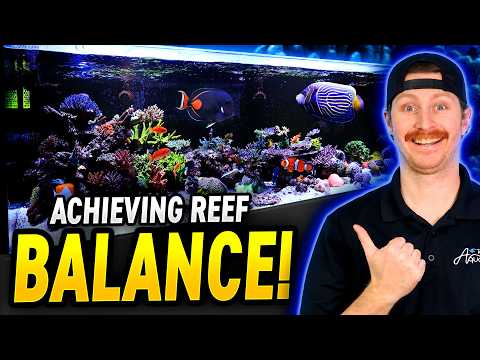
- SPS growth rates can vary greatly between individual corals.
- Lighting combines metal halides and LEDs for growth, coverage, and color.
- Multiple pumps create flow around Acropora without directly blasting them.
- Monthly ICP testing helps monitor deficiencies, accumulation, and metal toxicity.
- A large cleanup crew supports algae control in the bare-bottom system.
- Feeding and nutrient export are balanced to avoid paling corals.
Read the full video transcript
Our trip continues on. We're still in New Jersey and we're down in another basement. The jealousy is so real. I wish I had one of these in my place. But I'm standing here with Richard. Richard, thank you for letting us stop by. I'm excited. We've got a lot to cover down here, but let's go ahead and roll right into it talking about the tank that's right next to us. What's the size of this system? This is a 200 uh gallon innovative marine uh external overflow. Then the sump space. What do we got? So, it's their whole kit setup. So, it comes with um I think it's like a 60-gallon sump. It comes like like a complete kit, the plumbing, the tank, and everything. So, it's a standard setup. And then for reef keeping in general, how long have you been keeping reef tanks at this point? Um, my first reef was in 97. Um, and I did uh it was a mixed reef back then and I think you know what literature we had. We were reading a marine fish monthly magazine and uh h I don't know before the internet was even out aquarium meetings and then I ventured into SPS I think in like 99. And we had some Montapour and stuff and you know took it from there. That's you know basically you know the do dominated tank today. It's mostly acros. Yeah. You definitely got a ton of sticks. We'll go ahead roll right into it man. I want to start talking about the livestock you got in this tank. Obviously SPS super heavy. Talk us through SPS definitely some of your favorite it seems like. Yeah. Yeah. I've always kind of gravitated toward them. You know, at first it was like the challenge, you know, like keep them alive because everybody said you couldn't and and then we did that and now like as things progressed, you want to get like peak colors out of them and stuff and with all the different lightings and and the and the and the the different methods, the trace elements and and the nutrient levels and the feedings. There's so many ways to manipulate the colors and stuff. So, you know, it's intriguing to me. I could change the color of a coral. I can make it darker. I can make it lighter. I can make it more pink. I can make it more red. You know, sometimes things happen. You're like, "Whoa, what the heck is you know, so it's it's a little more change in that particular coral than, you know, like an LPS where you kind of get a fluffy, you know, to that extent. So, you've got a ton of OG strains in this tank. I know a lot of those reapfers out there that have been around for quite some time are going to absolutely geek out when they see this group of corals. Talk us through some of kind of the OG strains we've got in the system. So, because this tank runs metal halid um as a primary light source, the OG strains tend to look better in here. So, some of the old old school corals here like Tyrie Pink Lemonade or a Pearlberry Acropport Florida. So, there's a few different names, a few different trade names for that one. Um, but then there's some other ones. Oh, Shortcake, just an Australian Shortcake ASD Rainbow Millie. Um, and then the Tyrie Purple Monster. I was able to acquire Frag over the summer and that I don't even know how many are left, but I'm I have it growing currently and I'm glad you got it on film because who knows how long I'll have it. hopefully a long time and I could get it back into the hobby, but you know, trying my best. It's one of those corals, honestly, like you had mentioned, I have only seen it personally twice in my life in an actual reef system. We saw it earlier on on the channel out in California. Now we're all the way across the coast and I get to see another frag of it as well. We've got some LPS mixed throughout the tank. You mentioned to me a little bit off camera about how some of the LPS was in the system, you took it out, it's back again. talk us through why that happened and some of the LPS we're keeping. So last year I added a copper band to deal with that and uh when I first put it in a tank, he tore my skullie apart and he went right for my a cans and he even bit the clam. So, I took all the LPS and the clam and I I put them in one of my frag tanks for a little while. And then as I got the copper band kind of like leaned on like um frozen scallop and mice and stuff, he stopped paying attention to the corals. And then I reintroduced the LPS and so far so good. They've been okay. He hasn't gone back for them, but if he does, then I'll have to move the uh the LPS, but you know, they look okay for now. You said the left side is kind of started to fill in a bit more. the right side, we've got some really beautiful mini colonies. You know, when we're talking about the growth rate of some of these sticks, I think people get the wrong idea at times. I think some people genuinely think these are, oh, these are slow growing corals, but kind of talk to us about it. You know, how fast do some of these corals really grow? So, that could vary. So, I have a frag in there that hasn't budged in 20 months. Okay. Then I have colonies that I removed out of there in 9 months because they became the size of a grapefruit, you know. So you you try to balance it out the best you can, but I really stuffed in a lot of corals there. I think there's like maybe 80 different corals in here across. So um you know, you can see there's some bigger ones and there's some smaller ones and you know, as the tank's becoming more aged and more more like successful kind of like a everything seems to be doing well at this point. It's a little over 2 years. You know, I'm kind of like pulling out the faster growers and replacing with smoothies or, you know, just generally slower growers just just just so it stays for a while. I'm trying to get some balance, you know, instead of having a big colony and then some smaller pieces, you know, be nice to get it all uniform. Obviously, no sand in the tank. We've gone with bare bottom. Probably just trying to really juice it up with flow, right? Yeah. For the amount of coral zone or stuff in here, I think sand would have been challenging. I would have probably had it piled up anyway, you know, on one side or something. So, uh, that's pretty much it. I mean, I do like the aesthetic of sand and, you know, it would be nice, but it' just be more challenging, I think. And then for cleanup crew, what do we got for cleanup crew? Obviously, we've got the tang gang that's doing probably some of the work. You're actively being one of the workers, too. But what is some of the cleanup crew we're using for this system? So, in in this tank, uh I I I probably have over a 100 troca snails. There's some bumblebee snails or some uh estray snails, I think you call them. Um there's like six urchin in here. There's two white urchin, four tuxedos, which they do a good job. They they they actually strip the rocks clean of coral and algae, but um but they they do a pretty good job otherwise. that in the tangs and, you know, algae in this tank isn't too bad. I have a couple spots with bubble algae, but there's there's really no algae that's like, you know, noticeable. So, you know, it's under control. Yeah, I think people tend to forget how important it is to really get a robust cleanup crew. I think sometimes they kind of skimp on that. We talked about the tang gang. Let's talk about some of the other fish we have in this tank. I've got a lot of them that I really enjoy, some of them that are a little bit more cryptic. Let's kind of talk about all the fish we have in here. So, we have some rasses, ones that really don't burrow in the sand as much. So, there's a mystery rass in here. I've had them for over two years. There's a possum rass. It's had them the same time, and they're they're in under the rocks mainly. Um, they come out for feeding, but they're kind of cool. The colors are nice on them. It's good behavior. Then there's a a royal gram. It's probably one of the biggest royal grammarss I've ever seen, and um he just kind of again another like cryptic type fish. Stays under the under the rocks. There's a couple cardinals in there. I have six chromis that my buddy gave me and they're they were in his tank for four years. They're in this tank for a little over a year and I still have all six which is great because I tried getting chromis in here and they never got out of quarantine cuz they would get urin and die after like a month. So I have you know it's nice to get hardened ones. Um antheus not so much in here. There's one bac and my copper band which is my favorite fish in the tank. I I hand feed that copper band. He's just like he's like my dog, you know, comes up to me. And something I love to see with the chromis, you know, out in the wild, they're normally in between the SPS, they're living amongst it. That's something that's really unique in this tank, I feel, is you've given them the actual kind of natural behavior that they kind of showcase in the wild. Let's start talking about the life support of the system, what makes this tank tick. We'll start from the top and work our way down. We've got some OG style of lighting. Let's talk about our lighting. Okay, so the lighting for this tank is a Guisman Spectra modified a little bit. So, it's three 250 W radium radium highlights in here that are uh overdriven with the uh magnetic ballast. Um instead of T5s, I was able to slide AI blades in place of the the T5. So, it's nice. You get a little bit more PA. You get some more color pop. One is a grow, one is a glow. Um so, it's a nice mix of colors. And then on the outside of the uh the Spectra is uh two blue Reef Brightite XHO's. So, it's a nice it's a it's a nice color correction for the the wider spectrum of the halli and more fills in the space more. It's interesting now with all the technology we have in reefkeeping, the utilization of LEDs along with the hallides is a really amazing combination in my opinion. I love the way it looks. I I think it makes it like almost more acceptable. Like if if you look at just halli by itself today, it's extremely white looking. Especially after looking at like blue LED tanks, your eye just it's totally different these days. I have them side by side so I look at them and it's just to me it looks like a 65k halli like a 20k radium but with the LEDs you get the pop you get you know it kind of like it's a good compromise I think and then for the schedule on the light how long are we running the schedule for? Uh so overall there's a 14-hour schedule but that a lot of it is just for for me to view. So at low par you know before and after ramping down the hallides are on 6 hours for the day. Um and uh during that time the LEDs will ramp up full intensity as well. So there's 6 hours of like high par baking and then it's just kind of ramping up and down to that you know and then with sticks obviously you need to juice it up with flow. We see it in the farm. We've got a ton of wave makers. Let's talk about the different kind of utilization of flow we've got in here. So, this tank is is all like EcoTech AI. So, I have four MP40s. Okay. Now, the idea was to place the the power heads in here so that like I don't want to directly beat the flow, which is why I went with six different pumps. There's four MP4s and two Nuro7s. And they're all kind of like pointing away from the Acros but get flow around all the Acros. And for now, I'm getting away with it, but I I see a need to maybe change it. I might end up adding some gyres, but I I don't want to block the side view, but you know, it's it's that dilemma when you It's a good problem, but you know, it is it's one of those things. I've talked about it in so many videos at this point, and this is a really really good example of it is that flow isn't one of those things that you just set and forget. You have to constantly change it, especially if you have something like this tank where you're trying to get flow in all kinds of different directions under the branches. Do you see yourself kind of having to play with the flow as things start to grow and develop? Well, right now not so much because I I I don't have too many options to move the power heads without beating up the coral directly. So, it kind of is what it is right now. If I have to get more flow in here, I think my only option is gyros cuz slide across the top. Um, it's either that or I, you know, take out a bunch of colonies to make room and stuff, you know, which is going to happen sooner or later. But, you know, it's it's the fun, you know, working down into the sump space. Let's talk a little bit about some of the nutrient control and the other pieces of equipment we have down in the sump. So uh as far as like uh filtration, so the water comes down. I have like 300 micron uh mesh filter sock. So it's not very aggressive mechanical filtration. I try not to strip the water because as these corals uh started growing, getting larger, um my nutrients started dropping and the corals would pale out. So um there's a bubble king 200 skimmer that does the bulk of the export. Um I do run GFO because my nitrates will bottom out but my phosphates will stay high. So running a little rowa or you know colar GFO whatever I can get my hands on keeps the phosphate like around 08.12 in that range and the the nitrates will actually bottom out in this tank. So I don't really worry too much. They'll be anywhere between 0 and four and um you know whether I dose I don't dose. I don't see a difference in the corals. I don't think it's nitrogen deficient. I just think the number says zero. So now for calcification demands the bulk of it right now in this tank is um in a vast K2 uh calcar. So I get I do 13,000 ml through the the system uh per day and then it doesn't keep up fully. So then I have uh all three on a dosier that does 200 ml per day and then a separate dosing head for magnesium which is like I think I'm at 40 ml a day to keep the magnesium around 1350. You kind of took the question out of my mouth, you know, talking about dosing. What are you actively dosing into the tank? Is there anything outside of those things we just spoke about that you're actively dosing in the system? Yeah. So, I am dosing more stuff and I'm hoping to simplify it, but I I send out monthly ICPs on this and I do dose some I so I do kind of like a modified reef moonshine. I don't do it 100% cuz it's just like I don't know just a bit much. So, I dose dailies. Um I'll do like iodine. I'll do u maganese and iron and selenium and then I'll do some monthly corrections that are like severely deficient. I like if it's a little low, no big deal. You know, major accumulations, I'll I'll do a water change or something like that. And I'll also do, you know, uh, uh, weekly water changes on this routinely. Um, and that and that's pretty much it. You know, some foods, too. I'll do some liquid foods, maybe a little aminos here and there, maybe some fatty acids every now and then. I try to feed a lot of fatty acids like put uh the foods in silkon and stuff like that. I see it makes a big difference in the corals. So, and then what do you feeding the fish? So, it's a it's a mix of frozen mainly. Um, so it's like rods food, LRS food, um, hikari micis, and then what I'll do is I'll make like specimen cups up like usually for a few days in a row. I'll weigh it. Um, I think I'm like feeding like 25 grams a day to this tank. So, it gets a lot. And then I'll soak it in silkcon and um, you know, I'll feed it usually around two feedings a day. I'll do like one in the morning and then one later in a day. And um, and that's pretty much it. It's kind of feeding the corals at the same time. You know, these tanks have gotten so smart. You've seen it over the course of your reefing career. You've been reefing for a long time. You've seen so much transition into kind of high tech stuff. I see you kind of hanging out on the wall over here. We've got an Aqua Wiz that we're using. Yeah, I love it. How are we liking the Aqua Wiz? And then outside of that, what other kind of automation have you added into the system? So, I started this system based on old school theories. Well, that that went out the window two years later. That's just So, the Aqua Wiz is my first auto tester. Okay. Um, there's one line that goes into the sump. Uh, and we follow some auto prompts and next thing you know, you there's you take a BNC connector from my hydros and I plug it right into there. And now I'm reading alkalinity like I read my pH and it's doing it 24 times a day with no reagent and it's grafting it for me. So I can see trends. It's like I didn't know my my alkalinity drops more at night than it does in the daytime. It's being consumed. So I I that's something new I learned from the Aqua Wiz. Um, what's the goal for this system when it comes to the numbers or are we not really worried about the numbers and more focused on stability? So, so no, I'm worried about the numbers. I mean, stability is going to come the way it's set up, I think. You know, that that's that's a given, but I'm not chasing numbers like to the tea. I'm not worried about natural seawater numbers being perfect, but I don't want to be deficient. I don't want an accumulation. And I send out monthly ICPS. My number one reason is to monitor metal toxicity because I've dealt with this, friends have dealt with this. This is like the number one reason why, you know, I'm aware of that we lose our acros and don't know why. So, I started sending out MS resolution ICPS which pick up the metals and um that's just peace of mind. That's why I do it really. What salt are you using? And for a lot of people that are wondering too, there was a switch in salts actually recently. Oh, probably three times, but you know, so it's a little price driven. I I was using uh Red Sea. I was using NIOS and I they're great salts. I love them, but I go through a lot of salt. So, I was trying to keep the cost down and still keep some quality. So, value-wise, I settled on Aquaforest sea salt. It's it's pretty solid salt. It's more affordable. And, you know, it has some deficiencies like strontium, a little low on fluoride, nothing I can't correct, and um I'm used to it. So, it's been consistent. I like it. Something that I really enjoyed when we got down here and we started talking about your tank. We're standing here with your son. It's a family affair now at this point, right? We've got the little man's involved as well. He's he's a 8-year-old reapfer, dude. That's pretty awesome. So, kind of talk us through that. Like, how has it been incorporating your kid into it? And you know, how involved is he with all of his systems? I mean, I heard that he's got his own tank running. He's got his own 15gon Hello Reef. And he actually we actually won the tank at a raffle at the New Jersey store that you you filmed before. So, we got that and then he picks out his corals and he he knows the name of most of these acros in here, the trade names, and you know, he's all into it. We go to reef reef shows together and stuff. It's it's nice nice to share with your son. Like, yeah, it was awesome chatting with him. I mean, he was more locked in than most reefers that are my age. I mean, he was on top of it. I think people are starting to see what's behind me. The cat's kind of out of the bag at this point. This is not the only tank we have. We've got multiple systems in here. Can you kind of walk us through? I know this system next to us is tied in as well to this main tank. Yeah. So So um originally I bought this tank here cuz I wanted a quarantine tank. Okay. So I I ran it like as a QT for a while and then I really wasn't buying more across so I wind up tying it into the system. So I plumbed it to this sump. You know, this is different though. Now, this system here is uh three Radeon G6 blues in a T5 hybrid, not aquatic life T5 hybrid. You know, I I wanted to have different lighting so I could, you know, play with some of the more popular corals and get the spectrum. And it gave me really good perspective because having hali and having LED, I'm not reading about it. I'm actually playing with the corals and seeing what does better under, what does better under LED. And I I have a lot of the same corals in both tanks with the same water. So, the difference would be mainly lighting. I mean, the flow may be a little different, but it's generally the same. And uh, you know, I think the color rendition on the LED is a lot better on the majority of corals, but the ones that do take the halli seem to grow explosive. That's that seems to be the uh the synopsis of it. You know, similar kind of grouping of fish outside of I do see the Australian stripey. There is nothing fleshy in here, it seems like, because he probably would go for it at some point. Have you seen that the stripe's been beneficial for you? So, so that's my second stripey. So, the other stripey I had in there, he got kind of big, so I swapped him out for a small one. And this one doesn't touch a taser. So like not yet. So maybe when he gets a little bit bigger. I don't know. I I want to get a copper band in here, but the problem is I have a coal tang that just won't let any other fish in there. Like the Australian stripey is like an oddball fish. Like I throw them in there and nothing even looks at them because such a weird shaped fish. But so these tanks are obviously connected together and then on the other side of us we've got even more. I mean it's like honestly it's like a reefer's paradise, right? This is why I am jealous in the fact that you do have this basement section because like you said, you said your wife was just like, "Go ahead, take the basement and let loose." Banished me to the basement and then I think she's sorry she did so when she came down here and uh so I had so many corals in this system and then you know I was worried about having all my eggs in one basket. So um before the tariffs hit I was like, "Oh, let me get this is SC aquariums. They were really affordable and I you know I was like let me just get it set up just so I have some redundancy if something was to go wrong you know." And uh so this is 11 months old right now, but but I use a lot of the rock and established media from this tank. So there there was like, you know, there was some like uglies or whatever, but there wasn't like a nitrogen cycle or anything like that. Kind of curious, this tank we're utilizing some of that bigger media on the bottom. Is there a reason why we're using the media on the bottom in comparison to the main tank? And then we've also got some bigger kind of rubbleish sand style, but this is like that calcium reactor media. Reborn media. Yeah. The other one's crushed coral. The reason I did I did this kind of like one is bare bottom, one is gravel. Um, you know, it's probably like the old school reef for me that's like um I just wanted surface area, you know, bact like in my sump I have rocks and I don't know, I figure it can't hurt to have that like surface area for bacteria for more stability, but it is an aptasia breeding ground if you don't have a copper band. So, you got you I do have copper bands in all these tanks, so it's not a problem. Amazing. You've been able to maintain some copper bands, too. Those are tough. I have a I have a little uh little system with them and it evol the biggest I mean they go they get quarantined but the biggest thing is to get them transition to scallop. Once they eat scallop they eat out of my hand and it keeps them fat and I have them long term. They they don't get skinny and once they eat the scallop they'll eat anything in the water column and and and oddly enough they're the most aggressive eaters in the tank. They they throw the tangs out of the way. Interesting. So you're actively feeding them scallops to kind of get them onto some form of food. I know people have talked about like black worms and things like that to try and get them onto some food, but have you seen that's really kind of the your little golden ticket for it? So, when you first get them, the biggest thing is to get a healthy specimen, right? So, you know, and then I'll put them through some meds or whatever like that, but they have to be picking and eating something. So, if I get them picking brine or a little mic is great, great. Then then I know it's healthy enough. Um my main I mean black worms gets them started as well, but um the biggest trick that I have is taking like mastic food and taking fresh scallop and smashing it together and and then once they whatever is in that scalp once they go for the scallop, they get drawn to that scent. And I mean I have three and three tanks longterm and uh the only reason why I don't have one in this tank is because the tanks won't let them go in there. So you kind of have your own little lab down here, right? You're able to kind of make your own experiments honestly. You get to see all these different things and how they react. Microscope over here and everything. Yeah. And then you've got a frag tank as well on the side. This is kind of like its own display. We've got the main display. This is another one that's kind of coming into another display, but this is a frag tank section. Correct. Well, sort of. So, yeah. I mean, there's obviously frags in there and and some of it is stuff that I haven't even planted in the other tanks yet. Some of it is stuff that, you know, I'll actively like sell and trade and subsidize the madness a little bit. Um, sometimes I'll just grow colonies out and I to prune or you know what, Blaine, I end up kind of hoarding more than anything cuz I just, you know, I can't get rid of them. You know, you obviously have the same kind of concepts and ways that you do your reef keeping, but tanks run differently. It's funny, right? Cuz I mean, we could get out the measuring tape and we could probably show that it's about 10 ft away from itself, but it's a completely different system. Walk us through this tank and how it's able to kind of function the way it is. Right. So, this tank, the goal of this tank was the redundancy of the corals, but I didn't want it to be like a maintenance slave. I mean, I have enough work with the main system the way I run it. So, um it's basically run the same way lighting wise, flow-wise, water parameter wise, feeding wise, but the dosing scheme is different in this one. And I I I didn't want to do the, you know, the five different ways the elements and so I did I I I I uh put the system on Modern Reef, which is like a four-part bowling uh method, which does the uh the trace and the foods, and it's an all-in-one system, and it's it's been working great. Like the growth in here has been explosive, and it just takes the the the the maintenance part and like just brings it down to manageable levels, you know. Um and because I have less fish in the system, I don't have to do as many water changes. It's not as high as an organic level. I may do two a month. Sometimes I might even go as far as like one a month. Um, you know, the other system has like 40 fish, so I can't get away with it. My phosphates will shoot up and, you know, I'll start seeing like darkening of colors and stuff in here. It's not not like that. I mean, you've got a huge mixture of lighting. If you had to kind of circling around just a group of lights, what has been your favorite group that you've ran over a tank? What's kind of given you the best growth? And what do you think has kind of looked the best, too? Cuz of course aesthetics, right? Everybody loves the way things look. All right. So, I don't have like a straight answer for that because I still love the look of metal halli overall. But now, now as far as like coral specific, um, again, it's a little different. Like, so radon blues, if you want to like smoke the corals and get the reds out of them and stuff like that, all the highlight colors, it's better for that. But from an overall coverage point of view and the overall like pop of the corals, I'm really loving the all AI blades. I have the one tank here has three grows and one glow. To me, it looks like like a T5 tank would pop and and I just love the spectrum on it. Like I wouldn't hesitate to do a tank larger than that with all like if I ever change this tank over, I would do six blades on it. I wouldn't hesitate. What has been some of the challenges you've faced when it comes to these systems though? Cuz I'm sure each one kind of has probably their unique challenges in their own way, right? Like we've got the bristle tooth over here is kind of a problem, you know. What are some of the overall challenges you've seen? Um, so something pretty simple, just just precipitation of calcasser. So I mean that's why I've been trying to get away from it. The calcer is like I just thought it was detritus at first and then I then somebody told me no that's that's uh that's precipitation and sure enough like it it was just accumulating in this system for so long which is really the main reason why I switched besides like the simplicity you know. Um so that's been a problem but I've been able to take care of that in the main tank. I know you talked about there was an issue with some of the acros starting to kind of gray out and get this weirdation to them. Can we talk a little bit about that and what ended up happening with it? So, so this is this is actually more common than you think. So, specific pieces now uh vivid confetti pink lemonade um was on like a shortcake uh anything that looks like a confetti too. So, there's a couple other corals. So they they ended up getting like I don't know they started darkening almost like a grayish or black color and the loose polyps but not dye. The tissue kind of almost looks it almost looks like sponge or something like that. Um now there's photos online that you could see of this. Um and um you know I reached out to a bunch of like coral growers and stuff on like Facebook pages and and you know unfortunately they said you know they had the same problems and the only fix for them was like antibiotics. I've never I've always been like probiotic dose and all. So, you know, after having it and like you know, worrying about it spread through the tank. I I I cyproed both systems and you know, it took about 2 months for the corals to start to lighten up, but they they went back they went back to normal and it's been like it's probably about 5 months now and I you know, I didn't I didn't really lose anything. They just took you know, it took a while to start growing and get healthy again, but they're okay now. So, I don't know. I don't know what caused it. Some people say it's a pathogen. Some people say it's a boring allergy. I was able to send um chunks of these corals uh to Salem and his group to do some research. I didn't hear back yet, so I'm not sure. No matter how long you've been reefing, you always are ending up trying new things. You're getting into new things. You're learning new stuff. Something you kind of mentioned over here, you've got some speciosas we've started to kick off. That was the first one. The That's crazy to me when I look at all the sticks you're growing in here, man. And the first speciosis. So, you know, I want to hear from you. You know, you've been reefing so long, you still run into that kind of stuff, right? where you're trying to getting a new thing, trying new things. My, you know, this is this is why I'm still in the hobby. Like I'm 29 years in this hobby now. It's like it doesn't get old and and my perspective is always changing. So like, you know, it humbles you over the years. You you can't like you think you know it all, right? You think you got to figure it out and then something will happen like you corals will turn black and you're like, "What the heck?" Or or you know, some some curveball. So So there's always a challenge and you know, somebody's always achieving like some kind of new benchmarks. There's always something to chase and aspire to. Um, you know, so it keeps me interested. Reefing is extremely humbling. You learn it all the time. You know, it can be expensive at times. Oh, yeah. You know, I'm sure people want to hear from you. When when I'm looking at all these tanks, it's like, did this guy ever have a bad reef in his life? I'm sure you've had some reefs though in your time where I mean, reefing that long, you've gone through some reefs that are tough. Yeah. I actually I had one tank h it's going back probably about 2012 now. This is when like guys were just kind of dabbling into dry rock tanks. So I was like, "Let me try dry rock, right?" So I didn't do it right. I The rock was actually dead rock from a previous system. So it was loaded with organics. Put it in a tank and I I got like some live sand and I went to cycle a tank and the nitrogen cycled, but I never got the crap to stop growing on the rocks. It was covered in fuzz and brown. I've never seen some of this growth. And around nine, month nine, when I just couldn't keep across and stuff, I pulled the plug on the whole tank. I was done. It was like my only like tank where I just I couldn't deal with it anymore. Something I noticed that you have kind of littered throughout the area down here are some EcoFlow backup batteries. Uh are we using these batteries down here, these little extra generators as some backup batteries, redundancy? What do we got going for these? So, there's uh there's there's EcoFlow and there's a company called Opus. I have both. They're they're just backups. Like this will run one return. They have this system here has two return pumps. Um one could run and feed both systems basically. So, so if I get a power outage here, I have 8 hours run time on my return pumps between this tank and then this tank. So, I have 8 hours to get home and manually hook up my generator. Um, I don't have a whole house generator yet, but I will eventually in the future. We've got so much invested into these systems, the last thing you want to do is not have backup power. I think it's a must. And I, you know, for a lot of Florida reef keepers, most of us have generators anyways. We're dealing with hurricanes, so it's one of those things that kind of come through. But I like to remind people a lot that are watching the channel or just kind of learning more about reefke keeping is having backup power is essential. I mean, we spend way too much money on these fish, on these corals to just kind of hope and pray that the power comes back on in an hour. It's our responsibility to take care of these things. You know, actually, we just had a cold snap for like 3 weeks and and you know, it opened my eyes to something like when it's 0 degrees out, if we were to lose power and lose heat, uh, my generator wasn't strong enough to run enough heaters to keep these tanks warm. So, I actually found a deal on a a local, you know, nice Honda generator, the second generator, just to run more heaters, just to run more heaters. Should this uh uh, you know, room turn to like 45°, you know, run 2,000 watts of heaters in each tank to keep it warm and wrap it in a solar blanket or something like that. And it always seems to happen at the worst time, right? Like the power's not going out when it's 78 out, it's sunny, and it's a perfect day. It's going out when it's 40° and it's really cold for these systems. I have to ask. One of my favorite things that Jake Adams used to do whenever he'd come into people's homes was asking for a piece of advice. I have I I kind of have two pieces of advice I want to hear from you. I want a piece of advice you would give to a beginner, but I also want to hear a piece of advice you'd give to someone trying to get into SPS cuz man, you grow this stuff like crazy. You grow it like weeds. I'd love to hear from you. You know, single piece of advice for saltwater fish keeping and then also like what's the key, man? You you've got a blue thumb. Thanks. So, so for for the newer hobbyist, I think the biggest thing is to check your salinity properly. Now, now I've had refractometers steer me wrong in the worst way cause big problems for them, right? And then if you you talk to like Claude from Fornarine, he says 70% of the first time American ICP users come back with low salinity, right? So, I think you're better off using a glass hydrometer. And if you want to do something a little bit more convenient than a glass hydrometer, like a VG refratometer that's actually meant for something in our salinity range, because the cheaper refractometers, I I feel like they're inadequate and steer people wrong. That would probably be the the the first and foremost thing. Um, as far as like an advanced hobbyist or or somebody looking to get into acros, you know, I think coral nutrition is something that's really underlooked. I mean, yeah, bright light, good flow, you know, that's a given. You know, you send out your ICPS, you want to play with trace, great. that's only going to help. Um, but nutrition, you know, you'll see some corals that are really sucked in and don't don't have like good polip extension and and these tanks, they're they're not being fed well, you know, so you feed food rich in fatty acids and aminos and and you know, you're not afraid of raising your nutrient level. Instead, I react to the nutrient level maybe by more export, you know, or like I, for instance, I run GFO in this so I can feed as much as I do so the corals stay lush, you know. It's it's a balance and it depends how much work you want to put in, you know. Yeah, it's definitely one of those things. It's a fine line of balancing between, you know, you're trying to maintain the happiness of the fish, feeding them and keeping them fat and healthy, but also you're trying to maintain a number that's proper for trying to maintain and keep the corals happy as well. It is kind of this juggling act we constantly are playing. But I genuinely, man, it's amazing to see what you've done down here. The the growth is out of this world. Uh, a lot of these sticks, I'm sure people are seeing videos of them right now as I'm talking, but they're just the colors, the way the growth tips look. You You've done an amazing job. Thank you. I I have no nothing else to say. This has been so much fun. I think there's moments like this that I truly geek out. I really get the chance to just sit back and listen because sometimes I feel like, you know, when we're dealing with people in the retail store, we have to do a lot of teaching. And every single one of these interviews, I really take a a lot of information out of it. This one has been special. It's been a lot of fun to sit here with you, talk about your systems. You've done an amazing job. There is no doubt in my mind there is a blue thumb in your hand and also probably genetically down to your son as well. So excited to see what you guys are able to do. Obviously, we're going to showcase all the tanks. I hope you guys enjoyed this one. This was definitely a longer one, but we had a lot of fun talking about these tanks. Again, thank you so much so much. This has been a blast. If you have any questions about the systems, systems, many systems. Feel free drop them down in the comments below. If you guys have tuned in all the way till the end, I want to say thank you very much. Be sure to like, subscribe, and hit the bell notification so you don't miss out any future uploads. inside to leave my holding anchor.