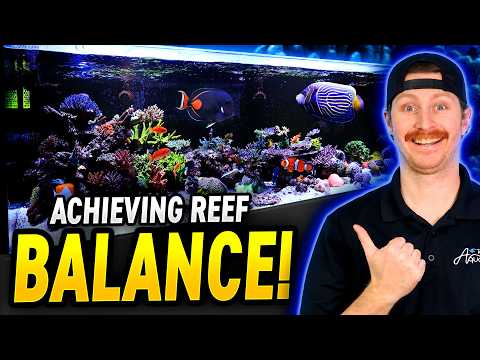
What you’ll learn
About This Video
Key takeaways
- The countdown features both Acropora and grafted Montipora.
- Walt Disney is presented as an iconic rainbow Acropora.
- TSA Flowerbomb stands out for its tabling growth structure.
- Forbidden Fruit Speciosa is described as more temperature-sensitive.
- Stable chemistry, lighting, and nutrition support SPS color and growth.
- Selective cutting helped develop TSA’s multicolor grafted corals.
Read the full video transcript
what's going on reefers Blaine here in today's video we're going to continue our top 10 SPS series at topshelf Aquatics you've all been asking for it so in this episode we're going to go into all the high-end SPS pieces it's going to be a lot of fun so let's head straight over to the farm and see what Kevin has what's going on Reapers we are hanging out here in the farm with Kevin Kevin good to have you again definitely we did the top 10 beginner SPS we moved over to intermediate SPS and today we're going to be doing the top 10 high-end SPS coming out of topshelf Aquatics I know everybody's been asking about this video this is one we've been really excited about doing I know Acora SP in general is definitely your main thing so I was really excited about getting this video filmed out and out to you guys we'll go ahead start off right away we'll start off with our number 10 so we'll talk about the TSA Heisenberg so this is an acorus species we've just recently released and it's really nice with that dark blue color and that nice kind of purplish lavender contrast on the pups let's talk a little bit about the Heisenberg and how we got it into the farm yeah so that was one that was imported from ACI aquaculture from Australia uh thing that really stands out to me I mean when you first look at it it looks a lot like you know a lot of the tenuous and things that you see coming in uh we don't really think it's the same species as a lot of those Mar cultures though you know when you take a closer look the branch structure and the cor light seem to be much more pronounced in large so we think it may be Acora kentai or perhaps a vermiculata um but you know what you were touching on really that stands out is um also that color you know hence the name Heisenberg it had that kind of crystall likee blue scaling on the core lights and then you know even on the axial pop you're starting to see the two-tone color coming in as well and then if you really look close into the the base color on that too you can see some U hints of pastel greens and and pinks as well so it's really kind of a A Unique Piece to add to any collection and and it's actually one of our newest SPS releases as well I like to say that they we're always constantly cooking new things here in the farm and the Heisenberg name is perfect for that you know we're cooking up the Heisenberg acropora and then we've now released it to the public I really like that one we'll continue on the trend with some of the nicer stuff this is one that a lot of people know about so the Walt Disney this is one that's been around for a long long time I feel like everyone that's been into SPS at some point has heard or seen a Walt Disney so when did we get the Walt Disney in the farm here and how did we originally Source it I mean originally we had got it direct from The Source from Mike bigar um you know obviously it's a shame that he's not with us anymore but you know the things he was doing with his system I mean had some of the most impressive SPS tanks that I had ever seen and the coloration that he was able to pull on that specific Coral kind of jump started the the trend in the in the hobby when it came to a lot of the rainbow out tenuous corals things like that um so you know that that's really iconic piece um one that we wanted to put special mention to me it's got you know crazy yellow pops on it yellowish orange you know the thing that really is hard to pull sometimes is the pinks on that piece and that was one that really jumped out to me that he was always able to capture really well under the lights he was growing it in which was a you know mixed LED with t5s um when he had that thing really looking amazing um we have it dialed in pretty well but I would say that as good as we are I've never had one Walt that looked as good as what his original piece had in his display tank but yeah we've been growing that one for uh almost a decade at this point I think maybe a little less we've had on our list a lot of Classics we had the green slimer earlier you know we have the TSA Bill Murray I feel like the Walt Disney is one that you know I've really come to enjoy and love and like you said it's a it's an acor species that's if you're able to really pull that true color out of it you must be doing a good job at that point definitely definitely if your Disney's a bit greened out you probably have to dial things in a little bit more as far as you know traces water quality uh light spectrum that kind of thing so you know that's um something to really eye and it's a good canary Coral when you're really trying to get everything looking tip toop uh coloration wise moving forward we have the TSA Flower Bomb so this this is one we showcased on Reef Builders they did a nice article on that we sent out some photos and videos where did this one come from and how did we get this one cooking here in a top shelf so that's another Australian piece you know I would say um big part of our collection is a lot of the wild Aussie pieces um that come in I think it's it's where I find a lot of unique things um that you don't really see on a lot of the the mar cultured pieces that you know kind of get recycled and and a little more common place um that one thing I like about that too is just the growth structure on it being a tabling piece I've always loved tabling acros too you know it's a great one to kind of add to some of your vertical Peaks where you can kind of have it mounted and growing off of a face of rock work um coloration on that I mean that thing has some really nice orange polyps some nice pink Hues a little bit of uh blue on the the new growth as well uh but really I'd say growth structure stands out on that one compared to a lot of the ones you see you know like you mentioned thinking about what that piece will eventually look like when you see a picture of the Mother Colony and where it'll fit in the display tank if you're going to mount an Acro you really want to have a long-term plan with that one we haven't talked about in any of our lists we've talked about speciosa so we have the TSA forbidden fruit speciosa another newer one we've released this one has some crazy coloring I think is absolutely insane let's talk a little bit about speciosa what you would kind of give for care requirements and things like that since we haven't talked about them before yeah I will say that these are some of the newest hottest corals that are coming in obviously with the Malaysian Imports it's something that you didn't really see um but they are getting more and more common now now I will point out they tend to be a little more difficult than a lot of your um you know Bread andb Butter acos uh so we've had some ups and downs with them we've had some experimentation on the the different wild pieces you obviously I don't have um an extensive track record or you know data to back this up but just anecdotally I've noticed that they seem to be a little more temperature sensitive we try not to let the um you know the temp Spike much over 78° you know we try to keep it more stable in that range we did have some issues during the summer months when uh one of the fans blowing over the sump had let the temp creep up and that's when I noticed more of those starting to RN um particular and and you know those things too just when they come in they're so bleachy and sort of stress they take a while to get established in an aquarium but that piece we've had for so long at this point I mean it's just a polp extension on that thing is just stunning if you walk over to that tank I mean it just looks like Flames coming out of the uh the branches and I mean I love the speciosa the the texture on them the the shape just that more delicate look it's just something really unique and I I can't wait to see what you know eventually everyone gets um you know when it comes to variety on those and and how they'll do longterm as as we get more established farm grown species that have been in captivity for years I think it's going to get easier and easier you know at the beginning a lot of times those things when we cut them they wouldn't do much of anything this one puddles up starts encrusting very very quickly so you know I'm confident that we've kind of turn the corner on that one and it's really really what I would consider an aquaculture piece at this point and kind of pass that initial adjustment period the next one on our list Rocky bboa another TSA piece I love the name and when you look at the colors it's really a knockout when it comes to that Coral so where did we get the name from originally how did we choose Rocky baloa and let's talk a little bit about the care requirements for this one so the name originally came because we had picked up set up at Reef stock in Denver Colorado um years back from a local hobbyist who had been growing out a really nice colony and we were able to snag a couple frags you know he had said hey this is an unnamed piece it's a really nice one we think you're going to do great things with it and the longer we kept that piece just the better and better it got I mean just the um the Vibrance of the polyps I think is really what stands out um you know as far as comparing that to something like a Walt Disney that tends to be a little more yellowish this one would be more towards a cherry bomb but the thing that makes it stand out is just the um two-tone polyps that it gets it's not you know as distinctly red I would say it's almost like a pinkish reddish color with orange undertones on the pops um and then the the tips on that are just vibrant blue and you know that thing will get a lot of really nice color I mean everyone asks about it when they walk through the farm and you know they see that thing standing out from uh you know feet away so definitely a nice Coral surely when you guys saw it originally at the show in Reef stock I feel like you've gone to the point where there's a lot of these corals you can kind of pinpoint and see and you can see the potential right away was that something you saw as soon as you saw the piece you're like I got to get my hands on oh yeah definitely I mean that that's one of those ones that you know you can kind of tell if a coral is going to you know be more one of those ones that's a macro shot type Coral I would say you know we all kind of know those ones that have more of the nuanced colors that you really have to look up close to appreciate this one you know looks great up close and from a distance which are always my favorite corals um in general you can appreciate them from across the room while you're sitting on the couch or you can appreciate them when you're really getting your face up to the glass and um yeah that one's a winner across the board I mean the coloration has just gotten better and better over time when to really cook that thing with a heavy blue spectrum and give it real good proper nutrition with the corals and everything so um yeah yeah that's a great one to the collection right there if you guys have gotten to this point in the video you guys obviously are interested in SPS and we've had our beginner SPS we've had our intermediate it's basically like the school of SPS here at topshelf Aquatics SPS are for sure a type of coral that it's kind of a challenge right you're get to the point where you're getting great growth and you're getting great color at the same time when it comes to coloration there's just so many variables that come into play a lot of it has to do with light spectrum so you know I would point to that as um you know something that you really want to I would say these days if you're trying to maximize a lot of the fluorescence um running a heavier blue Spectrum but with Acora you want to make sure you're having a good white Peak as well or else a lot of times they can kind of green out or the colors won't really bring out a lot of that luster so you know it's a fine line but running predominantly heavy Blues with at least a 4 to 6 hour period of white light uh really helps with the coloration across the board on most of our stuff you know Coral nutrition is another thing that really does help bring out the coloration as well so I would um you know recommend that people uh nutrients permitting that they're feeding their tanks a good amount and um you know really trying to add a lot of the specific Coral Foods plank tonic aminos things like that that those specific corals can feed on on a a regular basis um you know a food that we like to mix in to um in addition to that would be bipeds it's great because a lot of times if your Tank's running a little dirtier you can still feed that and because of the probiotics it doesn't seem to uh negatively tank the water quality we do put a lot of live phytoplank in you know a lot of times when you're dealing with these Acuras everyone thinks um when they're starting off oh my water quality has to be perfect I have to have zeros across the board uh we've had the best luck really kind of Towing that line about not going too clean because a lot of times with these acores they'll have them get a little bleacher the color Vibrance won't really come out as as well you know they may have more that pastel look sometimes they'll grow well and they'll you know be relatively healthy but to get the real Rich coloration we always Target having you know maybe 10 to 20 nitrates in a heavily stocked reef tank um usually the phosphates we you know go between 005 to 0.1 which may sound a little higher and that's not necessarily A a cure all number that I'll say to everyone we've just found that when the tanks really slam packed we have to bring those levels up nutrient wise a little bit more just to maintain the the good growth and coloration that we really like to see you know in a lot of these maxed out systems when you see here just wall to--all Acuras we'll notice you know some of the stuff bleaching Monty's getting a little Hale things like that when it starts dipping down a little too low you made a good point a lot of time I feel like people sometimes forget that you're going to want nutrients in your tank once that tank starts to fill in and the corals are growing we wanted to go in to a little bit deeper information on the chemistry side we're going to talk a little bit about pH and we'll talk about alkalinity so for pH here in the farm what are we doing to get to that achievable level of pH and what numbers are we trying to shoot for yeah so you know you know like you would kind of me obviously um the more you're getting into these SPS and having a tank that is full of a lot of these corals that are just growing heavy skeletal bases and branches they're going to be pulling a lot more out of the water as far as you know calcium and alkalinity and magnesium so it will require a little bit more fine-tuning and testing and at this point you've probably gotten to where your Tank's running a calcium reactor or a doser or something like that um to keep those levels really stable for us us we aim to really keep alkalinity super Flatline and kind of pairing to that you touched on ph um elevating that pH past where maybe a normal reef tank might be hovered around 7.88 during the day um if you're able to push that up to around that 83 84 level um consistently and keeping that fairly stable that's where we've found we've been able to achieve the best growth and a lot of the better coloration on these corals too but CA waler was a a vital tool for us to really be able to push past those thresholds consistently so most of these systems we run um you know cultul reactors on them and we have that not necessarily Plumb through some people would run cultul waler in an auto top off that kind of thing we have them running through a doser in the system and we were able to even dial in through the Apex to where we're dosing a heavier amount of the caul waler at nighttime where the tends to naturally be driven down to help boost that up and keep it more stable so you don't have those drastic swings where it's going maybe from 84 to 8 or 7.8 or something like that at night time we're able to keep that a little more consistent and um you know also a lot of our systems run refugiums too which do help keep that pH stable as well especially when they're set up on a reverse light cycle uh my guys who monitor that um and gals Megan are totally on top of that and they do an excellent job really keeping these systems Rock Solid and stable you know a lot of systems here in this Farm a lot of systems here in the uh the retail store to monitor but that's why we have a crew testing this stuff uh you know every day sometimes even twice a day as things can change really quickly with the amount of coral we have in here you're constantly absorbing that throughout the course of the day so I feel like you touched on some really good points about nutrition and all those things for our SPS let's go ahead go back into our list we have a triple grafted Monty we haven't talked about any montis today yet but we have the triple grafted M melt montipora that we've made here in the farm another one of your projects let's talk about that colors we have the bright green the nice dark green and also the red how did we get to this point where we have now the triple grafted Monty so we have so many different plating Mones that we Farm here at Top Shelf Aquatics at at one point or another we've tried grafting every color combination I think we have in the building and some with success some with that um this one was one we kind of stumbled upon as we were splicing things and saying okay well hey this red seems to pair with this green and this red also seems to pair with this yellow green now let's try to splice the combo all together and we were able to get that triple grafted piece now did take us some time to get that to production because obviously you know when you kind of piece these things together you end up with just a colony that looks sort of Blocky um to get the nice frags that have all three colors that are going to form a beautiful Colony for people where they really swirl together um that that took many generations of selective cutting and piecing things back together and and that sort of thing um but we've had some pretty crazy colonies come out of that and um I think it's just something that you know if you're going to have a Moni cap and it's going to take up a good amount of space you want that one showpiece unique one that that can be something that you can even have fun with by re-slicing it back together and kind of manipulating the way it grows and looks um to really have all three of those colors kind of swirling out together um so yeah it's it's been a little pet project but it's coming along and that piece is um yeah stand out here in the farm for sure like you said I'm really excited about seeing a couple of these pieces I know there's some that we in the farm that are growing out a bit I can't wait to see a big fullon colony of Mind melt that's going to be really cool with all the different pedaling of the Caps that they do and having that three different color mixture is really really unique you were talking about splicing we're going to go ahead and transition back over to the acropora we have the raspberry splice so this was another project you had I'm kind of curious to hear did you have more success with the monties when you're trying to graft them comparative to the acropora cuz I know the raspberry splice is kind of of us working on manufacturing a new piece what did you see between the two so when it comes to the acropora in my experience uh a lot of that with the splice tends to be something that happens the longer we hold on to these pieces being slammed together in captivity I think a lot of that has has to um do with those aberant colorations appearing um but you know like anything with with a lot of our acros that that show that just start with one little speck of green fluoresence that starts to um infect The Colony and then over time it'll grow in to the point where we had enough of that where I can selectively cut branches mix and match that in with some of the other traditional colonies to get get it looking the way it does now um where you see that a lot of these branches that are coming off you know they almost change from sort of that purpley green color of the um the regular raspberry limeade it's almost like a blackish color with those fluorescent Ultra green Swirls and Pops popping up mixed in there it just looks really interesting I think that's one of the more underrated spliced acros that we have in the farm and you know another one that I enjoy you know having some fun with too and you know again with any of those pieces just kind of keeping an eye on them selectively cutting merging it back to itself you can have a lot of fun making that Colony look um whatever color mix you're really going for on that you you made a good point I think that's definitely one of the pieces here in the farm that we don't give enough love to the raspberry splice has been around for some time at this point obviously it's a generational to be able to get to the point where we're mass-producing it for people but it's definitely something that I feel like doesn't get nearly as much hype as the nuclear fusion Monty things like that and so it's cool to be able to Showcase it here on the channel talk more about it and get the idea and the name out to people so that way they see the raspberry splice and they'll pick up one themselves absolutely it's definitely one of my faves staying on the same Trend we have so many grafted pieces and obviously a lot of them are the high-end stuff right so we have another triple grafted color so we have the TSA fruit swirl satsa this is a Sosa we talked about them earlier in the beginner SPS section but we have this really nice triple colored one how did we get to the point where we had the triple color did it start off with the tequila sunrise and then we were able to gain that extra coloration how did we get to this point so throughout the farm we probably have over 20 25 colonies of satas um various mixed colors and it's a coral that you don't really see getting imported too often so finding unique colorations tends to be difficult used to just be pretty much red that you you know see all the time with maybe little flexs of green and that sort of thing um a lot of ours when you look carefully throughout the systems have developed many different graph spots so we've had some of the Reds that have purple coming in and then some of the ones that have more of that orangey greenish tone to it too and then we have a different satos that we picked up that was more of um you know a vibrant orange coloration as well now that specific piece happened to be one section of one of the red ones that showed all three colors that we had cut out and isolated and then again um over periods of time selectively cutting it to promote the different colors to grow and mix where they don't get pinched off and and end up just getting uh out competed or dominated uh we able to get more of a balanced Colony that really exhibits all three colors very evenly and what's nice about the the Monty on on this one is it doesn't seem like some of the corals that are spliced where one color will just almost take over you know it seems like those colors are pretty equally balanced as far as how they grow so as long as you get a frag that has that mix it'll end up looking absolutely stunning especially when you let it grow out just the way satas look when you're not fragging them all the time they get those nice fingers on them it just can really look beautiful as a showpiece and um that one's taking a lot of work but you you can read more about it on a article they did on Coral magazine as well um but it's catching on and we're starting to sell more and more of those and we've got it to the point where it's to production where I can maybe get you know frag here and there um maybe two or three a month but it still will take some time to to get out there to people to the point where everyone has one in their tank but you know it's a labor of love and get those spliced pieces rolling and with the three colors it's it's um a bit more challenging than it is just with your normal two-color piece it's good to give people a perspective of how many of these pieces are actually coming out of the Farm per month you know when I look at some of our really high-end corals people tend to forget that some of these SPS Corals in general don't have a rapid growth rate so it's going to take some time to be able to procure and make those frags that we're able to get out to the public especially like you were saying if it's a triple colored graph you're wanting to make sure you have every single color as well so I think it's good for people to hear at home you know that these aren't just coming out all the time and that's why they are so highend because the fact that they're able to come out and that are frags available is just another reason why someone should grab them up and bring them into their tank at home definitely definitely we'll talk about probably one of the nicest if not the nicest on our list the TSA Bubble Yum Acora is crazy we're you know looking at those yellow coral lights I mean just the coloring in general that piece is amazing let's talk a little bit more about the Bubble Yum yeah so that's that's piece we've been growing for um shoot I think we originally re released that back before before this larger Farm was even built that was one from the Old Farm um you know started off from a small piece that was imported and you know over time it's uh you know had its ups and downs with coloration it can be one that's a little harder to really dial in and and pull out the um the Vibrance on the pink pops but once you get that really popping you'll see the two-tone Pops that can develop and um the bright yellow in the uh the axial growth tips and yeah it's just a really interesting piece I mean another one that tends to get really bushy and with nice flowy Pops in our system um yeah I mean that that's that's a stunner another rainbow tenos to add to our list for sure we've you know everybody's been asking non-stop on the comments they want to see the high-end SPS video and I have to say the Bubble Yum is a great example of a truly high-end you know it's got a fairly high price tag but it's worth it in the end if you can get that to grow out and become a colony it's truly an amazing piece yeah and it's been pretty Hardy overall compared to some of the other tenuous that we've had um you know even with some of the ups and downs in the system it tends to just lose the color not necessarily just start dying off um you know or that that sort of thing I think at this point it's been in captivity for so long that even if it's not 100% optimized it still grows and it still looks good um but yeah you know that's a great one I would definitely reach into those pockets and uh you know put that one on your list we'll talk about our crown jewels so this is the last one on our list so this one is by far my favorite I was never a stickhead before I came to top shelf and after I ended up seeing the TSA fruity splice I fell in love I immediately was like how can I start becoming a better reefkeeper so that way I can get to the point where I have that it started out as the Fruity Pebbles correct so started at the Fruity Pebbles and now it's gotten to the point where it's a basically its own Coral how did we get from the Fruity Pebbles to now the TSA fruity splice so back to kind of what I was touching on with the the acros um you know a lot of it I hate to take away credit from myself and the crew here but you know it's a little bit of luck comes into play with this thing being in captivity for so long um that initial spec of green was just something that we noticed literally in the middle of the colony that had developed on one that was um you know sitting in our system and the key with that it was it was really just noticing that being able to cut it out isolate it since that's a tabling piece with it being kind of stuck in the middle it would have never grown to the point where that green would have ever really spread what we had to do is cut open um break that out once we got some of the growth edges going with the green then it really started producing um a lot more of the branches with that coloration and starting to spread that color more throughout the colony um and then we were able to pluck out other pieces that had that Green Mix resp them back to various parts of the colonies to the point where we have a really good mix of Swirls and and different colorations throughout and you know that's just a beautiful piece to begin with I mean really the Fruity Pebbles stands on its own as a a rainbow piece but adding that extra amount of flare to it with that fluorescent green you know just makes it jump out even more um you know to you when you see it across the room and you know having that really tight tabling growth structure it just looks um very unique and and pretty in an aquarium especially when it's grown in it was talked about in older videos the Bonsai style it's a very good example of when you guys got a piece you had it like you said smack in the middle you had to go ahead and get in there and start bonsing it so that way you could get more of that green growth the maroon dark maroon color with that green fluorescence is absolutely breathtaking if you had to choose one on the list though if you're looking at all the 10 that we've talked about I know there's a lot of high-end I know you're huge in your grafted corals what would you say be your favorite piece coming out of top shelf Aquatics for your high-end acor you know being that oh man you you're really putting me on the spot on this one oh I mean you're talking about some of my most favorite Corals in my life I would probably have to go with a Fruity Pebbles still I mean just the the personal attachment being that we've been growing um the main fruity and converting that to a splice um that thing's been in captivity for so long I mean you know another good thing about that piece too is the Fruity Pebbles just in general in addition to the splice is a very very hearty acropora and it's not one that tends to have to have the tank be perfect to be looking amazing um it will pull better colors under certain conditions like the the orange florescence I would say is one that when that's popping on the cor lights that's when it's in its ideal state um but yeah it's a great one you know it's one that that Rarity of the splice um adds an extra flare to it and the fact that you can kind of manipulate that Colony as it grows it's not one you just kind of throw in there and forget it um you know it's it's a true hobbyist coral and it's one that people can uh buy with confidence I would say well I want to say thank you again Kevin this was a lot of fun if you guys enjoyed this video and if you saw anything out of the list that you're looking to add into your reef tank at home head up to our website topshelf aquatics.com and pick up some amazing frags the team here Kevin everyone involved in bringing these corals to you are bringing you some of if not the best aquacultured pieces in the hobby so big kudos to you and your team I want to say thank you to you guys for checking out this video be sure to like subscribe and hit the Bell notification so you don't miss out on any future [Music] uploads [Music] he