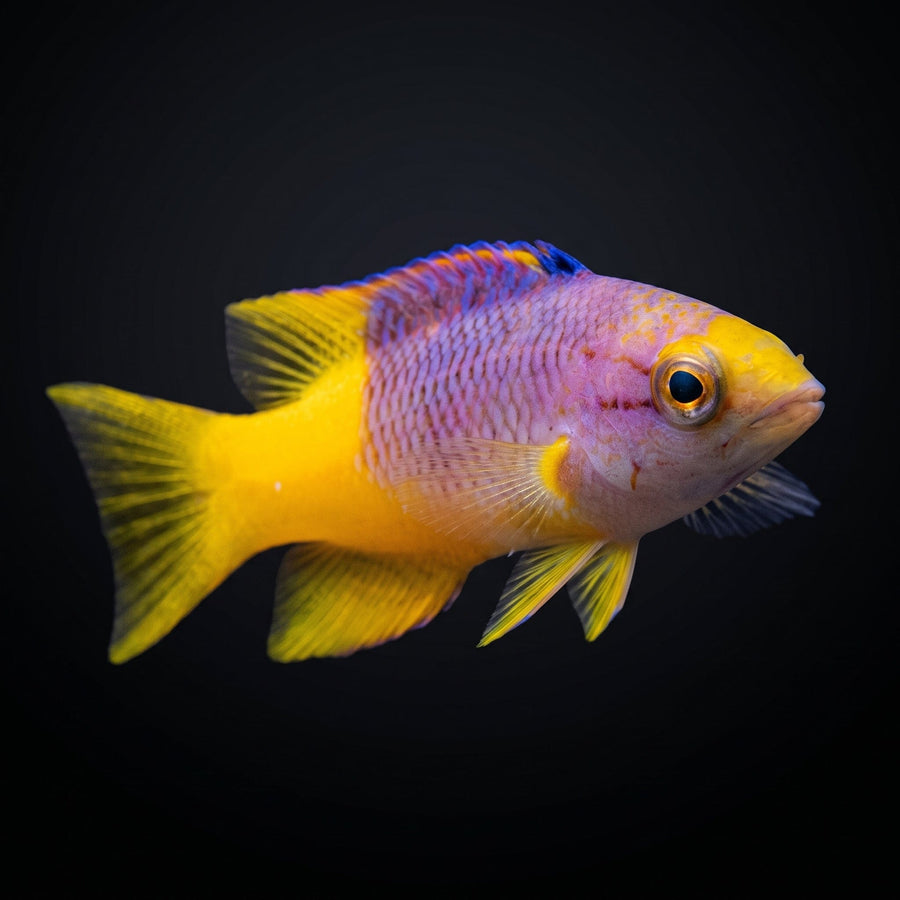
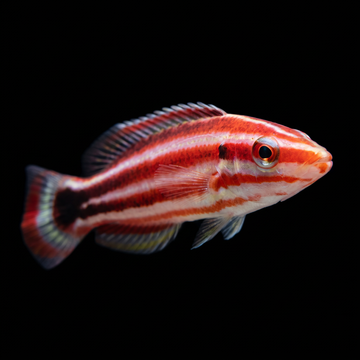
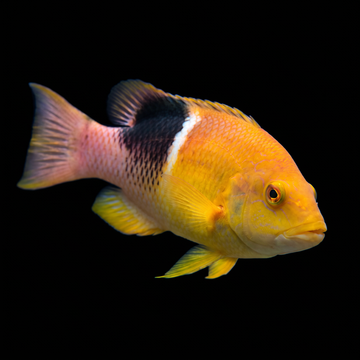
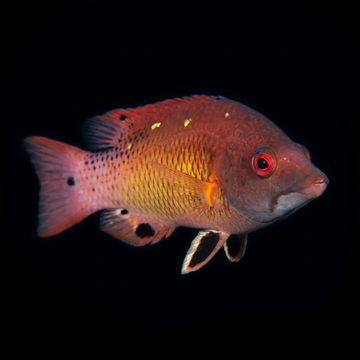
The Neopercularis Hogfish is a carnivorous marine fish that feeds on small crustaceans and other benthic invertebrates in its natural reef habitat. In captivity, it should receive a varied diet of high-quality marine proteins to support healthy growth, coloration, and activity.
Recommended foods include:
Frozen mysis shrimp
Vitamin-enriched brine shrimp
Finely chopped shrimp, clam, squid, and other marine seafood
Frozen marine carnivore blends
High-quality sinking marine pellets
Small crustaceans such as amphipods and copepods
Feed two to three small meals daily, offering portions that can be consumed promptly without excessive waste.
Newly introduced specimens may initially be hesitant to accept prepared foods, particularly following collection from deeper reef habitats. Frozen mysis shrimp and other appropriately sized meaty foods are excellent options for encouraging a feeding response.
A varied feeding routine helps maintain strong body condition and supports the fish's natural hunting and foraging behavior.
Like many members of the Bodianus genus, this species may display territorial behavior toward similarly shaped wrasses, other hogfish, or fish competing for the same shelter.
Suitable tankmates include clownfish, larger gobies, basslets, dwarf angelfish, and other peaceful to moderately assertive marine fish that are not easily intimidated.
Avoid combining this hogfish with highly aggressive predators, extremely timid species, or very small fish that could be harassed.
Keeping a single individual is generally recommended unless attempting a carefully planned pairing in a sufficiently spacious aquarium. Multiple hogfish should not be introduced together without considering territorial behavior and long-term compatibility.
Reef classification: With Caution.
The Neopercularis Hogfish is considered reef safe with caution.
It is not generally regarded as a coral-feeding species and can be maintained in reef aquariums containing healthy soft corals, LPS corals, and SPS corals.
However, its natural carnivorous feeding behavior may present risks to certain ornamental invertebrates. Small shrimp, tiny crabs, amphipods, and other crustaceans may be investigated or consumed.
Very small ornamental shrimp and delicate invertebrates are particularly vulnerable, especially as the hogfish becomes more established and confident.
Larger established invertebrates may be less vulnerable, although compatibility cannot be guaranteed.
For reef aquariums containing valuable ornamental shrimp or extensive populations of small crustaceans, careful consideration is recommended before introducing this species.
FAQ
Frequently Asked Questions
About the Neopercularis Hogfish
-
What size aquarium does the Neopercularis Hogfish need?
Provide at least 75 gallons for adult housing. Documented to 3.8 inches (9.7 cm standard length; excluding the tail fin). -
Is the Neopercularis Hogfish reef safe?
With Caution. The Neopercularis Hogfish is considered reef safe with caution. It is not generally regarded as a coral-feeding species and can be maintained in reef aquariums containing healthy soft corals, LPS corals, and SPS corals. However, its natural carnivorous feeding behavior may present risks to certain ornamental invertebrates. Small shrimp, tiny crabs, amphipods, and other crustaceans may be investigated or consumed. Very small ornamental shrimp and delicate invertebrates are particularly vulnerable, especially as the hogfish becomes more established and confident. Larger established invertebrates may be less vulnerable, although compatibility cannot be guaranteed. For reef aquariums containing valuable ornamental shrimp or extensive populations of small crustaceans, careful consideration is recommended before introducing this species. -
What does the Neopercularis Hogfish eat?
The Neopercularis Hogfish is a carnivorous marine fish that feeds on small crustaceans and other benthic invertebrates in its natural reef habitat. In captivity, it should receive a varied diet of high-quality marine proteins to support healthy growth, coloration, and activity. Recommended foods include: Frozen mysis shrimp Vitamin-enriched brine shrimp Finely chopped shrimp, clam, squid, and other marine seafood Frozen marine carnivore blends High-quality sinking marine pellets Small crustaceans such as amphipods and copepods Feed two to three small meals daily, offering portions that can be consumed promptly without excessive waste. Newly introduced specimens may initially be hesitant to accept prepared foods, particularly following collection from deeper reef habitats. Frozen mysis shrimp and other appropriately sized meaty foods are excellent options for encouraging a feeding response. A varied feeding routine helps maintain strong body condition and supports the fish's natural hunting and foraging behavior.