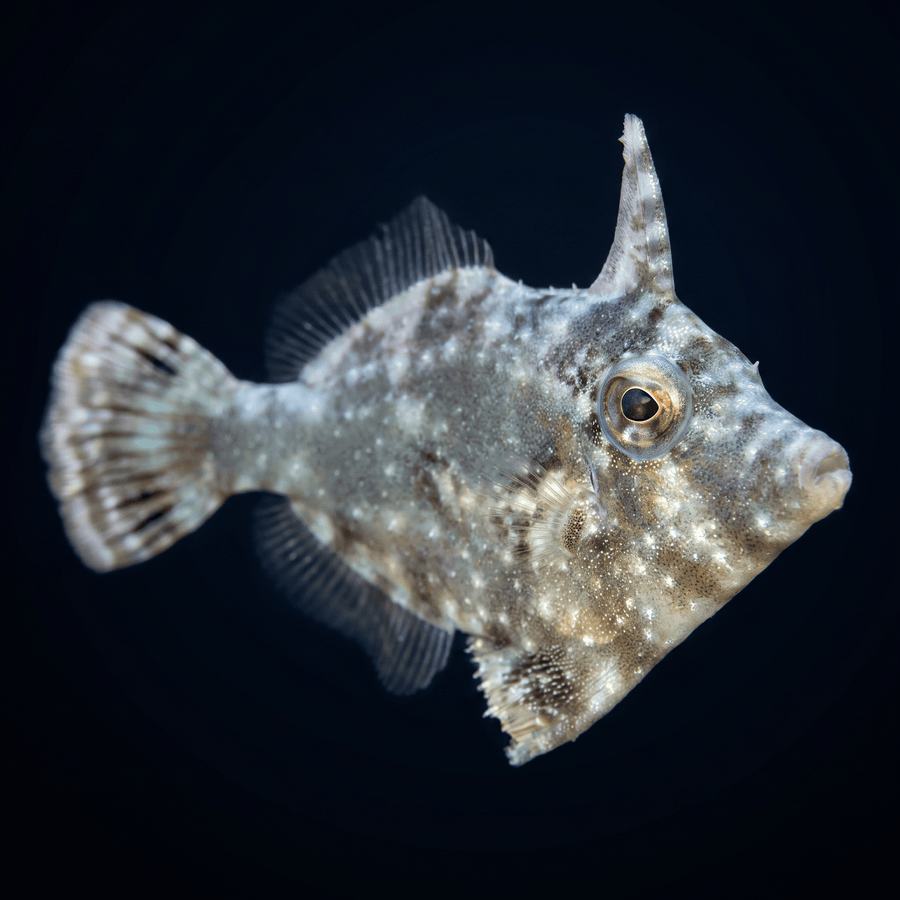
Pervagor spilosoma is an omnivore, picking continuously at algae, small invertebrates, and other edible material across reef surfaces. Some accounts emphasize its herbivorous tendencies, but in practice the species takes both plant and animal matter, and captive diets should reflect that breadth. Offer a rotation of frozen preparations along with live foods, marine algae, and vegetable-based fare so that both halves of the diet are covered.
Feed several small portions throughout the day, and be especially attentive during the first weeks after introduction, when frequent offerings help the fish settle and maintain condition. Once it begins foraging on its own and locating natural food sources within the aquarium, feeding frequency can be scaled back. Continued access to grazing surfaces reduces the likelihood of the fish turning its attention toward tank inhabitants.
Invertebrate compatibility is the central caveat, and this species should be considered reef safe with caution. It is inclined to sample small shrimp and other small crustaceans, and in some systems it has also bothered LPS corals, soft corals, larger shrimp and crabs, and assorted invertebrates. Some aquarists house it in reef displays without incident, but a fully stocked ornamental invertebrate tank is a gamble. Fish-only or fish-and-rock systems, or well-fed reefs where the keeper accepts the risk to motile inverts, are the safer placements.
FAQ
Frequently Asked Questions
About the Fantail Filefish
-
Is the Fantail Filefish reef safe?
It is reef safe only with caution. Small shrimp and other crustaceans are at risk, and some individuals also nip LPS corals, soft corals, larger crabs and shrimp, and assorted invertebrates. -
How large an aquarium does a Fantail Filefish need?
A 50-gallon aquarium is the practical minimum for an adult, and larger systems with generous live rock and open swimming lanes are better still. -
How large does a Fantail Filefish get?
Adults reach approximately 7.1 inches, which is sizable for a filefish kept in home aquariums.