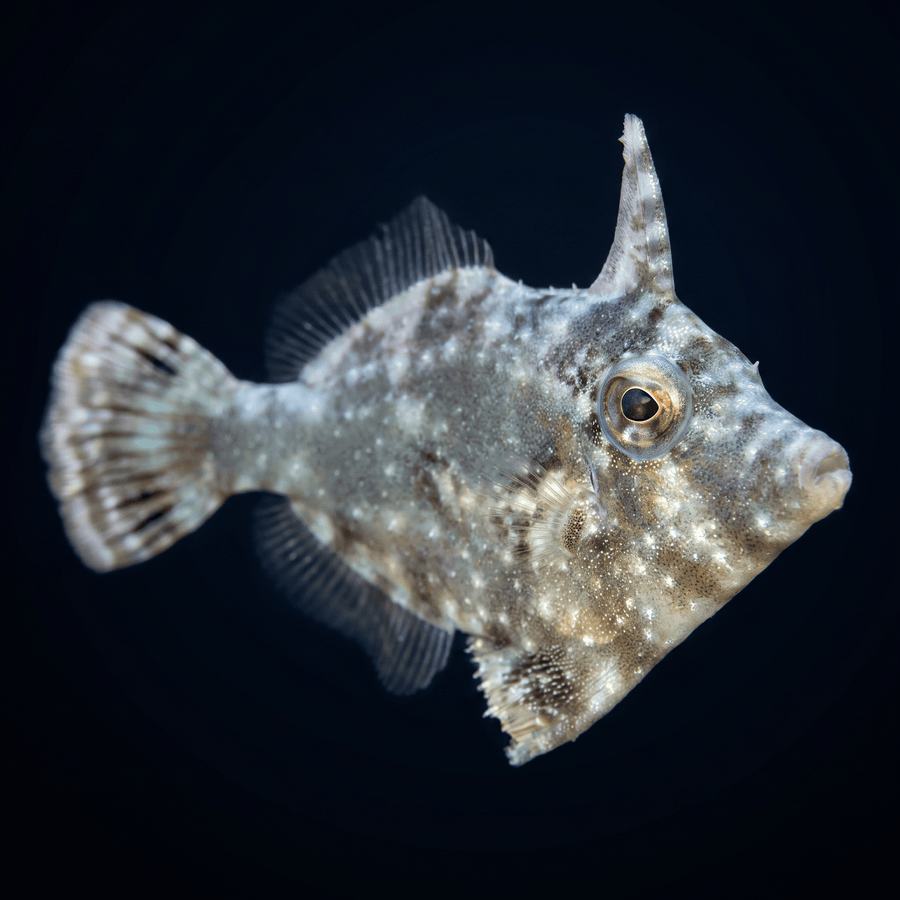
In the wild, Acreichthys tomentosus works its way through amphipods, polychaete worms, molluscs, and assorted benthic invertebrates, supplemented with some plant material. Many aquarium specimens extend that menu to Aiptasia anemones, which accounts for the common name, though glass anemones are only one item among many and never a complete diet. In captivity, offer a varied omnivorous selection built around mysis shrimp, brine shrimp, finely chopped shrimp, squid, scallop, clam, and similar marine seafood, along with krill, marine algae, and quality pellets or flakes sized for a small mouth.
Feed small portions two to several times daily, since this species grazes continuously rather than gorging. Slow or shy individuals often benefit from target feeding, which also ensures food reaches the fish before quicker tankmates strip the water column. Newly introduced specimens that ignore prepared items frequently respond to enriched live brine shrimp or blackworms before transitioning to frozen and dry foods. Expect patience regarding Aiptasia control: a fish may need days or weeks to recognize glass anemones as food, and some never take to them at all, so no purchase should be made on the assumption of guaranteed pest removal.
Reef compatibility must be treated as conditional. While this species is widely employed against nuisance Aiptasia, individuals may also nip hard corals, soft corals, coral polyps, fleshy corals, and other sessile invertebrates, and picking sometimes escalates once the glass anemone population has been cleared. Small ornamental shrimp, feather dusters, snails, and crabs can also come under attack. Behavior varies considerably from fish to fish, so close observation is essential. Some aquarists use the species successfully in coral systems, while others rotate it into a refugium or fish-only aquarium once its pest-control work is finished.
FAQ
Frequently Asked Questions
About the Aiptasia Eating Filefish
-
Will every Aiptasia Eating Filefish eliminate Aiptasia?
No. Many specimens do consume glass anemones, but a fish may need days or weeks to begin, and some never develop the habit. Keep a backup pest-control plan and continue offering supplemental food. -
Can this fish be kept in a coral reef aquarium?
Only with caution, as it may nip hard and soft corals and other sessile invertebrates in addition to Aiptasia. Small shrimp, ornamental crustaceans, feather dusters, snails, and crabs can also be at risk, so individual behavior requires close monitoring. -
What setup and feeding routine best suit this species?
Use an established aquarium of at least 30 gallons with live rock or similar cover, gentle to moderate flow, and peaceful tankmates. Offer varied meaty marine foods plus an algae component in small portions two to several times daily, using target feeding or live foods for shy new arrivals.