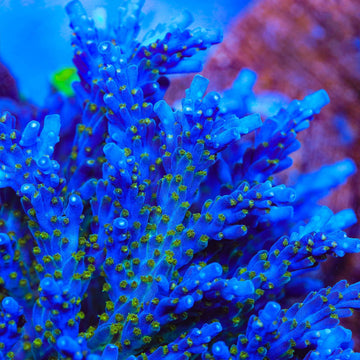
TSA Count Dracula Acropora Coral
Overview
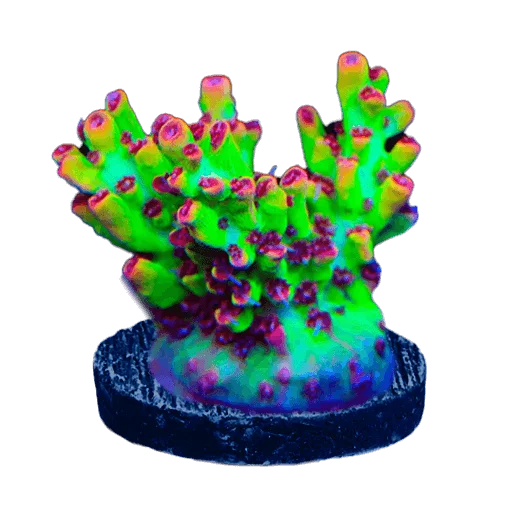
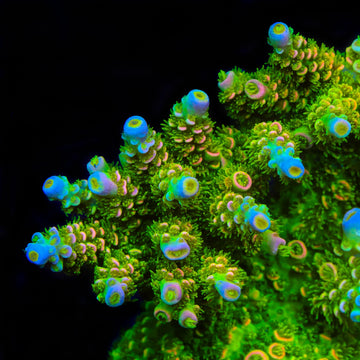
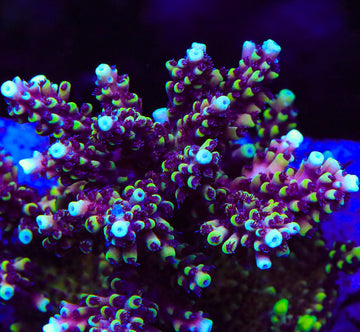
Count Dracula Acropora Coral shows dense, upward-branching tips with contrasting red to burgundy hues. Acropora tenuis is a small-polyp stony branching coral that prefers strong light and high, turbulent water flow. It relies on symbiotic algae for energy but accepts occasional small-particle foods, which may support faster growth and color. Place high on stable rockwork with space from stinging corals, and keep alkalinity and nutrients steady.
Quick Facts
Care
Difficult
Lighting
High
Flow
High
Placement
High
Temperament
Peaceful (2–3 inches from other SPS; 6 inches from aggressive LPS)
Recommended Parameters
Temp
76–80°F
pH
8.1–8.4
Salinity
1.025–1.026
Calcium
420–450 ppm
AlkAlkalinity
8–9 dKH
Magnesium
1280–1350 ppm
Feeding
photosynthetic (primary), microplankton, rotifers, copepod nauplii, oyster eggs, coral-specific powdered foods (e.g., Reef-Roids), amino acid supplements
Care & Placement
FAQ
Frequently Asked Questions
About the TSA Count Dracula Acropora Coral
-
Why does my Count Dracula Acropora lose its deep red tones and turn green or brown over time?
Color shifts often trace to spectrum and nutrient balance. This tenuis holds reds best under strong blue/violet (420–450 nm with a touch of 380–410 nm) and stable, modest nutrients (NO3 ~5–15 ppm, PO4 0.03–0.08). Low potassium or iodine can mute reds; test and keep K 380–420 ppm. Avoid excess white light and sudden PAR jumps; acclimate slowly. -
The tips are “burning” or bleaching while the base stays colored—what’s the likely cause?
Tip burn typically stems from high alkalinity paired with intense light and ultra-low nutrients. Keep dKH steady at 7.5–8.5, ensure NO3 and PO4 aren’t bottomed out, and reduce peak PAR temporarily. Increase random, turbulent flow to clear mucus and improve gas exchange. If damage advances, trim to healthy tissue and stabilize parameters before restoring light. -
How does Count Dracula Acropora prefer flow, and can flow patterns impact polyp extension?
It thrives in strong, alternating turbulence similar to surge zones. Use opposing pumps or a gyre with intermittent pulses; avoid constant laminar jets that cause tissue recession on the hit side. Proper flow boosts polyp extension and nutrient exchange, prevents detritus at the base, and helps maintain tip coloration. Watch for shadowed branches and re-aim pumps as the colony grows. -
My colony encrusts well but stalls vertically—is that normal for this strain?
Yes. Many tenuis, including Count Dracula, invest energy in a broad, thick base before pushing vertical spikes. This phase can last weeks to months, especially after fragging. Encourage upward growth by maintaining consistent PAR (300–400 on mature colonies), strong cross-flow, and stable alk/Ca/Mg. Avoid shading from neighboring branches and trim surrounding fast growers to reduce competition.