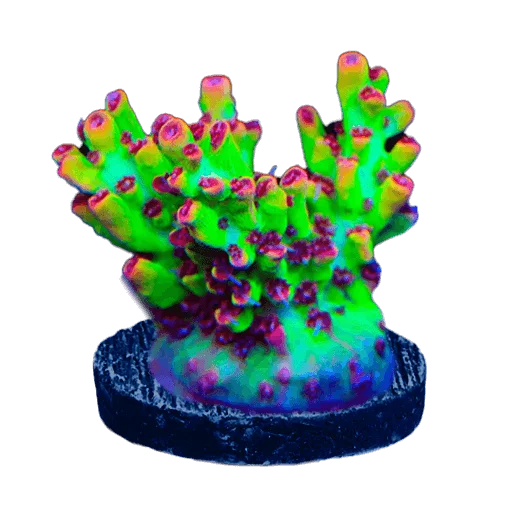
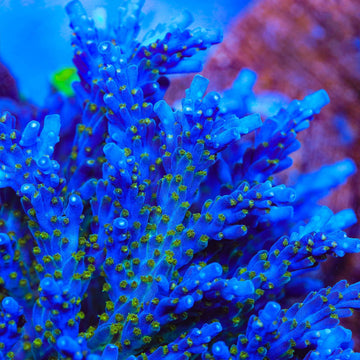
TSA Bottle Rocket Acropora Coral
Overview
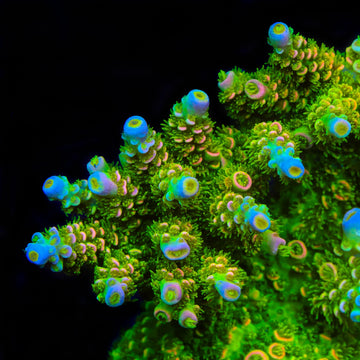
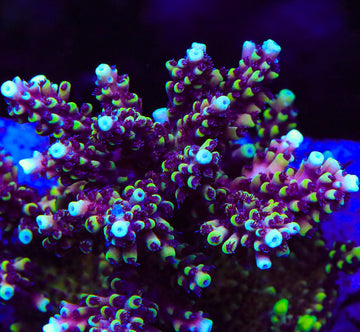
Bottle Rocket Acropora Coral displays thin, upward-branching axes with tightly spaced polyps. Acropora sp. is a small polyp stony branching coral that prefers strong light and high, turbulent water flow. It relies mainly on symbiotic algae for energy but can take very fine planktonic foods, which may support growth and coloration. Place high on rockwork with stable alkalinity and calcium, and keep clear of aggressive neighbors to avoid tissue damage.
Quick Facts
Care
Difficult
Lighting
High
Flow
High
Placement
High
Temperament
Peaceful (2–3 inches spacing)
Recommended Parameters
Temp
76–80°F
pH
8.1–8.4
Salinity
1.025–1.026
Calcium
420–450 ppm
AlkAlkalinity
7.5–9 dKH
Magnesium
1280–1350 ppm
Feeding
photosynthetic (primary), microplankton, rotifers, copepod nauplii, zooplankton suspensions, coral-specific powdered foods (e.g., Reef-Roids), amino acid supplements
Care & Placement
FAQ
Frequently Asked Questions
About the TSA Bottle Rocket Acropora Coral
-
How does the Bottle Rocket Acropora grow, and where should I place it to keep its upright, slender “rocket” look?
It encrusts quickly, then shoots narrow vertical branches that thicken with age. Give it strong, random flow to prevent one-sided growth and detritus buildup. Place high to mid-high under 250–400 PAR, with 3–4 inches of clearance for turbulence between branches. Avoid shade from plating corals; even light coverage helps prevent base die-off and maintains that tall, clustered profile. -
My coral’s tips are pale or “burnt” while the base is fine—what’s going on?
That’s often high alkalinity paired with low nutrients under strong light. Keep alk stable around 7.5–8.5 dKH, and avoid ultra-low nitrate/phosphate (target ~5–15 ppm NO3, 0.03–0.08 ppm PO4). Increase random flow across the tips and reduce PAR slightly for a week. Resume normal intensity after color returns. Ensure daily stability; rapid swings in alk or temperature provoke tip necrosis. -
The base is receding slowly—how do I tell if it’s shadowing, pests, or chemistry?
Shadowing STN shows white skeleton where light is blocked; increase side lighting and flow. AEFW cause patchy bite marks and tan egg clutches under branches; verify with a turkey baster blast and inspect dips. Red bugs look like tiny orange dots on polyps with reduced extension. For pests, frag above clean tissue, perform targeted dips, and improve flow. For chemistry, stabilize alk, pH, and salinity first. -
What’s the best way to frag this coral without losing its trademark shape or color?
Cut healthy tips 1–2 inches above a node, avoiding very new, thin growth. Mount frags vertically so flow hits both sides, encouraging straight, upward branches. Use fresh plugs and thick gel glue to minimize wobble. Acclimate to light over 7–10 days; sudden high PAR can stall growth. Maintain moderate nutrients post-frag to prevent paling and speed encrustment.