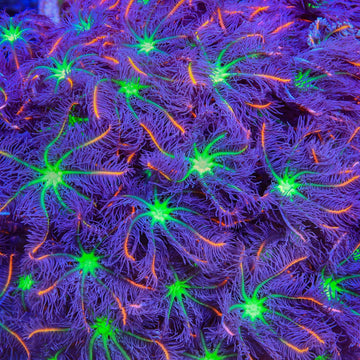
Super Saiyan Zoanthids Coral

Super Saiyan Zoanthids Coral

Beginner Corals Zoanthids Soft Coral

Overview

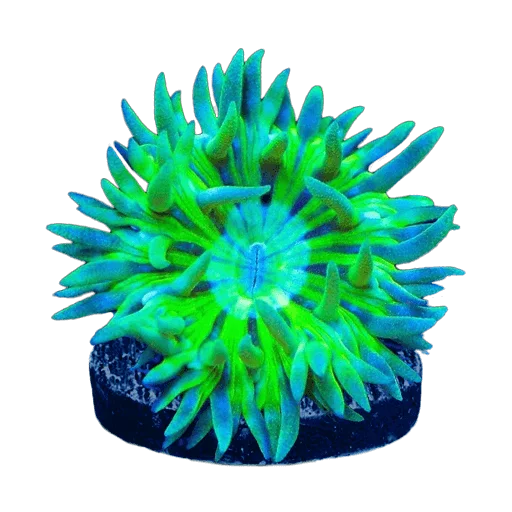
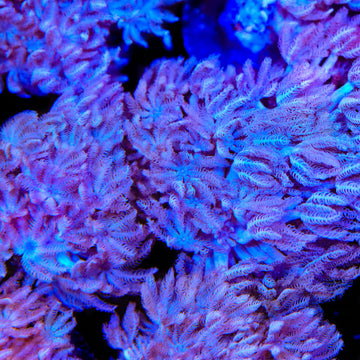
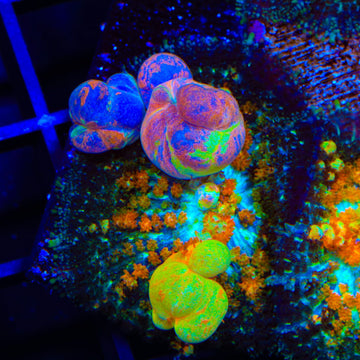
Super Saiyan Zoanthids Coral forms tight mats of small button-like polyps with bright contrasting centers. Classified as Zoanthus sp., this soft colonial polyp thrives under moderate lighting and moderate water flow. It is primarily photosynthetic via symbiotic algae but will accept small meaty foods, which can boost growth and coloration. Place on an isolated rock to manage rapid spreading, and ensure space from stinging neighbors.

Quick Facts

Care Easy
Lighting Moderate
Flow Moderate
Placement Low–Mid
Temperament Peaceful to semi-aggressive (2–4 inches spacing)

Recommended Parameters

Temp 76–80°F
pH 8.1–8.4
Salinity 1.025–1.026
Calcium 380–450 ppm
AlkAlkalinity 8–10 dKH
Magnesium 1250–1350 ppm
Feeding photosynthetic (primary), phytoplankton, zooplankton, rotifers, baby brine shrimp nauplii, cyclops, microplankton, powdered coral foods, marine snow

Care & Placement

Super Saiyan Zoanthids Coral (Zoanthus sp.) are hardy, fast-growing polyps that thrive with stable, clean water and moderate light and flow. Start them low to mid in the tank and acclimate to higher light if desired; target 75–150 PAR, avoiding sudden jumps to prevent bleaching. Provide indirect, moderate, turbulent flow to keep debris off the mat and deter algae or cyanobacteria. They photosynthesize but benefit from occasional small-particle foods (phytoplankton, rotifers, fine reef blends) 1–2 times weekly; spot-feed lightly to avoid film buildup. Keep temperature 24–26°C (75–79°F), salinity 1.025–1.026 (refractometer), pH 8.0–8.4, alkalinity 8–9.5 dKH, calcium 400–450 ppm, magnesium 1250–1350 ppm, nitrate 2–10 ppm, phosphate 0.03–0.10 ppm. Test weekly and maintain stability with consistent top-off and water changes.Place frags on an isolated rock “island” to control spread and leave space from slow growers. Avoid neighbors with long sweepers (e.g., Galaxea, Favids); Zoanthids are generally peaceful but can overtake nearby corals. Dip new pieces to exclude pests (zoa-eating nudibranchs, sundial snails) and acclimate to light using a screen or by starting low and moving up over 1–2 weeks. Closed polyps often signal irritation, pests, or too much light/flow; bleaching suggests excess light or low nutrients. Address detritus with more flow and careful feeding. Handle with gloves and eye protection when fragging.

FAQ

Frequently Asked Questions

About the Super Saiyan Zoanthids Coral

  • Why did my Super Saiyan Zoanthids fade from bright gold to green?
    This morph is highly spectrum-sensitive. A blue-heavy spectrum (actinic/royal blue) with moderate PAR (120–200) preserves gold tones; warm whites and low PAR push them toward green/brown. Keep nutrients non-zero (NO3 5–15 ppm, PO4 0.03–0.1) for color stability. Avoid abrupt light changes; ramp intensity slowly. Excess iron or yellow lenses can mute golds—tweak photoperiod and spectrum before chasing additives.
  • My polyps are staying closed and “melting.” What’s the likely cause?
    Check at night for predators: zoa-eating nudibranchs, sundial snails, or spiders. If absent, suspect bacterial issues (e.g., zoa pox): increase flow, perform an iodine or Furan-2 dip, and trim away necrotic mat. Keep alkalinity stable and avoid ultra-low nutrients. Run fresh carbon if nearby corals are chemical-aggressive. After treatment, reduce light briefly and restore gradually to limit stress.
  • How do I prevent this morph from overrunning nearby corals?
    Mount on an isolated “island” rock or use a rubble moat to block the mat. Prune regularly by cutting the coenenchyme edge and removing small colonies rather than tearing. Wear gloves and eye protection due to palytoxin risk in zoanthids. Maintain a clean, moderate-to-strong crossflow so mats don’t creep under shaded ledges. Replace carbon monthly to temper chemical skirmishes.
  • They’ve stopped growing despite good lighting—what can I adjust?
    Zoanthus can stall in “too clean” systems. Aim for measurable nutrients (NO3 5–15 ppm, PO4 0.03–0.1). Feed small particulate foods (e.g., rotifers, reef roids) sparingly 1–2× weekly; observe for capture to avoid waste. Increase random flow to prevent detritus settling. If skirts are unusually long, they may be stretching—raise PAR slightly or reduce shadowing, but acclimate slowly.