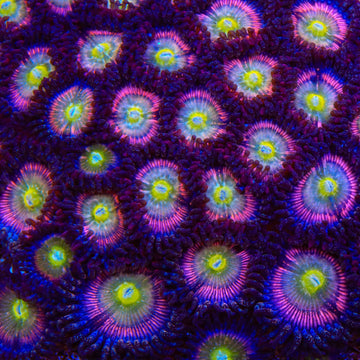
Space Chaos Zoanthids Coral
Overview
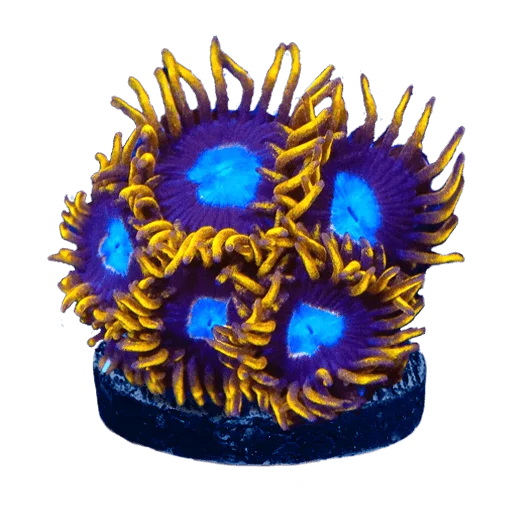
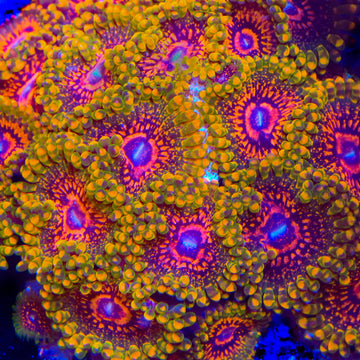
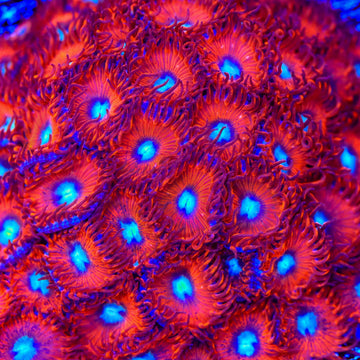
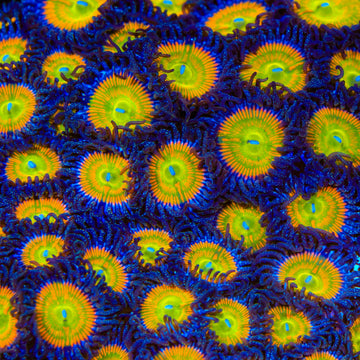
Space Chaos Zoanthids Coral displays small button-like polyps in tight mats with contrasting centers and skirts. Classified as Zoanthus sp., it is a soft, colonial zoanthid that does well under moderate lighting and low to moderate, steady water flow. It is primarily photosynthetic via symbiotic algae but accepts small particulate foods, which can support faster growth and deeper coloration. Place on isolated rock to manage spreading, and keep distance from aggressive stingers to avoid irritation.
Quick Facts
Care
Easy
Lighting
Low–Moderate
Flow
Moderate
Placement
Mid–Low
Temperament
Peaceful to semi-aggressive (allow 2–3 inches to prevent overgrowth)
Recommended Parameters
Temp
76–80°F
pH
8.1–8.4
Salinity
1.025–1.026
Calcium
400–440 ppm
AlkAlkalinity
8–10 dKH
Magnesium
1250–1350 ppm
Feeding
photosynthetic (primary), microplankton, phytoplankton, zooplankton, rotifers, copepod nauplii, cyclops, powdered coral foods, marine snow
Care & Placement
FAQ
Frequently Asked Questions
About the Space Chaos Zoanthids Coral
-
Why do my Space Chaos Zoanthids shift color under different lighting, and how can I keep their glow?
Zoanthus sp. pigments respond strongly to spectrum and PAR. Blues (420–470 nm) intensify fluorescence; too much white or PAR >200 can wash patterns. Aim for moderate PAR (~80–150) with a blue-heavy photoperiod. Keep nutrients non-zero (NO3 5–15 ppm, PO4 0.03–0.1 ppm); ultra-low nutrients dull colors. Stable alkalinity (8–9 dKH) also supports consistent coloration. -
My colony spreads fast, then “melts” in the center—what’s happening?
Rapid mat growth can trap detritus and bacteria, leading to localized die-off. Increase random flow to lift debris, turkey-baste weekly, and thin the mat to open gaps. An iodine dip can help if tissue looks necrotic. Verify stability: small salinity swings and temp spikes often trigger sudden retraction and melt in Zoanthus. -
What pests target Space Chaos Zoanthids, and how do I confirm and treat without harming them?
Look for zoa-eating nudibranchs, sundial snails, and tiny “zoa spiders.” Inspect at night with a flashlight; nudis often match the polyp’s color. Quarantine, then use a controlled coral dip (iodine-based or commercial). Remove egg spirals manually between polyps. Avoid long hydrogen peroxide baths—reserve brief, localized swabs for algae on the plug, not the tissue. -
Do Space Chaos Zoanthids compete chemically with neighbors, and how can I manage conflicts?
Zoanthus can release allelochemicals and irritate nearby soft corals or LPS. Provide a buffer zone and run quality activated carbon changed regularly. Increase flow to disperse compounds. If you notice persistent neighboring coral recession or closed polyps, relocate the most sensitive species and avoid downcurrent placement from a large, dense zoa mat.