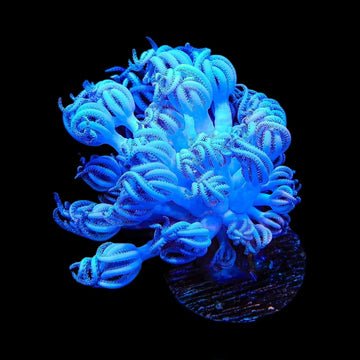
Red Death Palythoa Coral
Overview
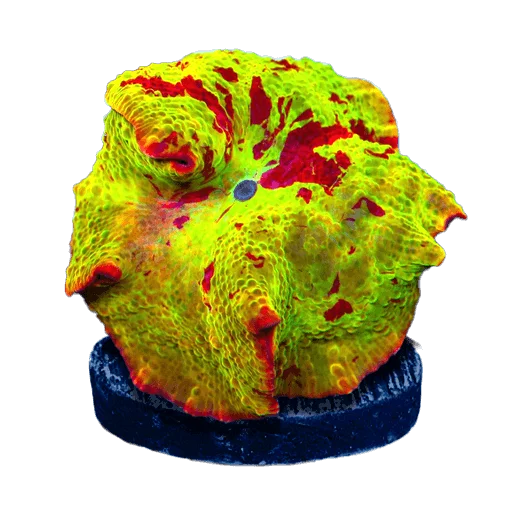
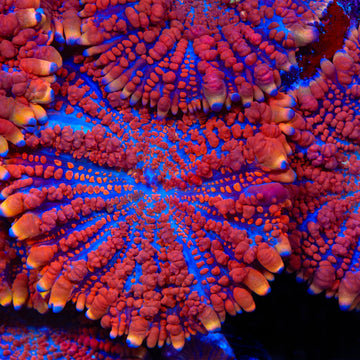
Red Death Palythoa Coral shows deep red, button-like polyps with contrasting centers. Palythoa sp. is a colonial zoanthid that forms mats; it does well under moderate light and moderate, indirect flow. It is photosynthetic via symbiotic algae but also accepts small meaty foods, which can improve growth and color. Place on an isolated rock to control spread, give space from neighbors, and handle with care due to palytoxin risk.
Quick Facts
Care
Easy
Lighting
Low–Moderate
Flow
Moderate
Placement
Low–Mid
Temperament
Semi-aggressive (3–6 inches spacing)
Recommended Parameters
Temp
76–80°F
pH
8.1–8.4
Salinity
1.025–1.026
Calcium
400–440 ppm
AlkAlkalinity
8–9.5 dKH
Magnesium
1250–1350 ppm
Feeding
photosynthetic, microplankton, phytoplankton, zooplankton, rotifers, cyclops, powdered coral foods, reef roids, marine snow, finely minced mysis shrimp, brine shrimp nauplii
Care & Placement
FAQ
Frequently Asked Questions
About the Red Death Palythoa Coral
-
Why do my Red Death Palythoa lose their deep red color and look brown or washed out?
Color shifts usually track light and nutrients. Too little light or very high nutrients lead to browning; too much light can bleach or dull the red. Aim for moderate PAR with gradual acclimation, steady nitrate in the low single digits and measurable phosphate, and strong, variable flow to prevent film buildup. Short, targeted feedings support richness without driving excess algae. -
How can I prevent Red Death Palythoa from overrunning my aquascape?
They spread via a mat that can overtake rock and shade neighbors. Mount them on isolated “islands” or rubble barriers you can remove and trim. Keep moderate, cross-flow to discourage detritus-fueled expansion. Periodically peel or cut the mat back with a sharp blade, then glue fragments to plugs. Run fresh carbon after pruning to manage chemical cues. -
My polyps stay closed for days—how do I pinpoint the cause?
Rule out pests first: inspect at night for nudibranchs, sundial snails, or spiders. Check for film algae or cyanobacteria smothering the mat; increase flow and siphon if present. If lighting was recently increased, reduce intensity and re-acclimate. Stable alk and nutrients help; sudden swings trigger shutdown. An iodine dip can help with irritation; reserve peroxide dips for stubborn algae. -
Do Red Death Palythoa need feeding, and what signs show it’s helping or hurting?
They benefit from occasional small meaty foods (e.g., fine mysis, reef roids), especially under moderate light. Feed sparingly with flow reduced so polyps ingest quickly. Positive signs: faster mat growth, fuller skirts, deeper coloration. Negative signs: film algae on the mat, swollen but closed polyps, or nutrient spikes. Adjust frequency and improve export if issues appear.