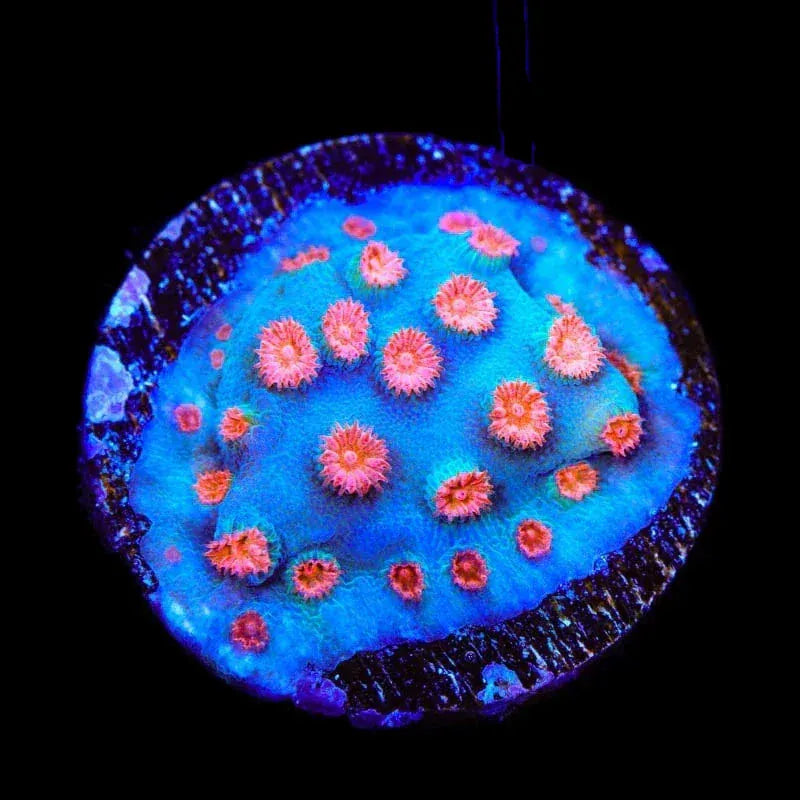
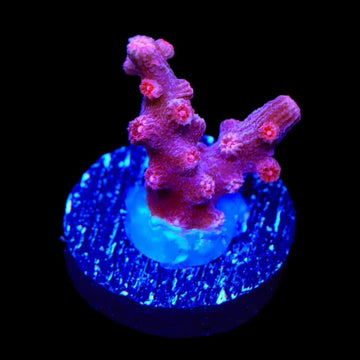
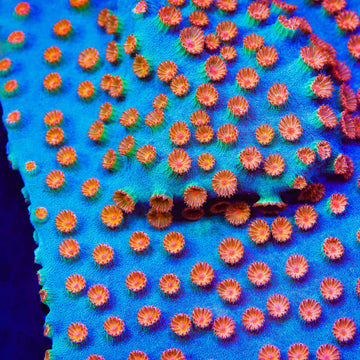
Pink Branching Cyphastrea Coral
Overview
Pink Branching Cyphastrea Coral shows tight, knobby branches with small polyps covering each surface. Cyphastrea decadia is a branching stony coral that prefers low to moderate light and gentle to moderate, indirect water flow. It is photosynthetic via symbiotic algae but will accept small particulate foods; occasional feeding can support growth and coloration. Place on stable rockwork with some space from stinging corals, and acclimate slowly if moving to brighter areas.
Quick Facts
Care
Moderate
Lighting
Low–Moderate
Flow
Low–Moderate
Placement
Low–Mid
Temperament
Peaceful to semi-aggressive (2–3 inches spacing)
Recommended Parameters
Temp
76–80°F
pH
8.1–8.4
Salinity
1.025–1.026
Calcium
400–450 ppm
AlkAlkalinity
8–9.5 dKH
Magnesium
1250–1350 ppm
Feeding
photosynthetic (primary), microplankton, rotifers, copepod nauplii, cyclops, baby brine shrimp, powdered coral foods (e.g., Reef-Roids), marine snow
Care & Placement
FAQ
Frequently Asked Questions
About the Pink Branching Cyphastrea Coral
-
Why does my Pink Branching Cyphastrea lose pink coloration or turn beige under new lights?
This species prefers moderate to low PAR. Sudden exposure to high intensity often washes out pinks, starting at branch tips. Acclimate over 2–3 weeks with reduced photoperiod or screen layers. In very low light it may brown or beige. Aim for 80–150 PAR, stable alkalinity (8–9 dKH), and moderate nutrients to maintain saturation without paling. -
How can I encourage branching rather than just encrusting growth?
Mount a small branch horizontally on a plug so multiple axial tips can form upward shoots. Provide steady, indirect flow to keep tissue clean. Keep neighboring surfaces clear so the base can encrust for stability; once a “foot” forms, growth often shifts vertical. Regular micro-feeding at night supports tip formation, especially after fragging stress. -
My colony retracts at night and shows tiny feeder tentacles—should I target feed?
Yes. Cyphastrea has small polyps that feed after lights out. Offer fine foods (rotifers, reef chili/roids, or enriched nauplii) 1–2 times weekly with pumps on low for 10–15 minutes. Overfeeding can foul tissue in low flow, so baste the colony gently afterward. Expect improved tissue thickness and color depth over several weeks. -
The base is receding while branch tips look fine—what’s the likely cause?
Basal recession often points to instability rather than pests: alk swings, detritus buildup under the base, or Vermetid irritation. Check alkalinity drift, increase gentle cross-flow to keep the base clean, and remove nearby Vermetids. Inspect for shadowing that starves the base; slight repositioning to diffuse light can halt recession and allow re-encrustment.