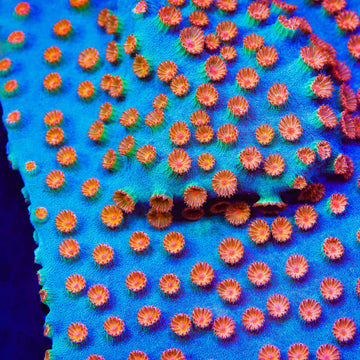
Peppermint Cyphastrea Coral
Overview
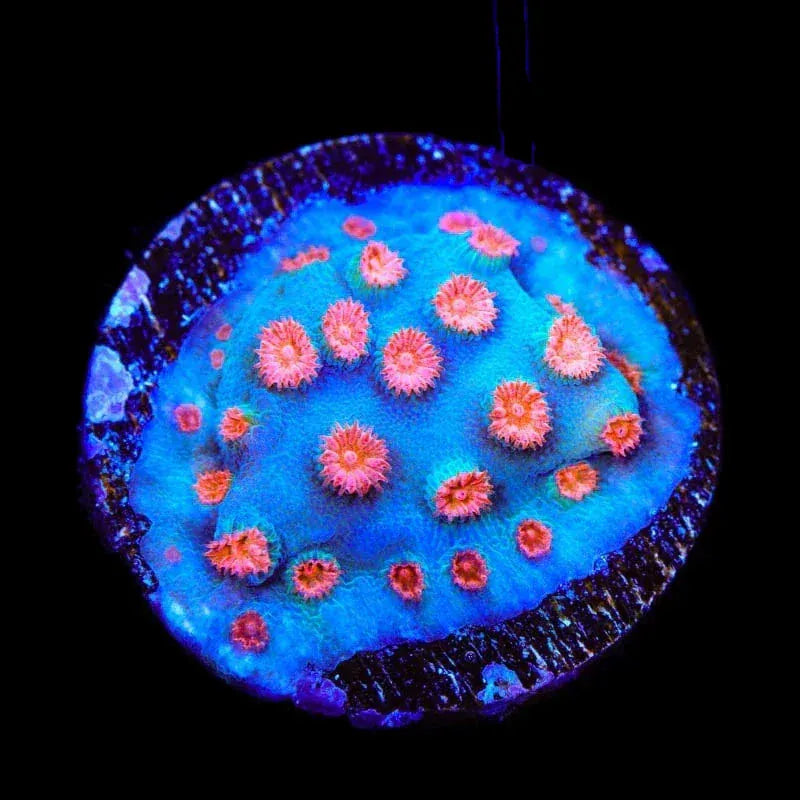
Peppermint Cyphastrea Coral features small, closely packed polyps on encrusting surfaces with contrasting red and green hues. Cyphastrea sp. is a slow-growing, encrusting stony coral; keep it in low to moderate light and gentle to moderate water flow. It is photosynthetic via symbiotic algae but accepts fine particulate foods at night, which can support growth and color. Place it on stable rock away from aggressive neighbors, as its sweeper tentacles are short but it can be overgrown by faster corals.
Quick Facts
Care
Easy
Lighting
Low–Moderate
Flow
Low–Moderate
Placement
Low–Mid
Temperament
Peaceful (1–3 inches spacing)
Recommended Parameters
Temp
76–80°F
pH
8.1–8.4
Salinity
1.025–1.026
Calcium
400–450 ppm
AlkAlkalinity
8–9 dKH
Magnesium
1250–1350 ppm
Feeding
photosynthetic (primary), microzooplankton, rotifers, copepod nauplii, baby brine shrimp, cyclops, powdered coral foods, amino acids
Care & Placement
FAQ
Frequently Asked Questions
About the Peppermint Cyphastrea Coral
-
Why does my Peppermint Cyphastrea expand at night but stay tight during the day?
Cyphastrea sp. often shows stronger polyp extension in dim light and at night, reflecting its turbid, lower-light habitat. Daytime retraction commonly points to excess PAR or overly direct flow. Try shading the colony’s edges, reduce hot spots, and provide indirect, moderate flow. Also inspect for micro-irritants like vermetid snail threads or film algae; both can suppress daytime extension. -
My coral’s red base looks washed out—how can I restore color without bleaching it?
Color washout typically comes from too much white light or very low nutrients. Shift spectrum toward blue and violet while keeping PAR modest (50–120). Raise nutrients slightly (target nitrate 5–15 ppm, phosphate 0.03–0.1 ppm) and avoid aggressive carbon dosing. Changes should be gradual over 2–3 weeks. Stable alkalinity and trace elements (iodine, iron) support pigment recovery. -
The colony is encrusting fast but won’t build height—can I encourage plating growth?
Cyphastrea is naturally encrusting. To create visual depth, provide textured substrates and vertical micro-ledges it can creep over. Place small rubble around the base; once it overgrows pieces, relocate them to new spots to “step up” the structure. Keep light modest—too bright discourages outward spread—and maintain steady, non-blasting flow to prevent detritus accumulation along new edges. -
Polyps are intact but tissue is receding from the base—what’s the likely cause?
Base recession usually reflects smothering by detritus or film algae at the growth margin. Increase intermittent, indirect flow to keep the rim clean, siphon debris during water changes, and reduce dissolved organics without bottoming out nutrients. Check for vermetid snails and their mucous nets; removing them often halts recession. An iodine dip can help if bacterial irritation is suspected.