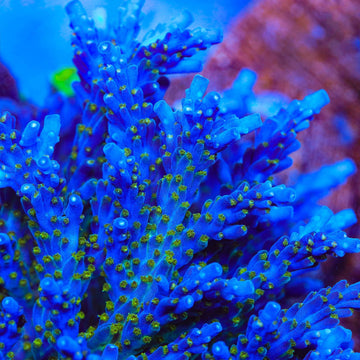
PC Superman Acropora Coral
Overview
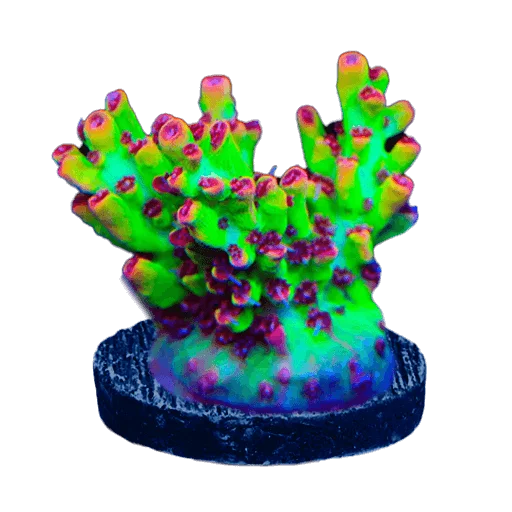
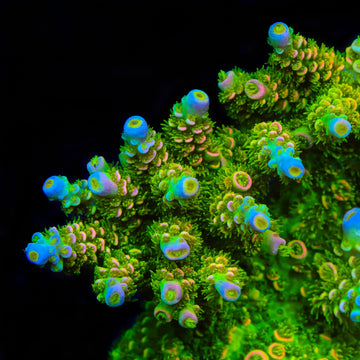
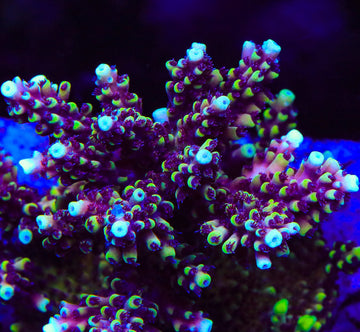
PC Superman Acropora Coral shows dense, spiky branchlets with fine radial corallites and contrasting polyp tips. Acropora millepora is a branching small-polyp stony coral that prefers strong light and high, turbulent water flow. It relies mainly on symbiotic algae for energy but can accept occasional microplankton or coral foods, which may support growth and coloration. Place high on stable rock with ample space, and avoid contact with aggressive neighbors or shadowing.
Quick Facts
Care
Difficult
Lighting
High
Flow
High
Placement
High
Temperament
Peaceful (short sweepers; 2–3 inches clearance)
Recommended Parameters
Temp
76–80°F
pH
8.1–8.4
Salinity
1.025–1.026
Calcium
420–450 ppm
AlkAlkalinity
7–9 dKH
Magnesium
1250–1350 ppm
Feeding
photosynthetic (primary), microplankton, rotifers, copepod nauplii, powdered coral foods, amino acids
Care & Placement
FAQ
Frequently Asked Questions
About the PC Superman Acropora Coral
-
Why does my PC Superman millepora lose its deep red base or blue polyps after a move?
This morph holds color best with stable nutrients and strong blue spectrum. Aim for moderate nitrate (5–10 ppm), measurable phosphate (0.03–0.08 ppm), and PAR around 250–350 with robust, random flow. Too-clean water or sudden intensity changes wash reds; excessive PAR can mute blues. Increase light gradually over 2–3 weeks, and avoid carbon overdosing that can strip nutrients and fade pigment. -
The base is receding while tips keep growing—what’s causing “top grows, base dies” in this mille?
Millepora forms dense, bushy growth that can shade its base, especially in lower flow zones. Redirect flow under and through the colony and raise it off the rock to reduce detritus buildup. Ensure alk stability (swing-sensitive tips burn quickly), and trim or reposition branches to open light pathways. Address pests if patterns are irregular; smooth, even recession often points to light/flow issues. -
What flow pattern does this species prefer to maximize polyp extension and tip density?
Shallow-reef surge is the model: high, chaotic, cross-current flow that shifts direction. Use two or more pumps on alternating schedules or a gyre paired with a randomizing pump. Avoid constant laminar blast at one side; it can cause tissue erosion on the facing branches and weak polyp extension elsewhere. Good turbulence tightens axial growth and keeps the base clean and oxygenated. -
Are there pest signs unique to millepora I should watch for beyond general Acropora checks?
Millepora shows a “peppered” bite pattern from AEFW on mid-branch surfaces rather than just bases, with dulling of the red base first. Blue polyps may remain deceptively visible early on. Night checks reveal tiny flatworms and stringy mucus at bites. Red bugs reduce polyp extension and tip fuzziness. Use targeted dips and a turkey baster blast routine; inspect under blue light for contrast.