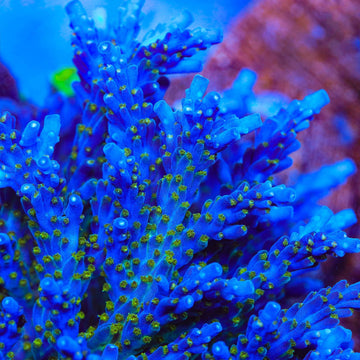
ORA Hawkins Echinata Acropora Coral
Overview
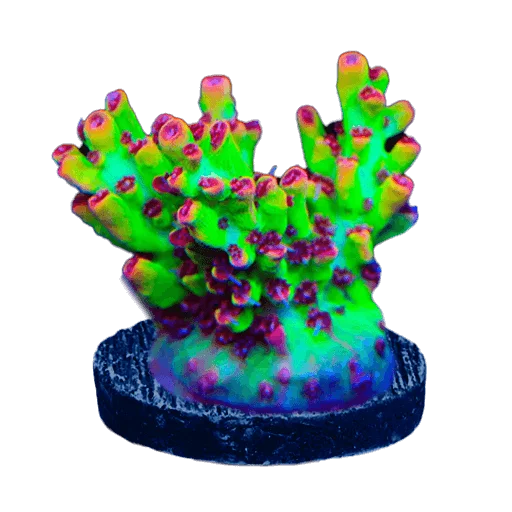
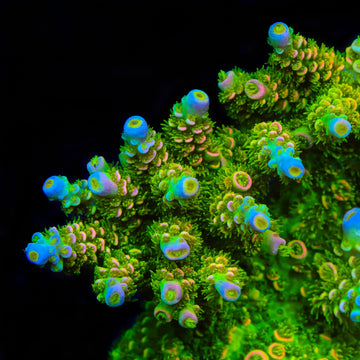
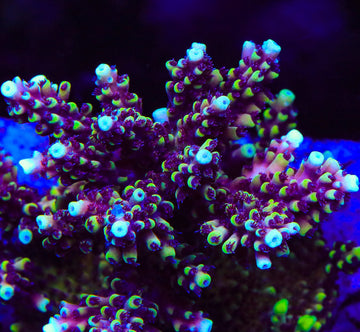
ORA Hawkins Echinata Acropora Coral shows slender, tightly spaced branchlets with sharp corallites. Acropora echinata is a small-polyp stony branching coral that prefers strong lighting and high, turbulent water flow. It is primarily photosynthetic via symbiotic algae but may accept occasional fine plankton or coral foods, which can support coloration and growth. Place high on stable rockwork with ample space from aggressive neighbors, and maintain very stable, clean water to prevent tissue loss.
Quick Facts
Care
Difficult
Lighting
High
Flow
High
Placement
High
Temperament
Peaceful (2–3 inches spacing)
Recommended Parameters
Temp
77–80°F
pH
8.1–8.4
Salinity
1.025–1.026
Calcium
420–450 ppm
AlkAlkalinity
7.5–9 dKH
Magnesium
1280–1350 ppm
Feeding
photosynthetic (primary), microplankton, rotifers, copepod nauplii, oyster eggs, amino acid supplements, coral-specific microfoods (e.g., Reef-Roids)
Care & Placement
FAQ
Frequently Asked Questions
About the ORA Hawkins Echinata Acropora Coral
-
Why does my ORA Hawkins Echinata lose color at the tips under strong lighting while the base stays darker?
A. echinata is a deep-water Acropora that prefers moderate PAR (around 200–300) with a blue‑heavy spectrum. Overly intense light bleaches growing tips while shaded bases retain pigments. Reduce peak intensity or raise the coral, and extend photoperiod instead of blasting with high PAR. Keep nutrients detectable (NO3 2–10 ppm, PO4 0.03–0.08) and stable alkalinity; abrupt drops or ultra‑low nutrients wash out blues. -
My colony encrusted, then stalled before shooting branches—normal?
Yes. Hawkins often invests in a solid base before pushing thin, bottlebrush branches. Stalling can indicate borderline flow or trace depletion. Increase alternating, high, non‑laminar flow to the base to prevent detritus buildup, and maintain regular micro‑element replenishment (especially potassium and iron) via water changes or tested dosing. Once stable, it tends to produce multiple vertical shoots; avoid nearby shading colonies. -
The base is receding while tips look fine—what’s the likely cause?
Base recession often comes from low flow and shading that trap detritus and film algae, stressing tissue. Redirect a powerhead to create more chaotic currents across the base, siphon debris, and trim nearby shadows. Check for slow tissue necrosis triggers: unstable alkalinity, very low nutrients, or chemical warfare from soft corals—run fresh carbon and increase skimming. Inspect for AEFW bite marks; quarantine and treat if seen. -
Are there spectrum or nutrient tweaks that improve the classic blue of Hawkins?
Maintain steady, moderate nutrients rather than “ULNS.” Keep nitrate and phosphate detectable and stable, then bias lighting toward 14–20K with strong royal blue/violet channels. Consistent potassium (380–420 ppm) and balanced iron help maintain blues without pushing algae; verify with tests before dosing. Avoid frequent spectrum changes—this coral responds best to long‑term consistency rather than aggressive lighting experiments.