ORA Cherry Red Goniopora Coral
Overview
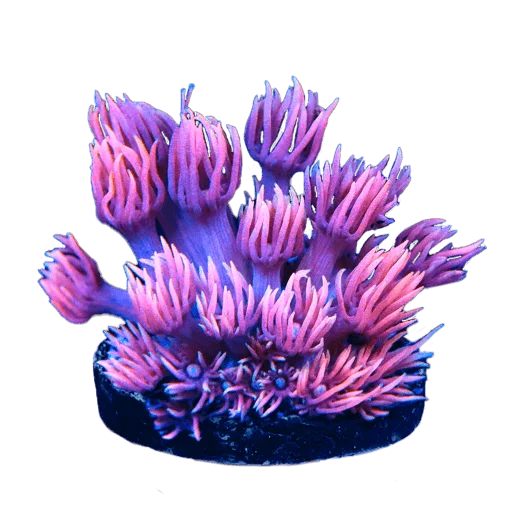
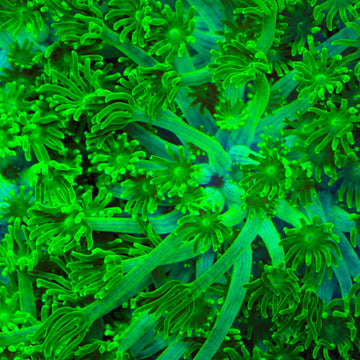
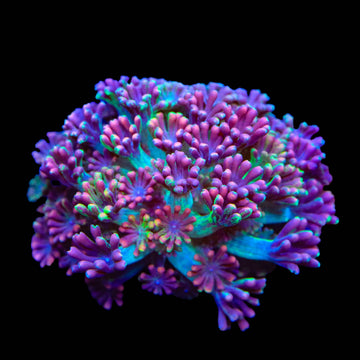
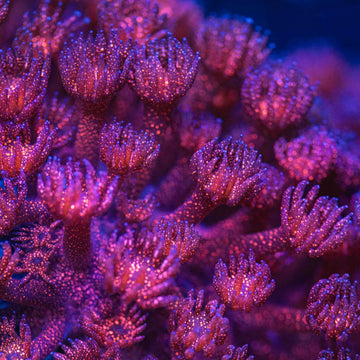
ORA Cherry Red Goniopora Coral features bright cherry-red, daisy-like polyps on long, extending stalks. Goniopora sp. is a large-polyp stony coral that prefers moderate light and gentle to moderate, indirect water flow. It is primarily photosynthetic via symbiotic algae but benefits from occasional feedings of fine plankton or coral foods to support growth and color. Place on stable rock or sand with space for full extension, and avoid contact with more aggressive corals.
Quick Facts
Care
Moderate
Lighting
Low–Moderate
Flow
Moderate indirect
Placement
Mid–Low
Temperament
Semi-aggressive (4–6 inches spacing)
Recommended Parameters
Temp
76–80°F
pH
8.1–8.4
Salinity
1.025–1.026
Calcium
420–450 ppm
AlkAlkalinity
8–9.5 dKH
Magnesium
1280–1400 ppm
Feeding
photosynthetic, phytoplankton, zooplankton, microplankton, rotifers, copepod nauplii, oyster eggs, Reef-Roids/powdered coral foods, Cyclops, finely minced mysis, enriched baby brine shrimp
Care & Placement
FAQ
Frequently Asked Questions
About the ORA Cherry Red Goniopora Coral
-
Why does my ORA Cherry Red Goniopora keep its polyps short or closed even though parameters look fine?
Check for subtle stressors: too-laminar flow, micro-irritation from vermetid snail webs, fish nipping (dwarf angels, butterflies), or alkalinity swings. Keep flow random and moderate so tentacles sway, not whip. Maintain nitrate 5–15 ppm and phosphate 0.03–0.1. Trace elements matter—low iron/manganese can suppress extension. Stabilize salinity and temp; small daily changes often reopen polyps within a week. -
How do I keep the cherry-red coloration from fading to pink or brown?
Provide moderate PAR (100–150) with strong blue spectrum (around 420–470 nm) and avoid ultra-low nutrients. Slightly “fed” water supports pigment density; aim nitrate 5–15 ppm and phosphate 0.03–0.1. Regular, fine-particulate feedings help. Consider iron and manganese replenishment via measured trace dosing or water changes. Avoid rapid light increases; ramp up 10–15% weekly to prevent photobleaching. -
What feeding routine gives the best growth without fouling the tank?
Offer fine foods (50–200 microns) like rotifers, reef roids, or enriched phytoplankton 2–3 times weekly. Target-feed gently with pumps on low; overpressure makes polyps retract and wastes food. Night or early evening feedings often yield better capture. Keep the skimmer running and monitor nutrients; if nitrate climbs above 20 ppm, reduce portions rather than frequency. -
Are there unique compatibility concerns for this coral in a mixed reef?
Keep it away from aggressive LPS with long sweepers (euphyllia, galaxea). Clownfish “hosting” can abrade polyps—discourage with placement or a decoy anemone/torch. Avoid direct sand burial but a stable sand-edge ledge works well. Watch for hermits bulldozing the base and vermetid snails embedding nearby. Most wrasses and shrimp are fine; dwarf angels remain a gamble.