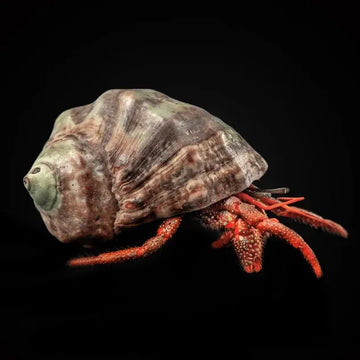
Omnivore
Film Algae
Bubble Algae
Detritus
Meaty Marine Foods
Usually nocturnal or crepuscular, Emerald Crabs graze rockwork and hide in crevices. Monitor increasing claw size, coral picking, and competition with smaller invertebrates.
FAQ
Frequently Asked Questions
About the Emerald Crab
-
Will an Emerald Crab eat bubble algae?
Many do, but results vary and large bubbles may be ignored. Use the crab as one part of a broader algae-control plan. -
Is an Emerald Crab completely reef safe?
No crab is guaranteed. Most behave well when appropriately stocked and fed, but monitor coral tissue and small invertebrates. -
Does an Emerald Crab need supplemental food?
Yes when the tank has little natural algae or detritus. Offer varied plant-based and marine foods in small portions. -
Why is my Emerald Crab hiding?
Hiding during the day and after molting is normal. Persistent inactivity also warrants a check of salinity, temperature, and water quality.