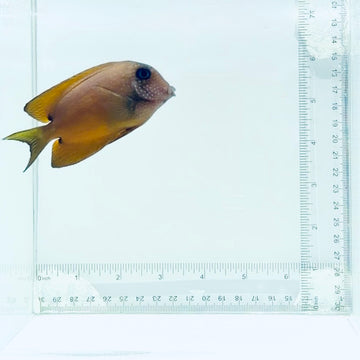
Sailfin Tang saltwater fish care guide

The Sailfin Tang (Zebrasoma velifer) is among the most visually commanding surgeonfish available to reef keepers, defined by an enormous dorsal fin that unfurls like a sail when the fish is displaying or startled. The body carries alternating yellow and blue-dark banding, with darker markings concentrated around the eyes and the fin bases, and juveniles at two to three inches already show the pattern in miniature before growing quickly toward an adult length of roughly 15 inches. The species is widespread across Indo-Pacific reefs, reported from the Red Sea region through the Maldives, Sri Lanka, Sumatra, Indonesia, Fiji, the Great Barrier Reef, Hawaii, and out to the Tuamotu Islands.

On the reef, Sailfin Tangs occupy shallow lagoons, surge-swept reef zones, and outer slopes from about 3 to 200 feet, grazing across hard substrate throughout the day. Captive housing should reflect that lifestyle: a mature, fully cycled system of at least 180 gallons with long, uninterrupted swimming lanes and generous live rock structure for grazing surface and secure retreats. Fine to medium coral sand suits the species well.

Strong, well-distributed flow and high oxygenation from powerheads help replicate the surge zones this tang favors, and stable water quality is essential for a fish of this size and activity level. A UV sterilizer is a worthwhile addition for parasite control. Because large, fast-moving tangs can collide with equipment or leave the water when spooked, the aquarium should be securely covered and rockwork firmly anchored. Care requirements place this species at a moderate level, best suited to keepers with an established system.

Sailfin Tangs are dedicated herbivores that spend the bulk of the day grazing algae and marine plant material across the reef. Replicating that near-constant intake is the single most important part of their husbandry. Build the diet around spirulina-based flakes and pellets, dried nori and other seaweed sheets clipped in the flow, and fresh vegetable matter such as blanched spinach or romaine. Occasional mysid or brine shrimp add protein and help maintain color intensity, but they should remain a supplement rather than a staple.

Feed two to three times daily to match the natural grazing rhythm, and increase both frequency and the proportion of algae-rich foods if the aquarium does not generate enough nuisance algae to browse. Other herbivorous residents, including cleaner shrimp working over the same surfaces, can reduce the available grazing, so supplemental feeding becomes more important in well-stocked systems. A tang kept slightly underfed will lose body condition quickly, so err toward more frequent offerings of prepared greens.

Spirulina Flakes Herbivore Pellets Dried Nori Sheets Seaweed Sheets Blanched Spinach Romaine Lettuce Mysid Shrimp Brine Shrimp
This is a bold, perpetually active swimmer that establishes and defends a territory in captivity much as it does on the reef. The Sailfin Tang is semi-aggressive and will assert itself, though it is often described as less combative than several other tangs. Conflict is most likely with other surgeonfish of similar size and body shape, particularly other Zebrasoma or Acanthurus species, so combining multiple tangs demands a very large system, simultaneous introduction where possible, and abundant rockwork offering sightline breaks and sleeping caves.

Toward unrelated fish the species is generally well behaved, mixing readily with wrasses, gobies, blennies, and anthias. Add assertive tankmates after the tang is settled, and avoid pairing it with extremely aggressive fish such as large triggers. In reef systems this tang is considered reef safe with caution: as an algae grazer it rarely troubles corals or invertebrates, but occasional nipping at coral polyps has been observed while foraging, and some invertebrates may not be entirely safe in every tank. Watch new additions closely rather than assuming complete invertebrate compatibility.

FAQ

Frequently Asked Questions

About the Sailfin Tang

  • How large should the aquarium be for an adult Sailfin Tang?
    Plan on a minimum of 180 gallons, with larger volumes preferred. This fish reaches about 15 inches and needs long, open swimming lanes in addition to substantial live rock.
  • Is the Sailfin Tang safe with corals and invertebrates?
    It is reef safe with caution. As a herbivorous grazer it seldom bothers corals or invertebrates, but occasional nipping at coral polyps has been reported and some invertebrates may be at risk.
  • How often should a Sailfin Tang be fed?
    Offer food two to three times per day to imitate constant natural grazing. Increase algae-based offerings if the aquarium does not produce enough algae for the fish to browse.