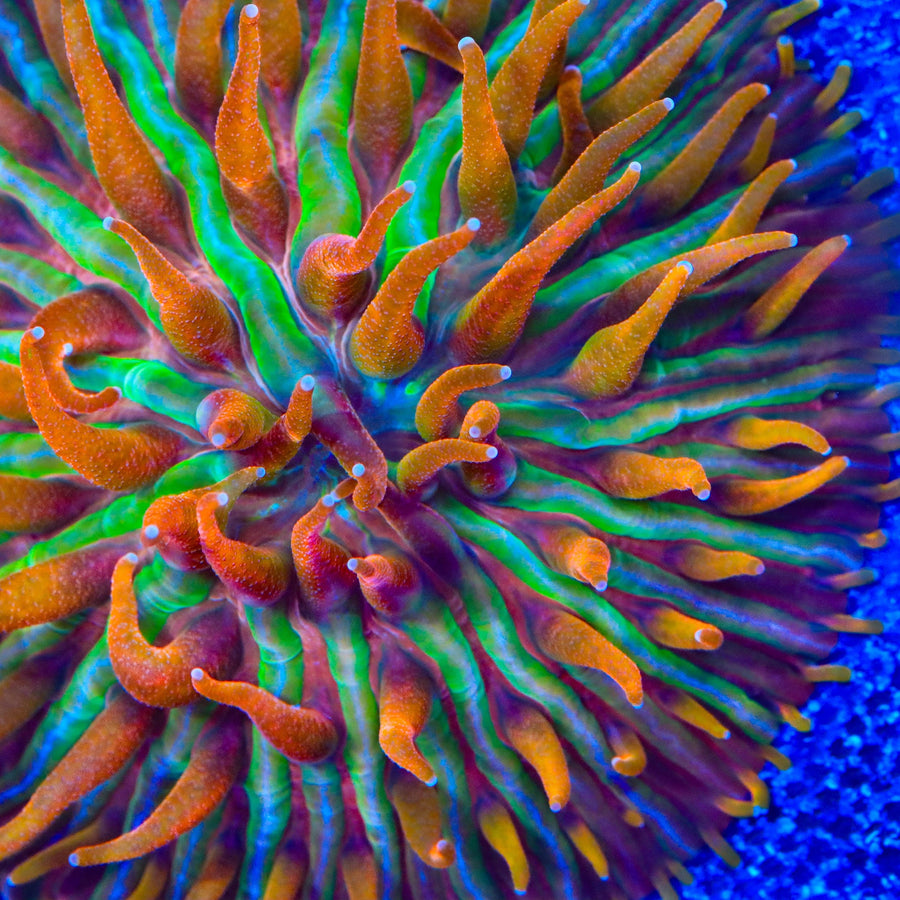
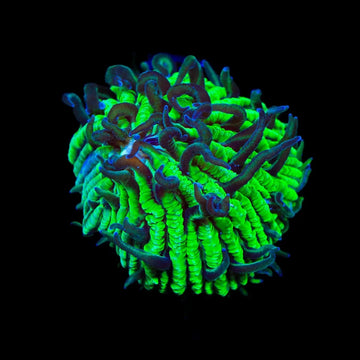
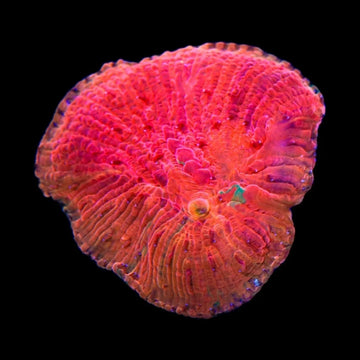
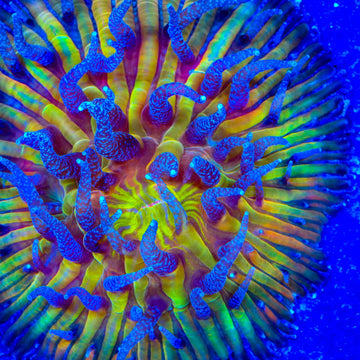
TSA Funky Fungia Plate Coral
Overview
Fungia Plate Coral has a round, flat disk with radiating ridges and a central mouth. Fungia fungites is a solitary LPS, free-living plate coral that does well under moderate light and low to moderate water flow. It hosts symbiotic algae for most nutrition but benefits from occasional small meaty feedings, which can improve growth and color. Place it on soft substrate with space around it, as it can inflate and move slightly and may sting nearby corals.
Quick Facts
Care
Moderate
Lighting
Moderate
Flow
Low–Moderate
Placement
Low
Temperament
Semi-aggressive (4–6 inches spacing)
Recommended Parameters
Temp
76–82°F
pH
8.1–8.4
Salinity
1.025–1.026
Calcium
400–450 ppm
AlkAlkalinity
8–10 dKH
Magnesium
1250–1350 ppm
Feeding
photosynthetic, mysis shrimp, enriched brine shrimp, finely chopped seafood, krill pieces, zooplankton, microplankton, LPS pellets, coral-specific foods
Care & Placement
FAQ
Frequently Asked Questions
About the TSA Funky Fungia Plate Coral
-
My Fungia Plate Coral keeps “walking.” Is that normal, and what is it telling me?
Yes—Fungia fungites can inflate and deflate to scoot across the substrate or flip upright. Frequent movement often signals excess light, harsh flow, or irritating sand/vermetid nets. Look for gaping mouth, receding rim, or bleaching as clues. Try lower, indirect flow, slightly reduced PAR, and a smooth sand bed or small rubble ring to prevent abrasion. Give it open space so it doesn’t sting or get stung while relocating. -
Why did “dead” Fungia skeleton produce tiny plates months later?
Fungiids can sprout anthocauli (juvenile plates) from the old skeleton. Leave the cleaned base in the tank on sand with gentle flow and moderate light; don’t discard it. If algae smothers it, gently brush and move to slightly shadier, cleaner water. Once babies reach 1–2 inches and detach naturally, you can relocate them. Avoid gluing; they’re free-living and do best resting on substrate. -
How can I feed Fungia without triggering bacterial issues or food theft?
Target-feed small meaty pieces (mysis, finely chopped clam) once or twice weekly. Briefly pause flow, coax feeding response with diluted food juice, then place pieces near the mouth. Use a perforated feeding dome to keep shrimp and fish from stealing. Resume gentle flow after 10–15 minutes. Avoid oversized portions and daily feeding; persistent slime, foul odor, or brown jelly signs mean halt feeding, iodine-dip, and improve flow. -
My Fungia’s color faded after a light upgrade. How do I regain vibrance safely?
Color shifts follow spectrum, PAR, and nutrients. Aim moderate PAR (100–200) with strong blue spectrum for fluorescence, and avoid rapid jumps—acclimate via reduced photoperiod or screen layers over 2–3 weeks. Maintain stable nitrate/phosphate in low but non-zero ranges. Improve polyp fullness with occasional meaty feeds. If tissue thins, lower intensity, increase shaded time, and monitor for bleaching at the rim first—an early warning to back off.