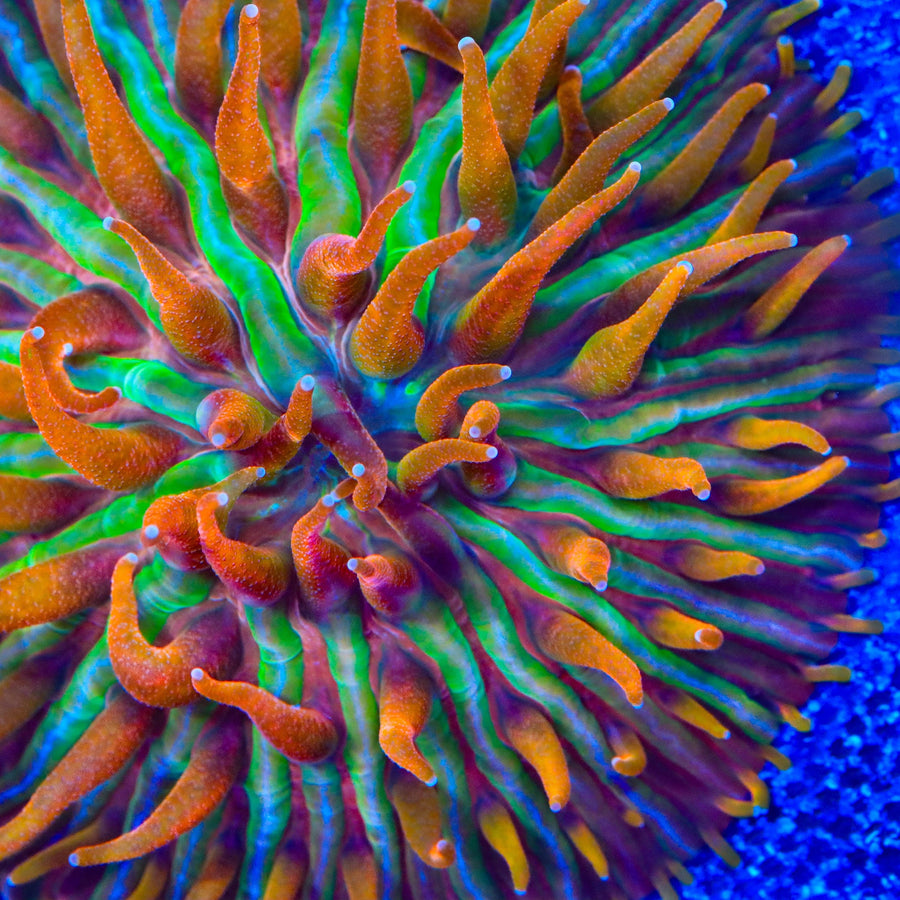
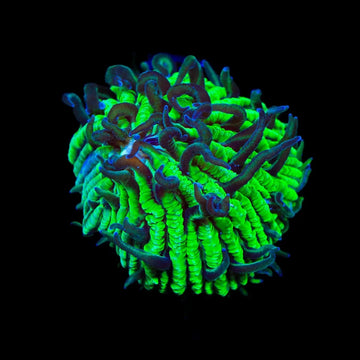
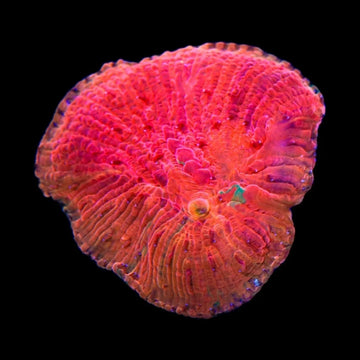
TSA Frosted Sun Aquacultured Plate Coral
Overview
Montipora Capricornis Coral forms broad, whorled plating layers with small polyps and smooth edges. Montipora capricornis is a small-polyp stony, plating coral that prefers moderate to high light and moderate, indirect flow. It is primarily photosynthetic via symbiotic algae, but occasional fine particulate foods can support growth and coloration. Place high on stable rock with room to expand, and keep clear of aggressive neighbors and stinging sweepers.
Quick Facts
Care
Moderate
Lighting
Moderate–High
Flow
Moderate–High
Placement
Mid–High
Temperament
Peaceful (2–3 inches spacing)
Recommended Parameters
Temp
76–80°F
pH
8.1–8.4
Salinity
1.025–1.026
Calcium
400–450 ppm
AlkAlkalinity
8–9 dKH
Magnesium
1250–1350 ppm
Feeding
photosynthetic (primary), phytoplankton, rotifers, microzooplankton, powdered coral foods, marine snow, amino acid supplements
Care & Placement
FAQ
Frequently Asked Questions
About the TSA Frosted Sun Aquacultured Plate Coral
-
Why does my Montipora capricornis start plating upward, then suddenly grow shelves sideways?
Growth form shifts with light and flow. Strong, even PAR and broad, turbulent flow promote flat, stacking plates; directional flow or shaded sections push the colony to curl or tier to capture light. If it’s shading itself, rotate the colony or remount on a vertical surface to encourage spirals. Trim outer lips periodically to limit self-shading and maintain light to lower surfaces and neighboring corals. -
My red cap is fading to pink or tan under LEDs—how can I restore color?
Check PAR (target roughly 200–350), avoid rapid intensity changes, and keep nitrate and phosphate low but not zero. Very lean nutrients and high blue bias can wash reds. Add spectrum balance (some white/UV-violet), keep alkalinity stable, and consider trace support (e.g., iron/iodine via tested dosing). Increase feed to fish or light particulate foods sparingly; abrupt nutrient spikes can brown tissue, so adjust gradually. -
I see scalloped bite marks on the plate edges—could this be Montipora-eating nudibranchs?
Yes. Look for tiny white nudibranchs and egg spirals on shaded undersides and edges. Remove affected frags for repeated dips (e.g., iodine or coral cleaners) every 3–5 days to catch hatch cycles. Manually brush egg clusters; dips don’t dissolve eggs. Night inspections help. Isolate the colony, increase flow on undersides, and consider sacrificial trimming of badly infested lips to stay ahead of feeding damage. -
My cap grows fast but stalls or recedes after minor parameter swings—why is it so touchy?
M. capricornis is sensitive to alkalinity instability; even small day-to-day shifts can trigger tip burn or slow tissue necrosis from the edges. Keep alk steady within a tight window, match consumption with automated dosing, and minimize abrupt light or nutrient changes. Good gas exchange, consistent temperature, and strong, indirect flow reduce stress. If recession starts, correct stability first before increasing light or feeding.