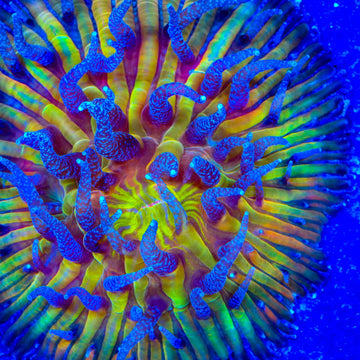
TSA Flaming Ring Aquacultured Plate Coral
Overview
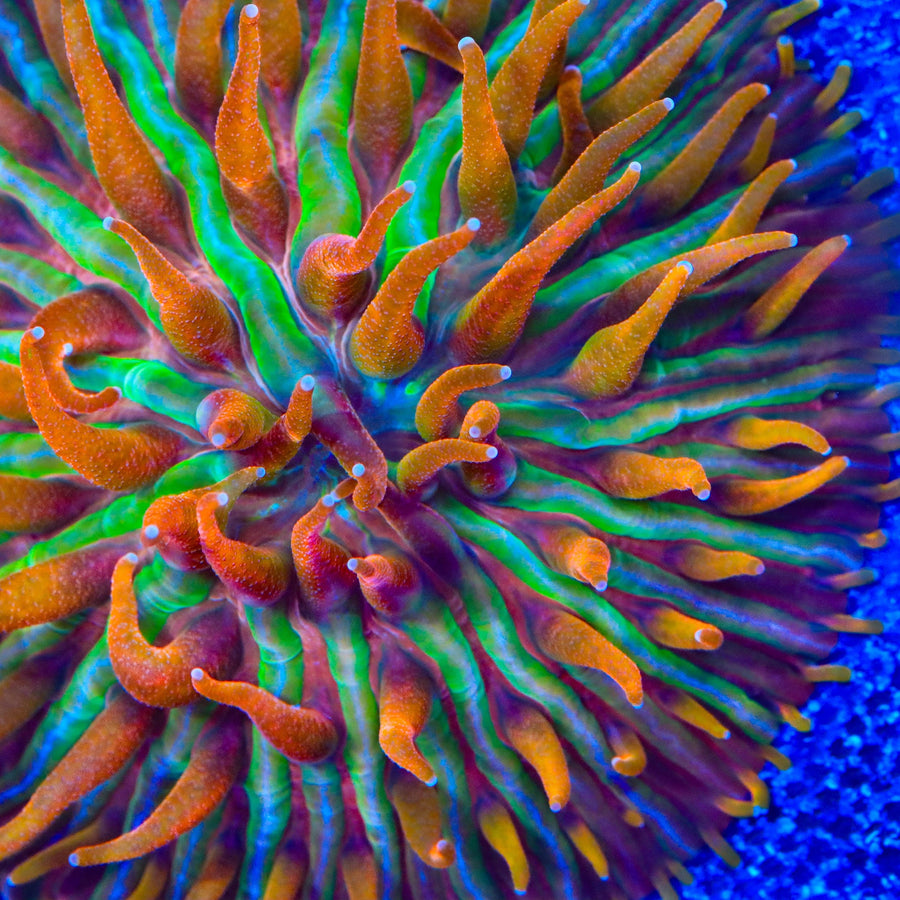
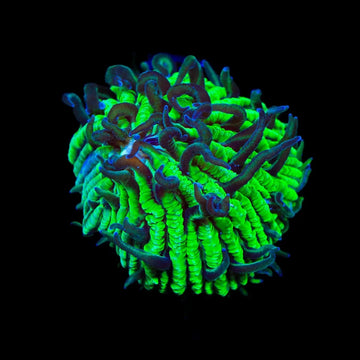
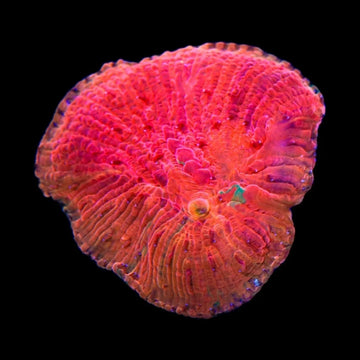
Flaming Ring Plate Coral shows a flat, circular disc with radiating ridges and a bright ringed pattern. Fungia fungites is a solitary, free-living stony plate coral that does best under moderate light and gentle to moderate, indirect flow. It relies on symbiotic algae for most nutrition but accepts small meaty foods, which can boost growth and color. Place it on open sand with space around it, as it can inflate and move and may extend short stinging tentacles at night.
Quick Facts
Care
Moderate
Lighting
Moderate
Flow
Moderate
Placement
Low
Temperament
Semi-aggressive (4–6 inches spacing)
Recommended Parameters
Temp
76–82°F
pH
8.1–8.4
Salinity
1.025–1.026
Calcium
400–450 ppm
AlkAlkalinity
8–10 dKH
Magnesium
1280–1350 ppm
Feeding
photosynthetic, mysis shrimp, enriched brine shrimp, finely chopped seafood, small krill pieces, copepods, zooplankton, microplankton/powdered coral foods
Care & Placement
FAQ
Frequently Asked Questions
About the TSA Flaming Ring Aquacultured Plate Coral
-
Why does my Flaming Ring Plate Coral “walk” across the sand?
Fungia fungites can inflate/deflate to shift position, avoiding harsh light, debris, or irritating flow. It also puffs up to shed sand. If it’s moving frequently, check for hotspots or gritty substrate and adjust flow to a gentle, laminar pattern that keeps detritus off without lifting the coral. Clear sand with a turkey baster and give it a clear, smooth area to prevent tissue abrasion. -
Is it safe to place this plate coral on rockwork?
It’s best kept on the sandbed. On rough rock, the underside tissue can scrape as it inflates, leading to infections or recession. If you must elevate it, use a smooth, wide pedestal and ensure no sharp edges. Keep flow moderate so it stays clean but isn’t tumbling, and allow expansion space all around the rim. -
My plate looks dead, but tiny disks are sprouting on the old skeleton. What’s happening?
Fungia fungites can produce anthocauli (baby plates) from the old skeleton or remaining tissue. Don’t discard it. Place the skeleton in a clean, low-turbulence area with moderate light, siphon off detritus, and keep parameters stable. Light target-feeding small meaty foods helps. Once juveniles reach a safe size, they can be separated gently if desired. -
How can I feed it effectively without causing stress or injury?
Offer small, appropriately sized meaty foods (mysis, finely chopped seafood) 1–2 times weekly. Turn off flow, place food near the mouth, and guard it with a feeding dome or hand to prevent fish theft. Avoid oversized pieces that tear tissue. Resume gentle flow after it’s swallowed. Consistent feeding supports recovery from bleaching or minor damage.