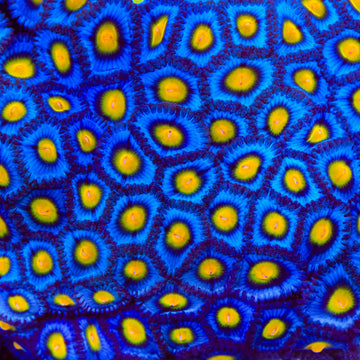
TSA Firework Clove Polyp Coral
Overview
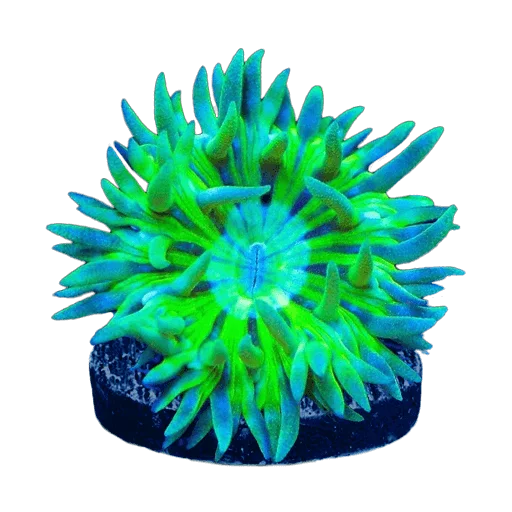
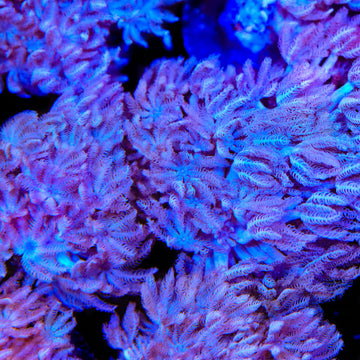
Firework Clove Polyps Coral shows star-like polyps with radiating, feathery tentacles that open from a creeping mat. Clavularia sp. is a soft, colonial mat-forming coral that prefers moderate light and gentle to moderate water flow. It relies on symbiotic algae for most nutrition but can take fine planktonic foods, which can support faster growth and steadier color. Place on an isolated rock or sand island, as it can spread quickly and overgrow nearby corals.
Quick Facts
Care
Easy
Lighting
Moderate
Flow
Moderate, indirect
Placement
Low–Mid
Temperament
Semi-aggressive (rapid overgrowth; isolate or 3–6 inches spacing)
Recommended Parameters
Temp
76–80°F
pH
8.1–8.4
Salinity
1.025–1.026
Calcium
380–430 ppm
AlkAlkalinity
8–10 dKH
Magnesium
1250–1350 ppm
Feeding
photosynthetic (primary), phytoplankton, microplankton, rotifers, baby brine shrimp nauplii, powdered coral foods, marine snow
Care & Placement
FAQ
Frequently Asked Questions
About the TSA Firework Clove Polyp Coral
-
Why do my Firework Clove Polyps stop opening for days even though parameters look fine?
Clavularia often enter a “rest” phase while laying new stolons under the mat. They may also close after sudden swings in alkalinity or salinity, micro-irritation from vermetid snails, or film algae on the coenenchyme. Increase random flow, lightly baste the mat, stabilize alk, and consider an iodine-based dip if tissue looks slimy or melting. -
How can I keep Firework Clove Polyps from overrunning my rockwork without hurting them?
Grow them on an isolated “island” rock or rubble pile, then periodically trim the mat at the edges with bone cutters or a sharp scalpel. You can place a sand gap or a low-flow channel around the island to discourage crossing. Immediately glue the cut edge to curb regrowth along unintended seams. -
What lighting and spectrum help retain the signature “firework” coloration without bleaching?
They hold color best under moderate PAR with strong blue/actinic bias. Intense white-heavy light can wash centers and shorten tentacles. Acclimate slowly using shorter photoperiods or staged intensity increases. If they pale, reduce peak intensity and extend blue spectrum; if they brown, slightly increase total PAR and improve flow to boost gas exchange. -
Do Firework Clove Polyps pulse like Xenia, and how can I tell them apart?
They don’t pulse. Clavularia has distinct clove-shaped polyps with longer, feathered tentacles and a creeping mat; Xenia has thicker stalks and rhythmic pulsing. If your colony waves only with current and spreads via a thin stolon mat, it’s Clavularia. Lack of pulsing isn’t a health issue here—it’s normal behavior.