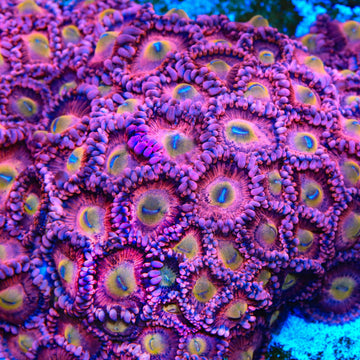
TSA Eclipse Bounce Mushroom Coral
Overview
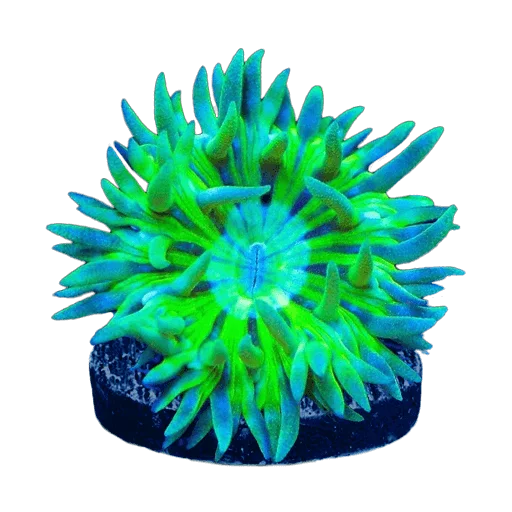
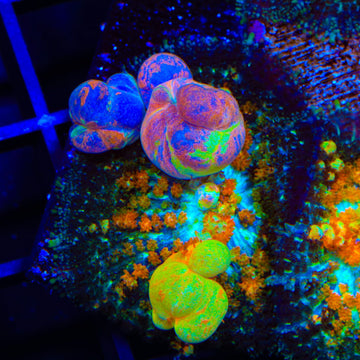
Eclipse Bounce Mushroom Coral displays large, inflated vesicles on a fleshy disc. Rhodactis sp. is a soft mushroom corallimorph that prefers low to moderate light and gentle to moderate water flow. It is photosynthetic via symbiotic algae but benefits from occasional small meaty foods, which can improve growth and polyp inflation. Place it on stable rock with room to expand, and keep distance from other corals to avoid contact and potential stings.
Quick Facts
Care
Moderate
Lighting
Low–Moderate
Flow
Low–Moderate
Placement
Low–Mid
Temperament
Semi-aggressive (3–6 inches spacing)
Recommended Parameters
Temp
76–80°F
pH
8.1–8.4
Salinity
1.025–1.026
Calcium
380–420 ppm
AlkAlkalinity
8–9 dKH
Magnesium
1250–1350 ppm
Feeding
Photosynthetic, microplankton, coral-specific powdered foods (e.g., Reef-Roids), marine snow, zooplankton, finely chopped mysis shrimp, enriched brine shrimp, copepods
Care & Placement
FAQ
Frequently Asked Questions
About the TSA Eclipse Bounce Mushroom Coral
-
Why did my Eclipse Bounce lose its “bubbles” after I increased lighting?
Bounce vesicles can flatten under abrupt light changes or excessive PAR. Aim for moderate PAR (80–150) with a blue-heavy spectrum and acclimate over 2–3 weeks. Keep flow gentle so vesicles aren’t whipped. Stable nutrients (nitrate 5–15 ppm, phosphate 0.03–0.1 ppm) support inflation; ultra-low nutrients or sudden drops often deflate them. If flattened, revert slowly and allow a few weeks for recovery. -
Do cloned frags always keep the same bounce and color pattern?
Genetics set the potential, but conditions decide expression. Clones usually retain colors, yet vesicle size and density vary with light, nutrients, and stability. Some frags temporarily lose “bounce” after cutting, then regain it as they heal. Keep parameters steady, avoid aggressive carbon swings, and maintain moderate PAR with detectable nutrients to preserve the morph’s look. -
My mushroom keeps detaching or “walking” away from its spot. How can I anchor it?
Detachment often follows too much flow, irritants (vermetids, bristle contact), or abrupt light shifts. Reduce flow to gentle, remove irritants, and provide a shaded crevice. Use a specimen cup or breeder box with rubble and mesh lid for 1–2 weeks so it can re-foot. Once attached, epoxy the rubble to your rockwork, keeping nearby stingers at bay. -
Are there hidden compatibility concerns with this coral in mixed reefs?
Rhodactis can overgrow and chemically stress neighbors, especially zoas and encrusting LPS. Give several inches of space and run moderate mechanical filtration; avoid sudden heavy carbon after long neglect. Keep torch/hammer/frogspawn at distance—sweeper tentacles can burn the mushroom. Watch for vermetid snails and hydroids; their irritation often triggers shrinkage, detachment, or mouth gaping.