Herbivore
Microfauna
Biofilms
Sponges
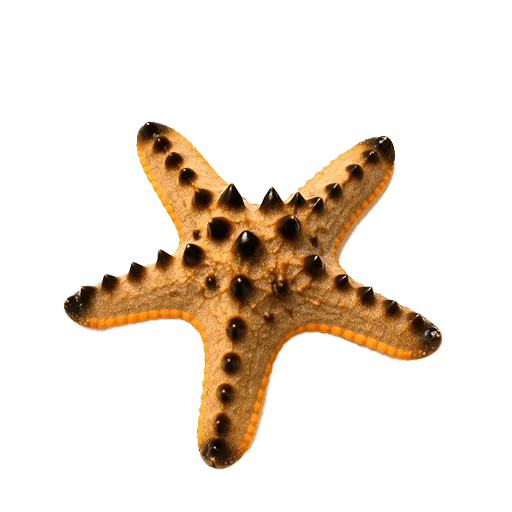
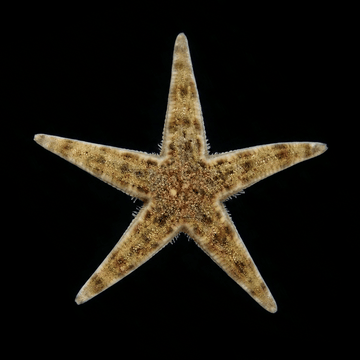
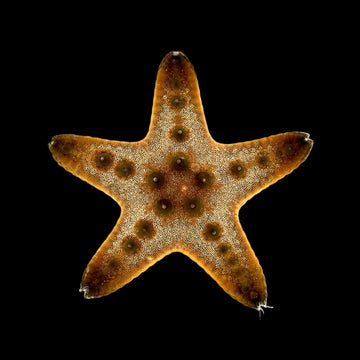
Granulated Starfish are slow-moving and generally calm in their behavior, spending much of their time perched on rock surfaces, reef ledges, or shaded overhangs. They move deliberately rather than constantly roaming, often remaining in the same general area for extended periods while grazing on biofilms, sponge growth, and other encrusting organisms. Unlike sand-sifting species, they do not disturb the substrate and instead rely on established live rock to meet their feeding needs. Granulated Starfish are typically most active during low-light periods and may reposition themselves overnight. Their behavior is non-disruptive, but they are sensitive to environmental instability and do not tolerate rapid changes in water chemistry or physical handling. In mature, stable systems, they display consistent, predictable movement and contribute quietly to surface grazing without drawing much attention.
FAQ
Frequently Asked Questions
About the Granulated Starfish
-
Are Granulated Starfish reef safe?
No. Granulated Starfish are not reef safe and should not be kept in coral reef aquariums. They are active predators that feed on corals, sponges, and other sessile invertebrates. Even in well-fed systems, they may still consume corals as part of their natural diet. They are best suited for fish-only or species-specific tanks. -
What do Granulated Starfish eat in aquariums?
Granulated Starfish are carnivorous and feed on a variety of meaty foods in captivity. They readily accept foods such as shrimp, clam, mussel, squid, and fish flesh. Regular feeding is important to maintain health and body condition, but it does not eliminate their tendency to prey on corals or other invertebrates. -
Can Granulated Starfish be kept with other invertebrates?
Caution is required. Granulated Starfish may prey on slow-moving or sessile invertebrates, including some snails, clams, and decorative invertebrate species. They are safest in systems where invertebrate loss is not a concern, such as fish-only displays. -
What tank size is appropriate for a Granulated Starfish?
Larger tanks with stable water parameters are recommended due to their size, activity level, and waste output. Adequate floor space allows them to move naturally and feed without competition. They are better suited to established aquariums rather than small or newly set up systems. -
Are Granulated Starfish hardy in captivity?
Yes, relative to many other starfish species. Granulated Starfish are more tolerant of aquarium conditions than delicate species like Linckia or Fromia. While they still require stable salinity and careful acclimation, their willingness to accept prepared foods makes them more forgiving and predictable long-term.