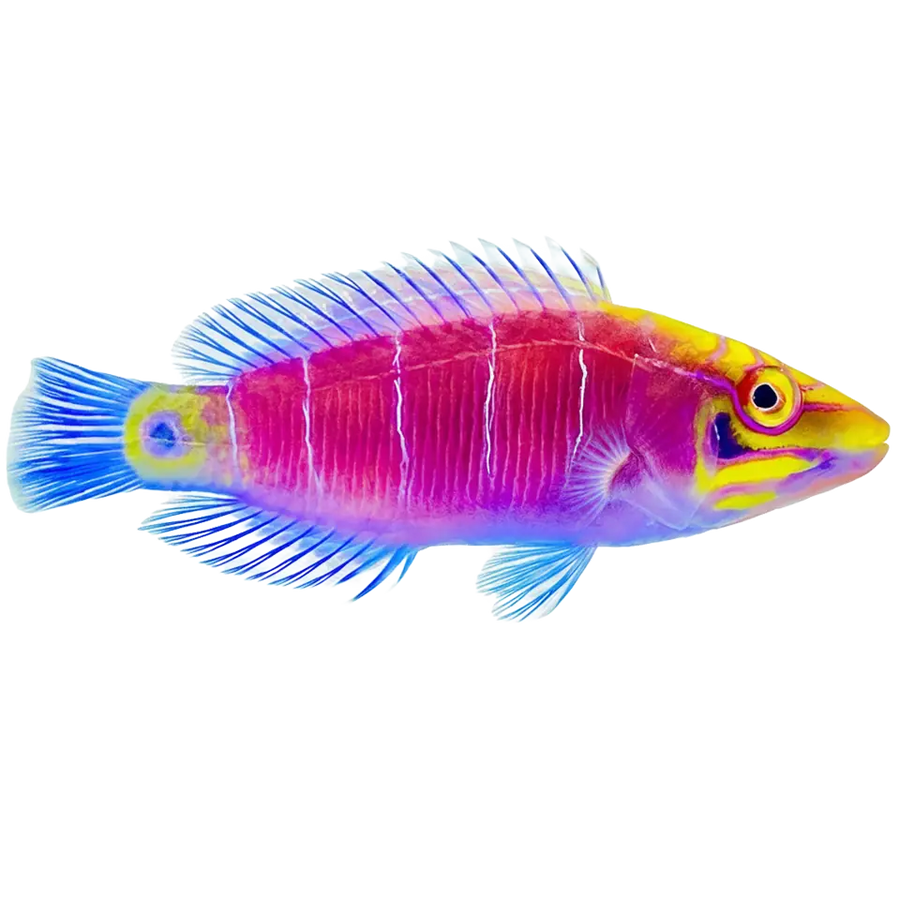
Yellow Fin Fairy Wrasse saltwater fish care guide

Overview:
The Yellow Fin Fairy Wrasse, known for its vibrant colors and active nature, requires a well-maintained marine environment. Ideally, this species thrives in a tank of at least 55 gallons, with plenty of live rock for hiding and exploring. The water should be kept at a temperature between 72-78°F, with a pH level of 8.1-8.4 and specific gravity of 1.020-1.025. A moderate to strong water flow is beneficial, mimicking their natural habitat of coral reefs. Ensure the tank is covered, as these wrasses are known jumpers.

Compatibility:
This species is generally peaceful and can coexist with other non-aggressive fish. They are best kept with similar-sized, non-aggressive tankmates. Avoid housing them with overly aggressive species that may bully or stress them. They can be kept singly or in small groups, but if kept in groups, ensure a larger tank to provide adequate space and reduce territorial disputes. Introducing them to the tank last can help minimize aggression from established tankmates.

Health and Quarantine:
Yellow Fin Fairy Wrasses are relatively hardy but can be susceptible to common marine diseases like ich and marine velvet. A quarantine period of at least two weeks is recommended before introducing them to the main tank. During quarantine, monitor for signs of illness such as white spots, rapid breathing, or lethargy. Maintaining excellent water quality, a stable environment, and a balanced diet are crucial for preventing disease. Regularly check water parameters and perform routine water changes to ensure a healthy environment. If signs of illness appear, consult a marine veterinarian for appropriate treatment options.

Pellets Mysis Finely Chopped Seafood
Yellow Fin Fairy Wrasse, Cirrhilabrus flavidorsalis, is a peaceful, reef-safe species from Indonesia, reaching up to 3 inches. It exhibits active swimming habits, often exploring various tank levels. Social by nature, it thrives in groups and displays minimal territoriality. Compatible with other non-aggressive species, it coexists well in a community setting. Its diet consists of mysis shrimp, brine shrimp, and finely chopped seafood. A minimum tank size of 50 gallons is recommended to accommodate its active swimming and social needs.

FAQ

Frequently Asked Questions

About the Yellow Fin Fairy Wrasse

  • How can I reliably differentiate a male Yellow Fin Fairy Wrasse from a female or juvenile, and why does this matter in a home reef tank?
    Males show more intense coloration overall, with a brighter yellow dorsal fin, more pronounced red/orange body hues, and more visible blue or purple edging on the fins; females and juveniles tend to be paler with less contrast and less extended fin rays. The male’s dorsal and caudal fins are often slightly more elongated and pointed. This matters because keeping one male with several females (a harem) encourages natural courtship displays and stable social behavior, while multiple males in smaller tanks often fight. If you want a peaceful group, aim for one clearly colored, dominant male and 3–5 more subdued females in tanks 90 gallons and up.
  • My Yellow Fin Fairy Wrasse hides constantly and only comes out briefly to grab food. What specific steps can I take to help it feel secure and become more visible?
    Provide plenty of rockwork with caves, arches, and overhangs to simulate a complex reef slope; these wrasses are naturally cautious midwater swimmers. Dim the lights or use a ramp-up period for the first hour of the day and reduce sharp light transitions, which can startle them. Add peaceful, active dither fish (like chromis, anthias, or reef-safe dartfish) that swim in the open to signal safety. Keep boisterous or aggressive tankmates (large wrasses, dottybacks, damsels) out of the tank. Maintain stable parameters (especially temperature and salinity) and avoid working in the tank frequently during the first 2–3 weeks. Over time, with regular small feedings of quality frozen foods and pellets, most Yellow Fin Fairy Wrasses shift from hiding in rockwork to confidently cruising open water.
  • How can I reduce jumping risk with a Yellow Fin Fairy Wrasse, given they are known “carpet surfers” that sleep in the rockwork rather than in the sand?
    Use a tight-fitting mesh lid (1/4" or 1/8" clear mesh) that covers every opening, including around overflow boxes, plumbing, and light mounts; they can and will find gaps. Keep water level a bit below the rim to lessen the chance of them launching directly out. Avoid sudden light changes, loud noises, or abrupt movements in front of the tank, especially during the first hours after lights on and off, when they are most skittish. If you must move rock or do heavy maintenance, dim lights and move slowly. When acclimating a new wrasse, turn down flow and room activity so it doesn’t panic and jump against the lid repeatedly. A proper lid and calm handling nearly always prevent losses.
  • My Yellow Fin Fairy Wrasse is nipping at new food but spitting it out. What feeding strategy and food types work best for getting this species to eat vigorously in captivity?
    Start with small, meaty frozen foods such as mysis shrimp, finely chopped krill, enriched brine, and marine plankton; thaw and rinse them, then feed in small portions multiple times per day. Many newly imported Yellow Fin Fairy Wrasses ignore dry food at first, so mix a few slow-sinking high-quality marine pellets into the thawed frozen to create a scent association. Over several days to weeks, gradually reduce frozen and increase pellets. Use a feeding ring or low-flow area so food doesn’t blow away too quickly; these wrasses prefer chasing food in the water column rather than picking it off the substrate. For especially finicky individuals, try live foods like blackworms or live baby brine for a few days to trigger feeding, then transition to frozen. Consistent multiple small feedings, rather than one large feeding, best mimic their natural grazing behavior.
  • Can I keep more than one Yellow Fin Fairy Wrasse together, or mix it with other fairy wrasse species, without serious aggression, and how should I introduce them?
    You can keep one male Yellow Fin Fairy Wrasse with several females of the same species, or mix it with other Cirrhilabrus species, as long as you avoid housing very similar-looking males in undersized tanks. Aim for at least 75–90 gallons for mixed fairy wrasses and include extensive rockwork with multiple “zones” so subdominant fish can retreat. Introduce all fairy wrasses at the same time when possible; if adding a new one later, use an acclimation box for several days so existing wrasses can see but not attack the newcomer. Avoid pairing with very assertive wrasses (like many Thalassoma, some Halichoeres, or large sixlines) that may harass them. Expect some initial chasing as hierarchy is established, but this should decrease within a week; persistent fin damage, pinned fins, and continual hiding mean you need to rehome the aggressor or rearrange rockwork and try a more gradual introduction.