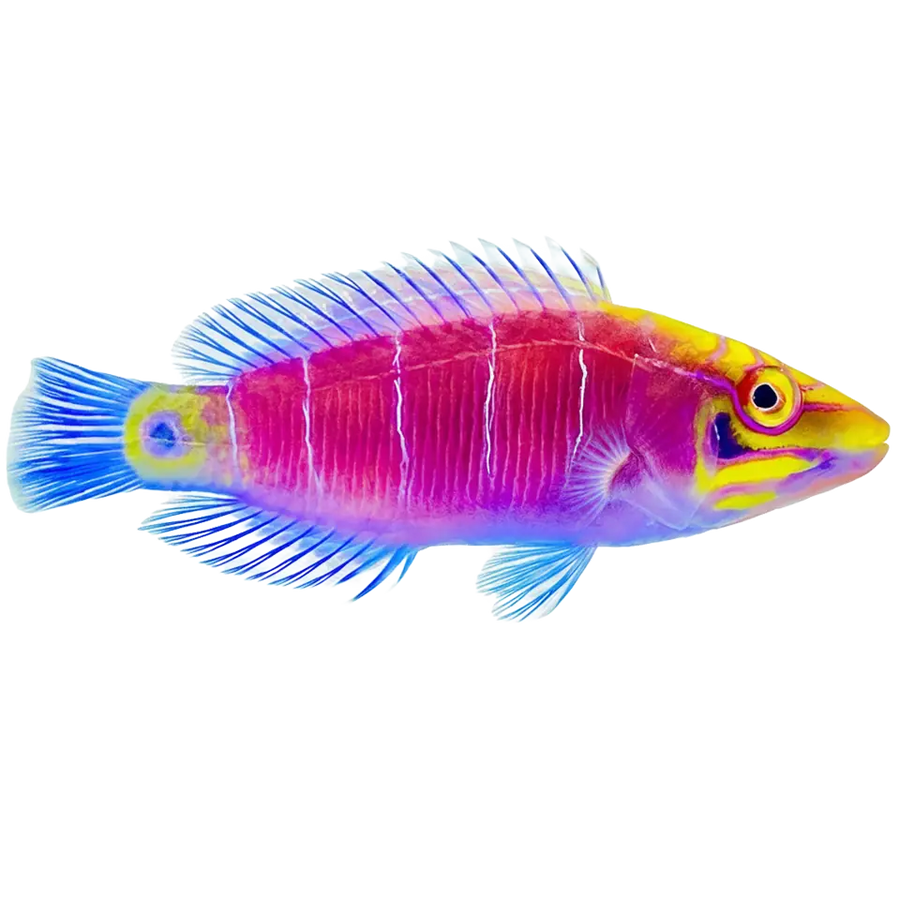
Timor Wrasse saltwater fish care guide

Overview:
The Timor Wrasse, a vibrant and active marine fish, thrives in well-maintained saltwater aquariums. Ideal conditions include a tank size of at least 75 gallons, with plenty of live rock for hiding and foraging. Water parameters should be stable, with a temperature range of 72-78°F, pH between 8.1-8.4, and specific gravity of 1.020-1.025. A secure lid is crucial as they are known jumpers. The environment should mimic their natural reef habitat, providing ample swimming space and hiding spots.

Compatibility:
Timor Wrasses are generally peaceful but can be territorial, especially with similar species. They are best kept with other non-aggressive fish of similar size. Avoid housing them with overly aggressive or significantly larger species. Suitable tankmates include other wrasses, clownfish, tangs, and gobies. Introduce them to the tank last to minimize territorial disputes. Ensure ample space and hiding spots to reduce stress and aggression.

Health and Quarantine:
Regular monitoring of water quality and parameters is essential for the health of the Timor Wrasse. They are susceptible to marine ich and other parasitic infections, so maintaining optimal water conditions and a stress-free environment is vital. A quarantine period of 2-4 weeks for new arrivals helps prevent the introduction of diseases. During quarantine, observe for signs of illness such as white spots, rapid breathing, or lethargy. Treat any health issues promptly with appropriate medications. Regularly check for signs of stress or disease and provide a balanced diet to support their immune system.

Pellets Mysis Finely Chopped Seafood
The Timor Wrasse is an active swimmer, often exploring the middle and bottom tank levels. It displays peaceful behavior, generally coexisting well with non-aggressive species. While not overtly territorial, it may show mild aggression towards similar-sized wrasses. Exercise caution in reef settings, as it might nip at small invertebrates. Best kept in a 55-gallon tank or larger, it thrives with ample swimming space and hiding spots. Compatibility with other fish is high, provided they are not overly aggressive or much larger.

FAQ

Frequently Asked Questions

About the Timor Wrasse

  • How large does a Timor Wrasse get in captivity, and what is the minimum tank size and aquascape layout they need to feel secure and display natural foraging behavior?
    Timor Wrasse (Halichoeres timorensis) typically reach about 4–5 inches (10–12 cm) in captivity, slightly smaller than some other Halichoeres wrasses. A minimum of 55 gallons (roughly 200 liters) is recommended for a single Timor Wrasse, with a 75-gallon tank preferred if you plan on keeping it with other active swimmers. They are highly active diurnal foragers that constantly pick at the rockwork and sandbed. Rockwork should be arranged in open “ridges” and arches with plenty of swim-throughs rather than a solid wall, leaving long stretches of open sand in front and back. This layout lets them dart in and out of cover while still having room to cruise. The tank should have a tight lid with no gaps; Timor Wrasses are strong jumpers, especially during the first few weeks as they settle in.
  • Does a Timor Wrasse absolutely require a sandbed, and if so, what depth and grain size are best for its burying behavior and overall health?
    Yes, a Timor Wrasse requires a sandbed; they are sand-sleeping Halichoeres and rely on burying to rest and to hide when spooked. Without sand, they experience chronic stress and can fail to thrive or injure themselves trying to wedge into rockwork. Provide 2–3 inches (5–7.5 cm) of soft, rounded aragonite sand. Grain size should be fine to small (roughly 0.5–1.5 mm), avoiding coarse crushed coral or sharp substrates that can cause scale and eye abrasions as they dive in and out. In very high-flow systems, keep the finer sand in a broad “lagoon” area with slightly reduced direct flow so it does not constantly blow away. Do not use bare-bottom or thin cosmetic dusting with this species; they need enough depth to fully cover their body.
  • How aggressive is a Timor Wrasse compared to other Halichoeres species, and what are the best and worst tankmates, including other wrasses, to avoid long-term conflict?
    Timor Wrasse is generally in the mild to moderately assertive range for Halichoeres. They are usually peaceful with dissimilar species but can be territorial toward fish of similar shape, pattern, or foraging niche. Good tankmates include most peaceful to semi-assertive reef fish such as fairy wrasses (Cirrhilabrus), flasher wrasses (Paracheilinus), chromis, anthias, small tangs, and reef-safe dwarf angels. Avoid other Halichoeres of similar size and pattern, especially if added after the Timor has established territory, as this can lead to persistent chasing. If keeping multiple Halichoeres, add all at the same time to a larger tank (75–90 gallons+), and choose visually distinct species. Dottybacks, large sixlines (Pseudocheilinus), and very feisty damsels can provoke or be provoked into ongoing skirmishes. Very timid nano fish (like small gobies) may be outcompeted or harassed in smaller tanks. Timor Wrasse rarely shows serious aggression toward larger, robust tankmates, but newly introduced wrasses should be acclimated with a socialization box so you can monitor interactions before full release.
  • How reliable is a Timor Wrasse for controlling pests such as flatworms, nudibranchs, and pyramid snails, and what should I feed it once the natural pest population declines?
    Timor Wrasse is an active micro-predator and will often eat small flatworms, nudibranchs, fanworm bases, tiny crabs, and other invertebrates. It can help reduce populations of nuisance flatworms and some snail parasites, but it should never be counted on as the sole “solution.” Their interest in specific pests varies by individual, and they may ignore certain species altogether. Once the natural pest and pod population drops, they require a varied prepared diet or they will lose condition. Feed at least twice daily with a mix of frozen mysis, enriched brine shrimp, chopped krill, finely chopped clam or shrimp, and high-quality small pellet foods. Timor Wrasses often take to pellets readily once settled, but they still benefit from regular frozen and fresh items. In heavily “cleaned” systems with low natural fauna, it is especially important to maintain consistent, meaty feedings so they don’t over-hunt beneficial invertebrates in desperation.
  • What specific acclimation and quarantine practices are important for Timor Wrasse, considering their tendency to dive into sand and react strongly to stress?
    For Timor Wrasse, careful acclimation and quarantine are critical because they are sensitive to sudden changes and stress but also very prone to external parasites and flukes like many wrasses. Float to temperature-match, then drip acclimate over 30–45 minutes to avoid abrupt salinity and pH shifts. During quarantine, provide at least a section of fine sand in a container or tray rather than bare-bottom; without sand, Timor Wrasses can injure themselves or refuse to settle. Dim the lights during the first few days and cover three sides of the quarantine tank to reduce visual stress. They often bury shortly after introduction and may not appear much the first day or two. Prophylactic treatments should be wrasse-safe: many keepers prefer chelated copper at moderate levels with test-kit confirmation, plus praziquantel for flukes, but you must monitor carefully because wrasses can be sensitive to overdosing and poor aeration. Use a tight cover over the quarantine tank, as they may jump when startled during early acclimation or during water changes. Once eating well and behaving normally in quarantine for 3–4 weeks, they can be moved to the display, ideally with the lights dimmed and rockwork providing immediate shelter near the release point.