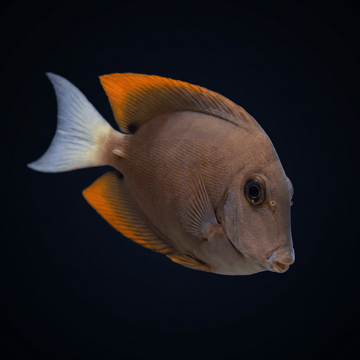
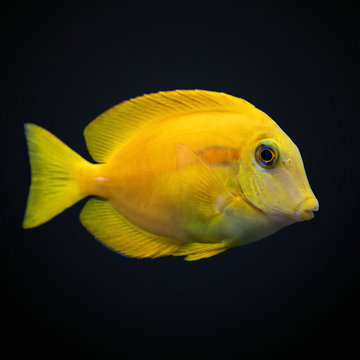
Wild Scopas Tangs spend nearly all daylight hours grazing filamentous and turf algae from rock and coral surfaces, using a long, pointed snout to probe crevices that broader-mouthed surgeonfish cannot reach. That constant browsing behavior should guide captive feeding. Dried seaweed on a clip left available throughout the day best approximates natural grazing, supplemented with spirulina-based flakes and pellets, dried seaweed blends, and algae-based frozen herbivore preparations. Occasional quality frozen fare is acceptable as a supplement, but the bulk of the diet must remain vegetable matter.
Small, frequent feedings spread across the day serve this fish far better than one or two large meals. Underfed individuals commonly develop pinching along the dorsal musculature, a clear starvation sign, and become more prone to head and lateral line erosion as well as territorial nipping. A well-nourished Scopas Tang holds richer color, behaves more calmly, and is markedly less likely to test corals or invertebrates.
Stressed or hungry specimens often fade to a washed-out muddy gray, which is a useful early warning that feeding or water quality needs attention.
In a reef display this species is a genuine asset, browsing rock and hard surfaces for nuisance algae rather than targeting corals or invertebrates. Corals, clams, snails, and crustaceans are left alone by well-fed individuals. The caveat is dietary: a hungry or stressed specimen may take an exploratory nip at coral tissue, so consistent access to algae-based food is the single most reliable safeguard for reef compatibility.


FAQ
Frequently Asked Questions
About the Scopas Tang
-
How large a tank does a Scopas Tang need?
Plan on a 75-gallon aquarium as a working minimum, with 100 to 125 gallons or more preferred for a long-term adult. A long horizontal footprint of 5 feet or more matters more than height or total volume. -
Is the Scopas Tang safe with corals and invertebrates?
Yes, it is considered reef safe and grazes algae from rock rather than bothering corals or invertebrates. A hungry or stressed individual may occasionally nip, so keeping it well fed is the key to reliable reef safety. -
Can I keep two Scopas Tangs, or a Scopas alongside another Zebrasoma?
It is risky, since this species is territorial toward tangs of similar body shape, especially other Zebrasoma. Two Scopas Tangs will almost always clash unless the system is very large and the introduction is carefully planned.