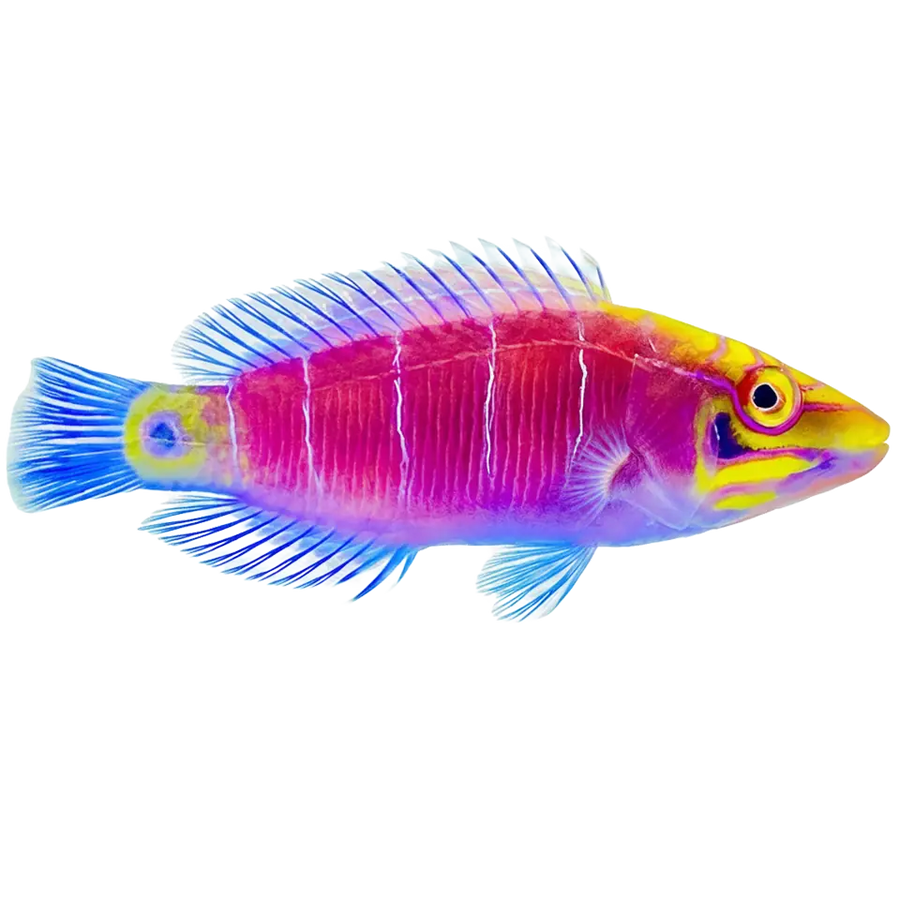
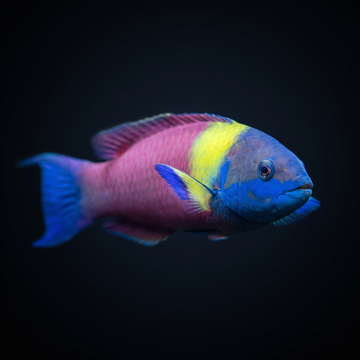
Redfin Fairy Wrasse saltwater fish care guide

Overview:
The Redfin Fairy Wrasse is a vibrant and active marine fish, ideal for reef aquariums. It thrives in well-established tanks with stable water conditions. Optimal parameters include a temperature range of 72-78°F, a pH of 8.1-8.4, and a salinity of 1.020-1.025. A tank size of at least 55 gallons is recommended to provide ample swimming space. Incorporating live rock structures offers hiding spots and promotes natural behavior. Ensure moderate water flow and efficient filtration to maintain water quality.

Compatibility:
These wrasses are generally peaceful and can coexist with a variety of tankmates. They are best kept with other non-aggressive fish species. Avoid housing them with larger, predatory fish that may see them as prey. Redfin Fairy Wrasses can be kept in groups if introduced simultaneously, but ensure adequate space to prevent territorial disputes. They are reef-safe and will not harm corals or invertebrates, making them suitable for mixed reef environments.

Health and Quarantine:
Regular monitoring of water quality is crucial to prevent stress-related diseases. Redfin Fairy Wrasses are susceptible to common marine ailments like ich and marine velvet. Implement a quarantine period of 2-4 weeks for new arrivals to observe and treat any health issues before introducing them to the main tank. Maintain a varied diet to support their immune system. Regularly inspect for signs of illness, such as changes in behavior or appearance. If symptoms arise, promptly address with appropriate treatments.

Pellets Mysis Finely Chopped Seafood
The Redfin Fairy Wrasse, native to the Philippines, is a peaceful, reef-safe fish that thrives in a 50-gallon or larger tank. Reaching up to 3.5 inches, it exhibits active swimming habits, often exploring all tank levels. This species is non-territorial and social, making it compatible with other peaceful fish. It prefers groups but can be kept singly. A carnivore, it feeds on mysis shrimp, brine shrimp, and enriched frozen foods. Ideal for community tanks, it adds vibrant color without aggressive behavior.

FAQ

Frequently Asked Questions

About the Redfin Fairy Wrasse

  • Can male Redfin Fairy Wrasses be kept together in the same tank, and if so, under what conditions to minimize aggression and stress?
    Multiple males can be kept together, but only in larger, low-stress setups. For most home aquariums under 6 feet, it’s safer to keep a single male with several females (a harem). If you want to keep more than one male, the tank should be at least 6–8 feet long with abundant rockwork and vertical structure to break line of sight, plus several caves and ledges for retreat. Introduce the less dominant male first, allow him to settle, then add the show male in an acclimation box so the existing wrasse can see but not attack him. Avoid combining similarly colored Cirrhilabrus species (especially other red/orange-bodied fairy wrasses), as they may be seen as direct rivals. Always cover the tank tightly and be ready to remove a bullied male if persistent chasing, torn fins, or hiding with refusal to eat occurs.
  • My Redfin Fairy Wrasse only displays its brightest colors during certain times of day. Is this normal, and can I influence how often it “flash displays”?
    This is normal behavior. Male Redfin Fairy Wrasses intensify color and perform “flashing” displays primarily during courtship, at dusk, and sometimes when interacting with rival males. You can encourage more frequent displays by: (1) housing him with one or more females of the same species; (2) using a predictable light cycle with a gentle ramp-down at the end of the day (via dimmable LEDs) to simulate dusk; (3) keeping water quality very high (low nutrients, stable temperature and salinity), which helps coloration and energy levels; and (4) providing open swimming space in front of rockwork where he feels secure enough to display. Avoid bright, harsh lighting without shaded areas; provide some overhangs and darker zones so the fish is confident enough to come out and show off.
  • My Redfin Fairy Wrasse is picking at the sand and occasionally “spitting” it out. Is this a sign of illness, or part of normal feeding behavior?
    That behavior is usually normal, especially if the fish is active, eating well, and not showing labored breathing or clamped fins. Redfin Fairy Wrasses often pick at the substrate and rock to hunt tiny crustaceans, worms, and other microfauna, and will inhale and then expel sand as they search for food. However, if the fish is spending most of its time at the bottom, breathing heavily, or appears to be scratching on sand and rocks, you should suspect parasites such as flukes or gill irritations. In that case, observe closely, check gills for excess mucus or discoloration, and consider a freshwater dip or proper quarantine treatment. As long as the fish remains bright, alert, and otherwise normal, occasional sand “tasting” is simply part of its natural foraging routine.
  • My Redfin Fairy Wrasse hides or rests on the sand immediately after the lights go out and is hard to find. How do I provide a safe nighttime environment, and is it a problem if I rarely see it after dark?
    Redfin Fairy Wrasses adopt a distinct day–night pattern. They are diurnal and seek shelter to sleep once the tank darkens. Unlike many Halichoeres wrasses that bury completely, Redfin Fairy Wrasses typically wedge themselves into rock crevices and may secrete a thin mucus layer as a sleeping “cocoon.” Some individuals will tuck close to the sand and rock interface, which makes them look like they’re “on” the sand. This is normal and not a concern if they emerge quickly in the morning and resume normal feeding. To support this, provide complex rockwork with narrow gaps and overhangs, avoid sudden “lights off” (use a dimming ramp or a short, lower-intensity “moonlight” phase), and prevent nocturnal startle events (slamming doors, sudden room lights at night). A tight-fitting lid is vital, as wrasses spooked after lights out are very prone to jumping.
  • What specific feeding strategy helps maintain the intense red and purple coloration of a Redfin Fairy Wrasse in captivity, beyond just “feeding a varied diet”?
    Focus on small, frequent feedings of highly pigmented, marine-based foods. Ideal staples include: (1) frozen enriched mysis, finely chopped krill, and small marine plankton; (2) high-quality micro pellets formulated for marine carnivores/omnivores with added astaxanthin, spirulina, and marine algae meals; and (3) occasional offerings of live or refrigerated copepods and baby brine shrimp to stimulate hunting and activity. Feed 2–3 times daily in modest amounts so the fish can graze without large nutrient spikes. Soak foods in a vitamin supplement (with HUFA and vitamin A) several times a week to support immunity and pigmentation. Avoid relying heavily on terrestrial-based ingredients (e.g., foods dominated by wheat, soy, or land animal proteins) and keep overall nutrition consistent; dramatic lapses in diet quality and frequency can dull the wrasse’s reds and purples over time.