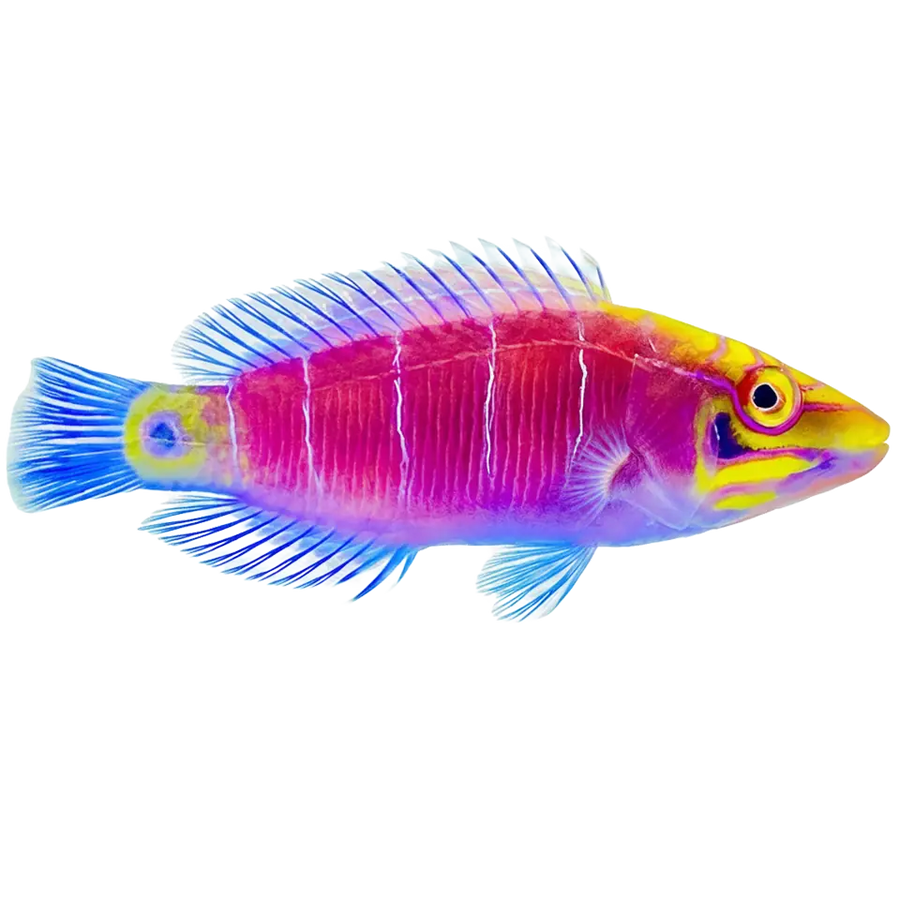
In the wild this wrasse is a carnivore that crushes benthic, hard-shelled prey, including mollusks, crustaceans, and sea urchins. Captive feeding should mirror that with a rotation of substantial, meaty marine items: chopped fish flesh, crustacean flesh, clam, shrimp, crab, and other marine invertebrate meats. The powerful jaws handle large pieces easily, and offering food in generous chunks encourages natural crushing behavior rather than casual picking.
Freshly imported individuals are sometimes reluctant to eat. Live foods are the most reliable trigger, with live brine shrimp, glass or grass shrimp, small crabs, or suitable small live fish typically prompting a strike before the fish transitions to prepared seafood. Once settled, feeding does not need to be frequent; this species will take a large meal and then show little interest for two or three days, so a schedule of substantial feedings every few days suits it better than daily small offerings.
Tankmates should be other moderately assertive fish capable of standing their ground. Introduction order matters: when the existing community is composed of similarly robust fish, add this wrasse first so it does not arrive as an interloper, but when the residents are peaceful, add it last. Reef compatibility is strictly with caution. Reports on direct coral impact differ, and many specimens ignore corals entirely, yet the appetite for invertebrates is consistent. Ornamental shrimp, crabs, snails, clams and other bivalves, sea urchins, feather dusters and other tubeworms, brittle stars, and sea stars are all treated as food, and small fish are at risk as well. A fish-focused system built around durable tankmates is the honest application for this wrasse.


FAQ
Frequently Asked Questions
About the Red Breasted Maori Wrasse
-
How large an aquarium does a Red Breasted Maori Wrasse need as an adult?
Plan on at least 180 gallons for a single adult, with more volume preferred. Because the species reaches roughly 16 inches and needs extensive open swimming room, a fully grown specimen can exceed what a typical home system handles comfortably. -
Can this wrasse be kept with shrimp, crabs, snails, or small fish?
Not reliably. It is reported to eat crustaceans, snails, bivalves, sea urchins, tubeworms, brittle stars, sea stars, and smaller fish, so those animals are poor tankmate choices. -
What should be offered if a new specimen refuses prepared food?
Use live foods to trigger a feeding response, such as live brine shrimp, glass or grass shrimp, small crabs, or suitable small live fish. Once it is eating, transition the fish to a varied carnivorous diet of marine fish flesh, crustacean meat, clam, and other meaty seafood.