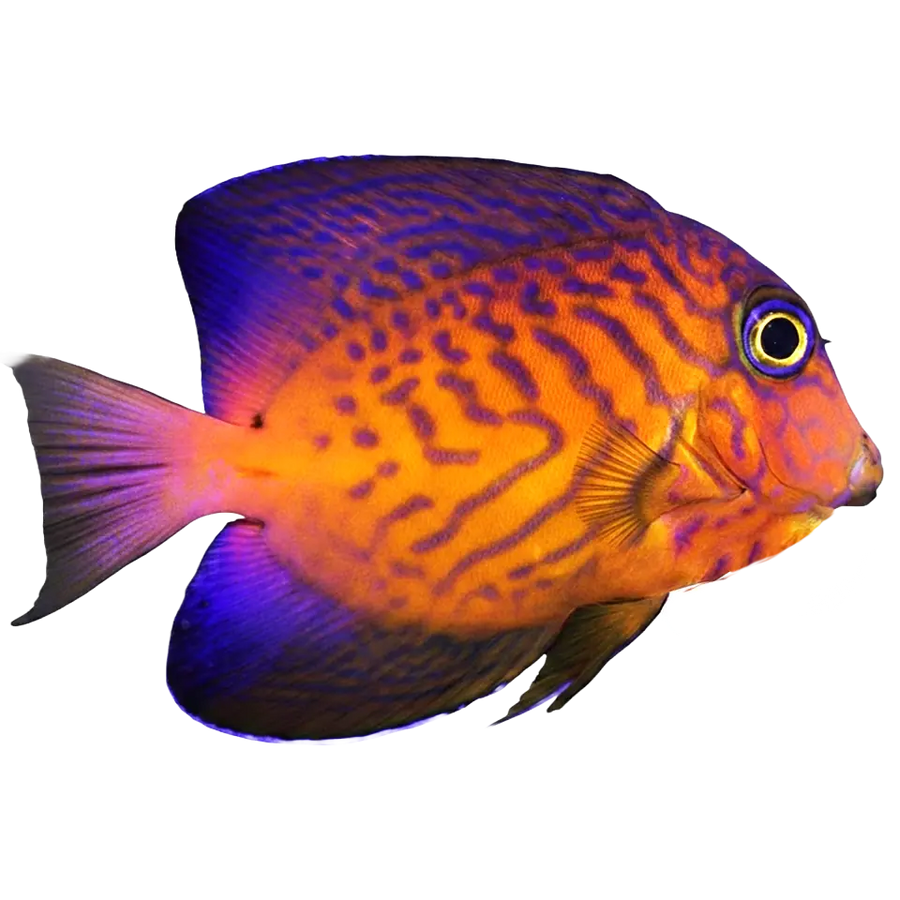
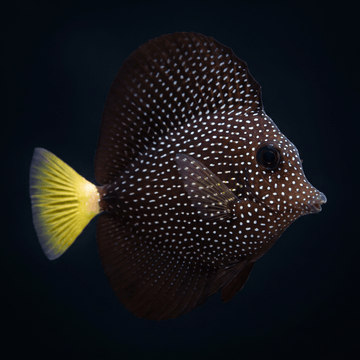
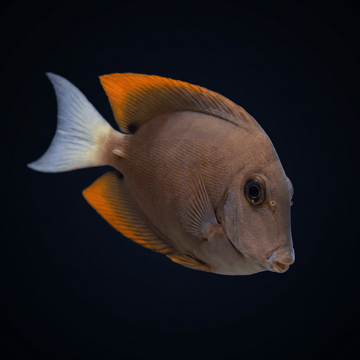
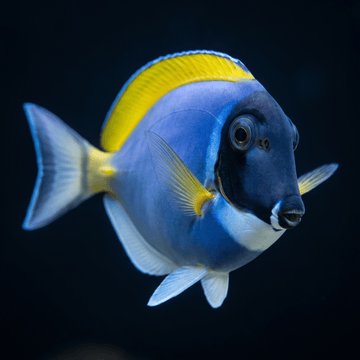
On the reef, Purple Tangs graze almost without pause on filamentous micro- and macroalgae, working the same surfaces repeatedly throughout the day. That pattern should guide feeding in captivity. The foundation of the diet needs to be algae-based: dried seaweed sheets clipped in the current, spirulina, and algae-rich prepared herbivore foods. Mysis shrimp, brine shrimp, and other prepared omnivore rations can be offered as supplements, and adults readily accept meaty items, but green matter must remain the constant. Soaking foods in a vitamin or HUFA supplement supports color and long-term condition.
Feed at least three times per week as an absolute minimum, though offering food more frequently, or leaving seaweed available for near-continuous grazing, better mirrors natural behavior and helps curb aggression at mealtimes. Diets short on algae are a genuine risk here, as deficient fish commonly lose color intensity and may develop head and lateral line erosion. Newly imported specimens benefit from a quarantine period before entering the display; even a fish stressed by a delayed shipment can recover fully given a month of dedicated care and steady feeding in a separate tank.
Introduce a Purple Tang last, after the other residents have established themselves, to blunt its territorial response. In a sufficiently large aquarium, tangs from different genera can coexist provided each has its own refuge and a share of grazing territory; abundant hiding places and consistent feeding go a long way toward keeping the peace. Unrelated, non-competing fish are generally ignored. On the reef side, this species is considered reef safe and is a mainstay of algae-managed reef displays, grazing nuisance growth without troubling corals, clams, or sessile invertebrates, though any large tang warrants a period of observation once it settles in.


FAQ
Frequently Asked Questions
About the Purple Tang
-
Is the Purple Tang reef safe with corals and invertebrates?
Yes, it is considered reef safe and is a popular reef tank fish because it grazes algae and typically leaves corals, clams, and other invertebrates alone. -
What size aquarium does an adult Purple Tang need?
A minimum of 100 gallons is required, and the footprint should be long rather than tall, ideally 5 to 6 feet, because this fish swims continuously. -
Can a Purple Tang be housed with other tangs?
It is semi-aggressive toward other tangs and particularly intolerant of fellow Zebrasoma species, so add it last and only mix it with tangs from other genera in a tank large enough for each fish to hold its own territory.