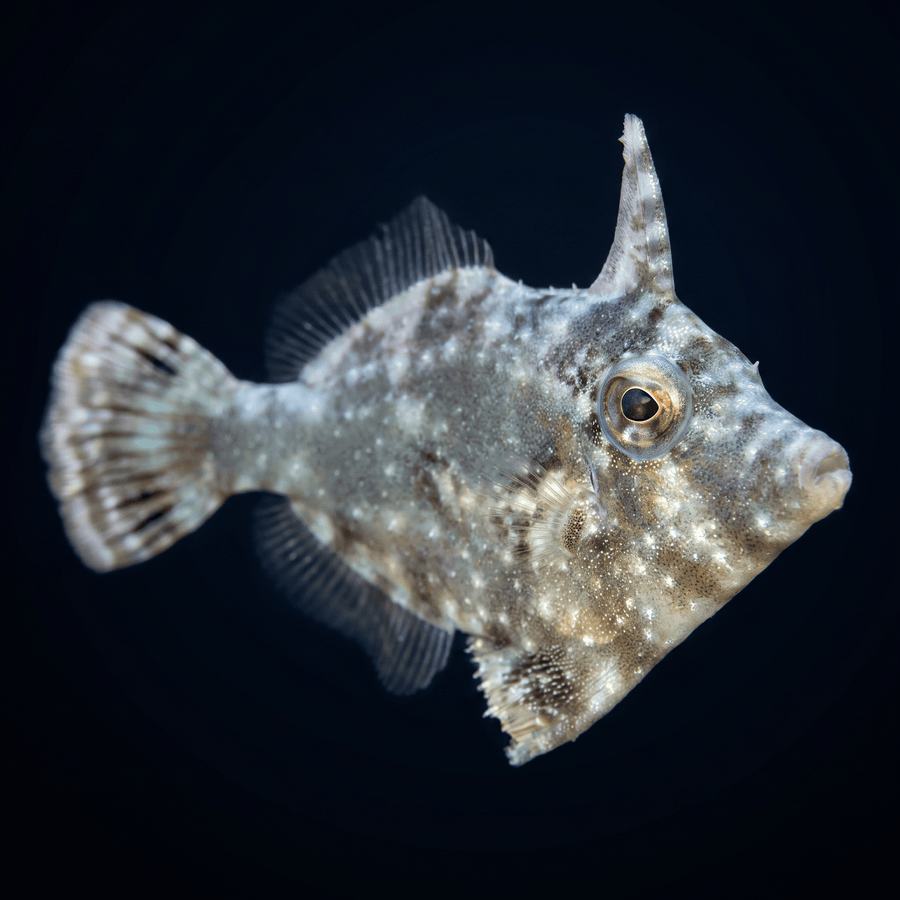
Orange Spotted Filefish saltwater fish care guide

Overview:
The Orange Spotted Filefish, also known as Oxymonacanthus longirostris, is a vibrant marine species requiring specific care to thrive. They are best suited for established reef aquariums with a minimum size of 50 gallons. The tank should mimic their natural habitat with live rock formations and plenty of hiding spaces. Water conditions must be stable, with temperatures between 72-78°F, pH levels of 8.1-8.4, and salinity of 1.020-1.025. High water quality is crucial, necessitating regular monitoring and maintenance, including efficient filtration and water changes.

Compatibility:
When considering tankmates, Orange Spotted Filefish are generally peaceful but can be sensitive to aggressive species. Ideal companions include other non-aggressive fish such as gobies, blennies, and certain species of wrasses. Avoid housing them with larger, more boisterous fish that may outcompete them for food or exhibit territorial behavior. Additionally, their compatibility with corals is complex, as they may nip at certain species. Careful observation is necessary to ensure they do not damage coral populations in the tank.

Health and Quarantine:
Maintaining the health of Orange Spotted Filefish involves diligent preventive care. Quarantine new arrivals for at least two weeks to monitor for signs of disease and acclimate them to tank conditions. Common health issues include parasitic infections and stress-related ailments, often due to poor water quality or inadequate diet. Regular health checks and prompt treatment of any symptoms are essential. Employ UV sterilizers and maintain optimal water parameters to reduce the risk of disease. Providing a stress-free environment with proper nutrition and stable conditions is key to their longevity and vitality.

Coral Polyps Mysis Shrimp Finely Chopped Seafood
The Orange Spotted Filefish is a slow swimmer with a unique, undulating motion. It is generally peaceful, often seen alone or in pairs. This species can be territorial, especially during breeding. While it may coexist with other non-aggressive fish, it is not suitable for reef tanks as it may nip at corals. Due to its specific dietary needs, it requires careful consideration when housed with other species.

FAQ

Frequently Asked Questions

About the Orange Spotted Filefish

  • Can I keep an Orange Spotted Filefish in a typical mixed reef tank, and what coral types are safest with them?
    Orange Spotted Filefish (Oxymonacanthus longirostris) are obligate corallivores in the wild and are notorious for nipping many small‑polyp stony (SPS) corals, especially Acropora. In most mixed reefs, they will graze on Acropora and similar branching SPS until those colonies decline. Some individuals adapt to prepared foods and reduce coral picking, but this is unpredictable. If you attempt them in a reef, avoid prized Acropora, Montipora digitata, and similar delicate SPS. They are usually less interested in large‑polyp stony corals (e.g., Euphyllia, Favia, Acanthastrea) and many soft corals and mushrooms, but there are always exceptions. A species tank or a tank with hardy, expendable SPS “sacrifice” colonies is far more realistic than expecting one to be fully reef‑safe.
  • What feeding routine works long term for Orange Spotted Filefish that are initially taking frozen or prepared foods at the store?
    Even if the fish is already eating prepared foods, you should feed very frequently—4–6 small meals per day at minimum. Use a mix of finely chopped frozen mysis, enriched brine shrimp, Cyclops, and high‑quality reef plankton blends, supplemented with finely crushed marine pellets soaked in vitamin and HUFA supplements. Target feeding with a pipette or turkey baster near their preferred hiding areas helps shy individuals get enough food without competition. Many keepers set up an auto‑feeder that dispenses tiny pellet amounts multiple times daily, paired with two frozen feeds you provide manually. Watch the fish’s belly; it should look gently rounded, never pinched in. If you cannot maintain this intensive feeding schedule, the fish is likely to slowly starve even though it “eats.”
  • How do you acclimate a wild Orange Spotted Filefish that refuses all prepared foods and only picks at coral?
    Start with live foods that trigger a strong feeding response—live enriched Artemia (brine shrimp), live copepods, and small live blackworms if available. Offer these several times daily; once the fish is eating live prey, gradually mix in very small amounts of thawed frozen Cyclops or mysis with the live food. Over a week or more, shift the ratio toward more frozen and less live. Keep water flow gentle at the feeding spot so foods linger in the water column where the filefish can pick at them. Some aquarists rubber‑band small pieces of thawed mysis or clam to dead Acropora branches or a feeding clip, mimicking their natural foraging behavior. Patience is crucial; the transition can take several weeks. If the fish stops eating for more than a couple of days, return to all live foods and try again more slowly.
  • What tankmates are most compatible with Orange Spotted Filefish, and which should be avoided to reduce stress and feeding competition?
    Ideal tankmates are small, peaceful fish that don’t outcompete them for food: small gobies, dartfish, jawfish, smaller fairy and flasher wrasses, and peaceful cardinalfish. Avoid boisterous or aggressive feeders such as large wrasses, triggers, most tangs, dottybacks, and large damsels, as well as nippy fish like some angelfish that may harass them. Avoid other filefish species unless you have a very large aquarium and a clear plan for managing potential aggression and food demands. For a pair of Orange Spotted Filefish, a calm, low‑competition community in a 55–75+ gallon tank is best, with plenty of branching rockwork to break line‑of‑sight and provide quiet feeding zones.
  • How can I tell if my Orange Spotted Filefish is a male or female, and does sexing matter for keeping a pair?
    Males typically show more intense blue markings and a more pronounced blue line along the dorsal region, as well as slightly larger and more elaborate dorsal and caudal fin patterning compared to females, which tend to have more subdued coloration and slightly rounder bodies when in good condition. These differences can be subtle and are most visible when comparing multiple individuals side by side. For pairing, the safest route is to obtain an already established, compatible pair from a reputable source; random pairings can result in bullying. If that’s not possible, introduce a clearly smaller individual to a larger one in a larger tank with lots of cover, and watch closely for aggression during the first week, being ready to separate if one fish relentlessly chases or pins the other.