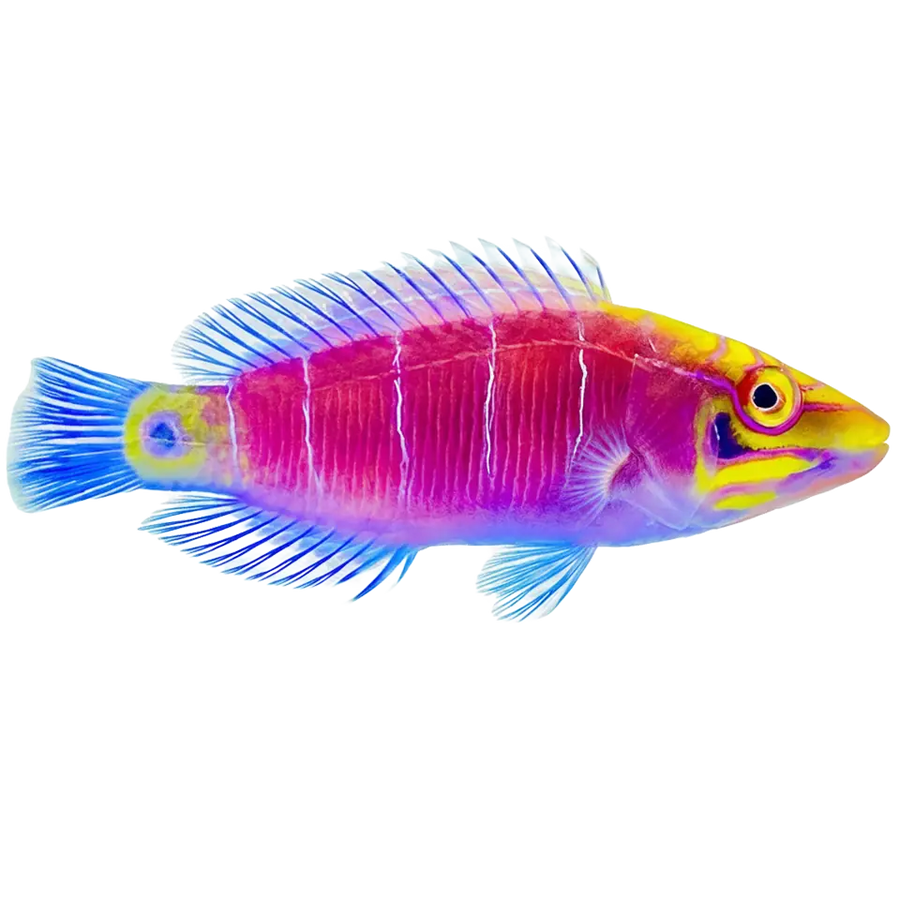
Mystery Wrasse saltwater fish care guide

Overview:
The Mystery Wrasse, known for its vibrant colors and active nature, thrives in well-maintained marine aquariums. Ideally, it requires a tank of at least 50 gallons with plenty of live rock for hiding and foraging. The water temperature should be maintained between 72-78°F, with a pH level of 8.1-8.4 and specific gravity of 1.020-1.025. A moderate water flow and efficient filtration system are crucial to mimic its natural reef environment. Regular water changes and monitoring of water parameters are essential to ensure optimal living conditions.

Compatibility:
Mystery Wrasses are generally peaceful but can exhibit territorial behavior, especially towards other wrasses or similarly shaped fish. They are best kept with other peaceful species that do not resemble them in size or shape. Avoid housing them with overly aggressive or significantly larger fish. They can coexist with a variety of invertebrates, but caution is advised with small crustaceans, as they may be seen as prey. Providing ample hiding spots can help reduce territorial disputes and stress.

Health and Quarantine:
Mystery Wrasses are relatively hardy but can be susceptible to common marine diseases such as ich and marine velvet. A quarantine period of at least two weeks is recommended for new arrivals to monitor for signs of illness and prevent the spread of disease to the main tank. Regular observation for changes in behavior, appetite, or appearance can help detect health issues early. Maintaining high water quality and a balanced diet is key to preventing stress-related illnesses. In case of disease, consult a veterinarian for appropriate treatment options.

Pellets Mysis Finely Chopped Seafood
Mystery Wrasse, Pseudocheilinus ocellatus, exhibits dynamic swimming, often darting among rocks and corals. It is semi-aggressive, showing territorial behavior, especially in smaller tanks. Compatible with larger, non-aggressive species, it can be combative with similar-sized or shaped fish. It thrives in reef environments, contributing to pest control by preying on copepods, amphipods, and shrimp. Best kept singly unless in a large tank, it requires ample hiding spots. This species reaches up to 4 inches and should be housed in a minimum of 55 gallons.

FAQ

Frequently Asked Questions

About the Mystery Wrasse

  • My Mystery Wrasse keeps disappearing into the rockwork for long periods, sometimes a full day. Is this normal or a sign of disease?
    It’s normal behavior for Mystery Wrasses (Pseudocheilinus ocellatus) to wedge themselves into rock crevices and “sleep” or hide, especially when new to a tank or if something startles them. They don’t bury in sand like some wrasses, but they are secretive and will vanish into dense rock for hours. As long as it comes out daily to eat with good appetite, has normal coloration, no rapid breathing, and no visible lesions, this is typical. If it remains hidden for more than 48 hours, refuses food, or shows labored breathing or marks on the body, then check parameters (ammonia/nitrite should be zero, nitrate reasonably low, stable salinity and temperature) and look for bullying from tankmates. Adding more rockwork for additional hideouts and maintaining a consistent light schedule can help it feel safer and reduce prolonged hiding.
  • How aggressive can a Mystery Wrasse be toward other wrasses and similar-shaped fish, and what tankmates are most at risk?
    Mystery Wrasses are often sold as “reef safe,” but they can be territorial, especially in smaller tanks or once they have established themselves. They are most likely to harass other Pseudocheilinus wrasses (six-line, four-line, etc.), small fairy and flasher wrasses, and similar-sized elongated fish like grammas and dottybacks. In tanks under about 75 gallons, they can dominate the rockwork and relentlessly chase any new wrasse additions. To reduce issues, add a Mystery Wrasse last or near last, and avoid housing it with other lined wrasses or very timid wrasse species. It usually coexists better with tangs, larger angels, hawkfish, and clowns. If aggression becomes a problem, rearranging rock to “reset” territories and using an acclimation box for any new wrasse introduction can help, but in some cases the only long-term fix is rehoming either the Mystery Wrasse or the targeted fish.
  • Will a Mystery Wrasse control pests like flatworms, nudibranchs, and small shrimp, and how reliable is it as a “cleanup” fish?
    Mystery Wrasses do eat a variety of small invertebrates from rockwork, including many small worms and tiny crustaceans, and some individuals will pick at flatworms, parasitic snails, and nudibranchs. However, they are not consistent or guaranteed pest controllers. Some specimens show strong interest in flatworms and zoanthid-eating nudibranchs, while others largely ignore them and focus on pods and prepared foods. They may also prey on small ornamental shrimp (especially sexy shrimp and very small cleaner shrimp), tiny hermits, and feather dusters. Consider any pest control they provide a bonus, not a primary solution. If you must protect small shrimp, introduce the shrimp first, let them establish, provide dense rock and branching coral for cover, and keep the Wrasse well fed with frequent small meals so it’s less inclined to actively hunt them.
  • What are the ideal tank size and aquascape layout specifically for a single adult Mystery Wrasse to reduce stress and aggression?
    For a single Mystery Wrasse, a minimum of 55 gallons is often quoted, but 75 gallons or larger is much better, especially for an assertive or very active specimen. They need rock-heavy aquascaping with many tight caves, arches, and tunnels that allow them to weave in and out and retreat from view. Vertical complexity (ledges at different heights) is more important than wide-open sand area for this species. Avoid bare, sparse rock layouts; they feel exposed and are more likely to hide constantly or turn aggressive. Provide at least two main rock islands or zones so that the Wrasse and any potential tankmates have separate territories. Moderate to strong, varied water flow is ideal, with some lower-flow pockets within the rockwork so they can rest. A secure, fully covered lid with all gaps sealed (including around plumbing and cables) is mandatory, as Mystery Wrasses are strong jumpers, especially at night or when startled.
  • My Mystery Wrasse is eating but getting a slightly sunken belly. What feeding schedule and food variety does it need to maintain good body weight and coloration?
    Mystery Wrasses are active foragers and burn a lot of energy; a single large daily feeding is often not enough. Aim for 2–3 smaller feedings per day. Use a mix of high-quality meaty foods: enriched frozen mysis, finely chopped shrimp and clam, small marine-based pellets, and occasional frozen copepod or fish-egg products. Soak foods in a vitamin supplement a few times a week to support immune health and coloration. Avoid feeding only brine shrimp, which is low in nutrition unless gut-loaded and enriched. If the belly remains sunken despite frequent feeding, observe whether tankmates are outcompeting it or if it spits food. In that case, target-feed with a turkey baster or pipette near its favored rock area. Also verify there is a healthy copepod population in the rockwork, as natural grazing between feedings helps keep them filled out. If the fish continues to lose weight, consider internal parasites and, if feasible, move it to a separate tank for observation and possible deworming under appropriate guidance.