Pellets
Mysis
Finely Chopped Seafood
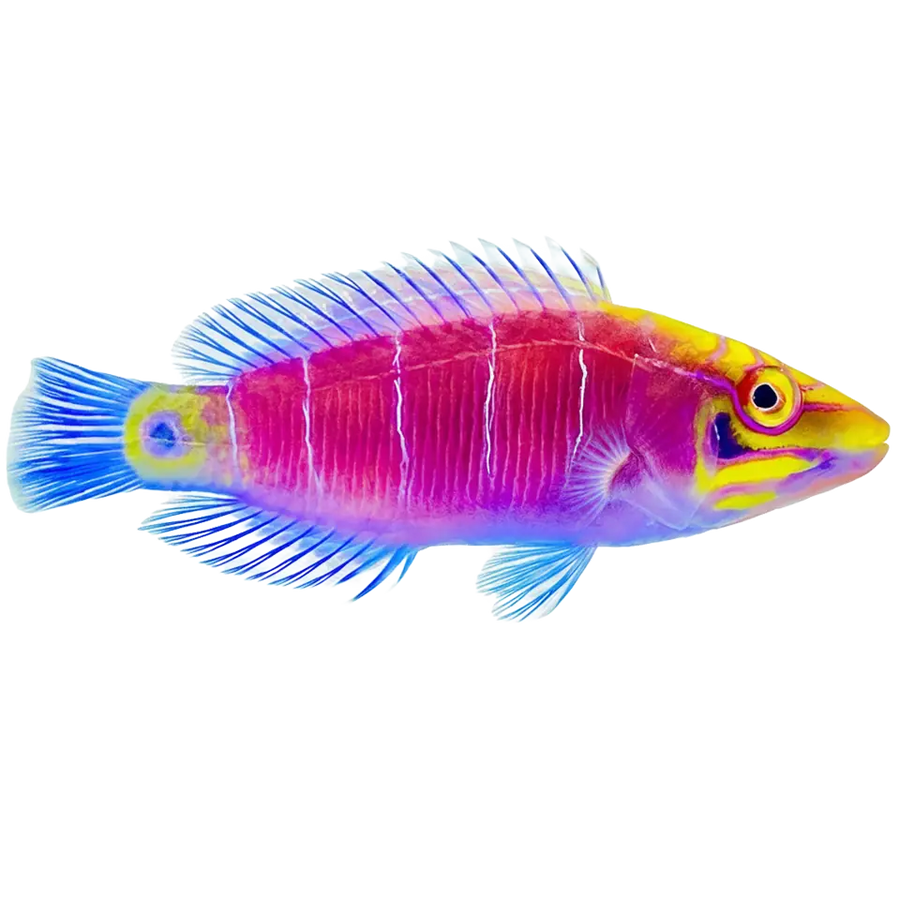
Marble Wrasse, Halichoeres hortulanus, swims actively throughout the tank, often exploring crevices. Semi-aggressive, it may display territorial behavior, especially in smaller spaces. Compatible with similarly sized fish, but caution is advised with smaller, slower species. Prefers ample hiding spots to establish territory. In reef tanks, it might nip at invertebrates. Best housed in a spacious 125-gallon tank or larger to minimize aggression. Diet includes shrimp, crab, mollusks, and mysis shrimp, reflecting its carnivorous nature. Originating from the Philippines, it thrives in well-maintained environments.
FAQ
Frequently Asked Questions
About the Marble Wrasse
-
Can a Marble Wrasse be kept in a reef tank without it eating my shrimp and crabs, and if so, from what size does it become a serious risk to cleanup crew and ornamental shrimp?
Marble Wrasses (Halichoeres hortulanus) are generally not reef-safe with inverts. As juveniles under about 3–4 inches, they may ignore larger hermits and some snails if well fed, but they still tend to hunt tiny crustaceans. Once they pass 4–5 inches, they become very efficient predators of small shrimp (peppermints, cleaners, sexy shrimp), small hermits, and snails. In a reef, they’re usually only safe with larger, tough-shelled snails (like turbo and trochus), big hermits, and no ornamental shrimp you really care about. If your goal is a shrimp-focused reef, this species is a poor choice; if you’re okay with losing small crustaceans, they can work in a reef with robust corals and larger inverts. -
My juvenile Marble Wrasse is losing its bright pattern and turning duller with more spotting and streaks. Is this normal or a sign of stress or disease?
This is usually a normal color transition, not disease. Marble Wrasses go through a significant juvenile-to-adult phase change. Juveniles show a clean, defined pattern and adults develop a more complex, “marbled” look with more spotting, faint banding, and variation from greenish to brownish tones. The transition can look patchy for several months. As long as you see normal behavior (active swimming, good appetite, regular burying at night) and no obvious signs of illness (spots like grain-of-salt ich, velvet sheen, frayed fins, heavy breathing), it’s likely just maturation. Dull color combined with clamped fins, hiding, or rapid gilling suggests stress or disease instead of natural color change. -
How deep does the sand bed need to be for a Marble Wrasse, and what specific substrate type is safest to avoid eye or skin damage when it buries itself?
Plan for at least 2–3 inches of soft, fine to medium aragonite sand. This species dives into the sand at night or when startled, and coarse or sharp substrates (large crushed coral, jagged shells) can cause abrasions, damaged scales, and eye injuries. Grain size around sugar-fine to 1–2 mm is ideal. You don’t need a deep sand bed for filtration purposes, but you do need enough depth for it to fully cover itself, typically 2 inches in smaller tanks and closer to 3 inches in larger tanks where the fish will grow bigger. Avoid bare-bottom or minimal sand setups; a Marble Wrasse without a proper sand bed will be stressed, sleep poorly, and is more prone to jumping. -
My Marble Wrasse constantly flips snails and hunts tiny worms in the rockwork. Will it wipe out beneficial bristleworms and pods and reduce the natural cleanup capacity of my tank?
Yes, over time a Marble Wrasse will substantially reduce visible populations of small worms and pods. They are active foragers that pick at rock and sand all day, eating small feather dusters, spaghetti worms, bristleworms (especially small to medium ones), amphipods, copepods, and small crustaceans. In a mature, rock-heavy system, some microfauna will persist, but you should not rely on bristleworms, small pods, or mini brittle stars as your primary cleanup crew once this fish is established. Plan to supplement with more robust inverts (larger snails, some larger hermits, conchs) and maintain good husbandry. If your main goal is to cultivate a high density of visible pods and worms, a Marble Wrasse is a poor fit. -
How aggressive is a Marble Wrasse toward other wrasses and similarly shaped fish, and what are the best and worst tankmates within the wrasse group?
Marble Wrasses are mid-level in aggression: not as nasty as some Thalassoma species, but more assertive than many fairy (Cirrhilabrus) and flasher (Paracheilinus) wrasses. They can coexist with other wrasses if you choose species and sizes carefully. Good options include robust Halichoeres species (like H. melanurus, H. chrysus, H. bivittatus) and larger fairy wrasses added before or at the same time as the Marble Wrasse. Avoid combining them with smaller, timid fairy or flasher wrasses (they may be harassed) and with highly aggressive wrasses such as large Thalassoma or big Coris species that can intimidate or injure them. Introduce the Marble Wrasse after more passive wrasses, use an acclimation box if possible, and ensure the tank is at least 4 feet long with plenty of rock to break line of sight.